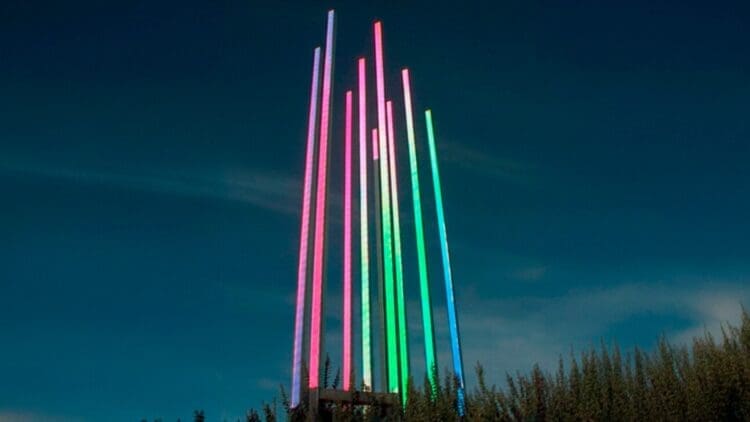

When it comes to thinking outside the box, a particular renowned artist comes to mind. He created ingenious, sustainable public art pieces, with a career that lasted over three decades. One of his creations, Solar Intersections, makes photosynthesis and has been glowing and producing energy since the 80s. Find out why this public art piece has piqued the interest of thousands of onlookers for 36 years, and what symbolism lies locked within this functional, artsy night light.
Glowing and producing energy since the 80s
The 80s will forever be one of the most memorable and iconic eras. It had everything from vibrant fashion to legendary music, emphasising that the unique pop culture was central at that time. It was also one of the more authentic and simple times before the modern life we have become accustomed to, although tech was significantly on the rise. This includes computers and unique gadgets.
However, one crucial technology was less popular and more of a niche during the 80s, namely solar energy. Back then, this technology was unaffordable and not as efficient. Yet many people realised the importance of this pioneering technology and the role that it will one day play in the world. That is why the artist Robert Behrens was approached in the late 80s, giving birth to his functional public artwork, Solar Intersections.

Solar Intersections uses the natural process of photosynthesis to generate light
Modern pioneers have put the ‘we’ into community solar. However, before we finally reached that point, it was up to clever artists to create functional artwork to educate people about the role of solar energy technologies and how they can be flawlessly integrated into public spaces and architecture, serving functional and aesthetic roles in society.
Enter Robert Behrens, who designed and installed the functional artwork, Solar Intersections, back in 1989 in California. This artwork consists of 16 steel poles, towering at 70 feet high in the sky. Behrens coated these poles with an adhesive paint and then added solar panels to them. These poles not only reflect light, but also create colorful, interchanging displays.
The color you perceive depends on the angle at which you view the artwork. In addition to the solar theme, one can find elements of nature, such as myrtle trees and perennial flowers, surrounding the artwork’s metal frame in a checkerboard pattern.
The result of thinking outside the box
While it serves as a colorful night light during the darker hours, Solar Intersections is about so much more. The entire piece combines science, art, and public engagement to spark conversation on topics such as nature, sustainability, technology, and our connection to all of it. This was particularly important in the 80s, especially when solar energy was still perceived as a niche technology.
According to the Illinois Renewables website, public artwork pieces such as this one break barriers on the role of renewable energy installations by becoming unique, functional, and sustainable landmarks. As a result of thinking outside the box, this artwork has been glowing and producing energy since the 80s, proving the lasting role solar energy can play in our daily lives.
Of course, it has also evoked several conspiracy theories. Some believe that these beams can be perceived as ‘guiding light towers’ and, with the cornfields nearby, are obviously intended to assist with UFO landings.
While the latter theory is more fantasy than anything else, the true symbolism and purpose of the colorful light beams are strikingly awe-inspiring. If functional artwork becomes more popular, we may soon have architecture with higher energy security, saving costs while maintaining the importance of aesthetics in design. Sustainability will prevail in the end, as the global footprint will inevitably become smaller. Another example of such functional beauty is Seattle’s solar flowers that pulse with sound.
Disclaimer: Our coverage of events affecting companies is purely informative and descriptive. Under no circumstances does it seek to promote an opinion or create a trend, nor can it be taken as investment advice or a recommendation of any kind.
Anke Maree is a writer with a clear and engaging editorial style. Her work focuses on making complex topics accessible, informative, and relevant for readers across different areas of interest.