
A wind farm rose in the middle of the sea, and mussels turned it into their favorite reef as the population exploded a hundredfold
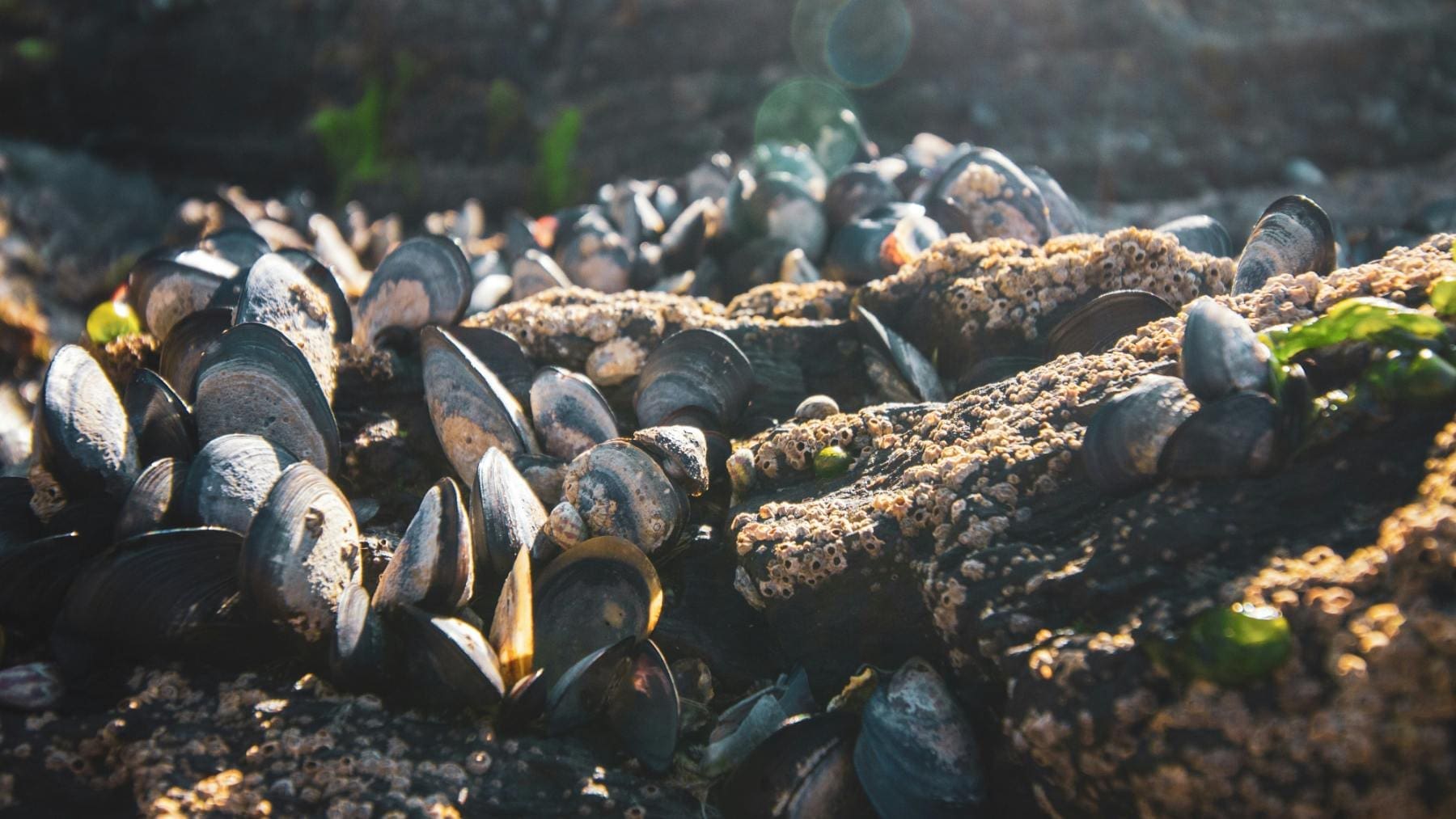
Human intervention can make or break a population, but for mussels, man-made offshore wind farms had an unexpected effect.
As the climate crisis has become a major headache globally, the race toward net-zero is now more important than ever.
Nations are rapidly expanding renewable infrastructure to meet climate mandates while trying to prevent major blackouts.
This realization sparked the current human intervention, which entails the global transition to renewable energy and electrification.
Will these green ambitions truly help save the planet, or will the intervention end up costing it more?
How advancing society has taken a toll on Earth
Several years ago, mankind’s desire for progress overcame technological and engineering limitations.
A fast-growing population and the need for faster city expansion led to a shift in manufacturing and power production.
Soon, fossil fuels became the driver of the Industrial Revolution, which was initially deemed the ultimate human triumph.
Not only did this intervention promise growth, connectivity, and comfort, but it also delivered them.
Unfortunately, factories multiplied, and energy demands reached new heights. Eventually, this advancement started taking a quiet but devastating toll on the planet.
The tools used to build a modern world simultaneously began to break down nature with their damaging greenhouse gases.
This realization sparked the current human intervention, which entails the global transition to renewable energy and electrification.
Will the pivot toward green infrastructure truly correct the course of the last two centuries, or will history repeat itself?
From baseload clean power to unpredictable consequences
The ecological cost of burning fossil fuels has become undeniable, especially as atmospheric patterns are cracking worldwide.
Wind energy has emerged as one of the primary solutions to mitigate the effects of global warming.
It offers a rare opportunity to produce substantial clean electricity while meeting the demands of the modern, electrified world.
However, as society embraces the digital age, infrastructure and operations have been left in a critical position.
To protect critical infrastructure and keep the world interconnected, wind capacity had to scale and expand.
Deployment of giant turbines, both onshore and offshore, is now happening at an exponential rate.
This sudden “green rush” occurred at a scale and pace that traditional environmental modeling could not keep up with. It meant that predicting potential impacts of wind power became nearly impossible, especially offshore.
This was the case of a Dutch offshore wind farm. Fortunately, CORDIS explained how this North Sea project affected the wildlife.
A report from Informatiehuis Marien provided the foundational evidence for these impacts.
Mussels are turning wind farms into reefs
In the depths of the ocean, offshore turbines generate something that could not be predicted.
Research on the Windpark Egmond aan Zee (OWEZ) centered on the site where 36 turbines were anchored in the seabed.
Before construction and operation, this area was merely a sandy sediment desert.
However, once the steel monopiles and protective rock layers were introduced, a biological revolution took place.
The hundredfold surge: Mussels as ecosystem engineers
Informatiehuis Marien’s data indicated the blue mussel (Mytilus edulis) led the transformation by claiming the turbines.
Within five years, mussel density on turbine bases was 100 times higher than on the surrounding natural hard substrates.
The towers enabled settlement at depths of 6 to 33 feet, where sunlight and nutrient-rich currents are ideal.
These millions of mussels act as living water filters, clearing water and enabling light to deeply penetrate the ocean column.
The CORDIS analysis indicated that the mussel-driven reef effect transformed the wind farm into a magnet for greater biodiversity.
Beyond providing a substantial food source, the absence of commercial trawling and fishing transformed the environment into an oasis.
Additional species now thrive at OWEZ, proving that offshore wind farms can become tools for marine restoration.
Of course, more in-depth marine environmental impact studies must be conducted to prove where these farms are most beneficial.
Anke Maree is a writer with a clear and engaging editorial style. Her work focuses on making complex topics accessible, informative, and relevant for readers across different areas of interest.
