
Germany’s 58-MW Gundelsheim solar park includes a wide wildlife corridor, flower strips and improvements to an old fire pond
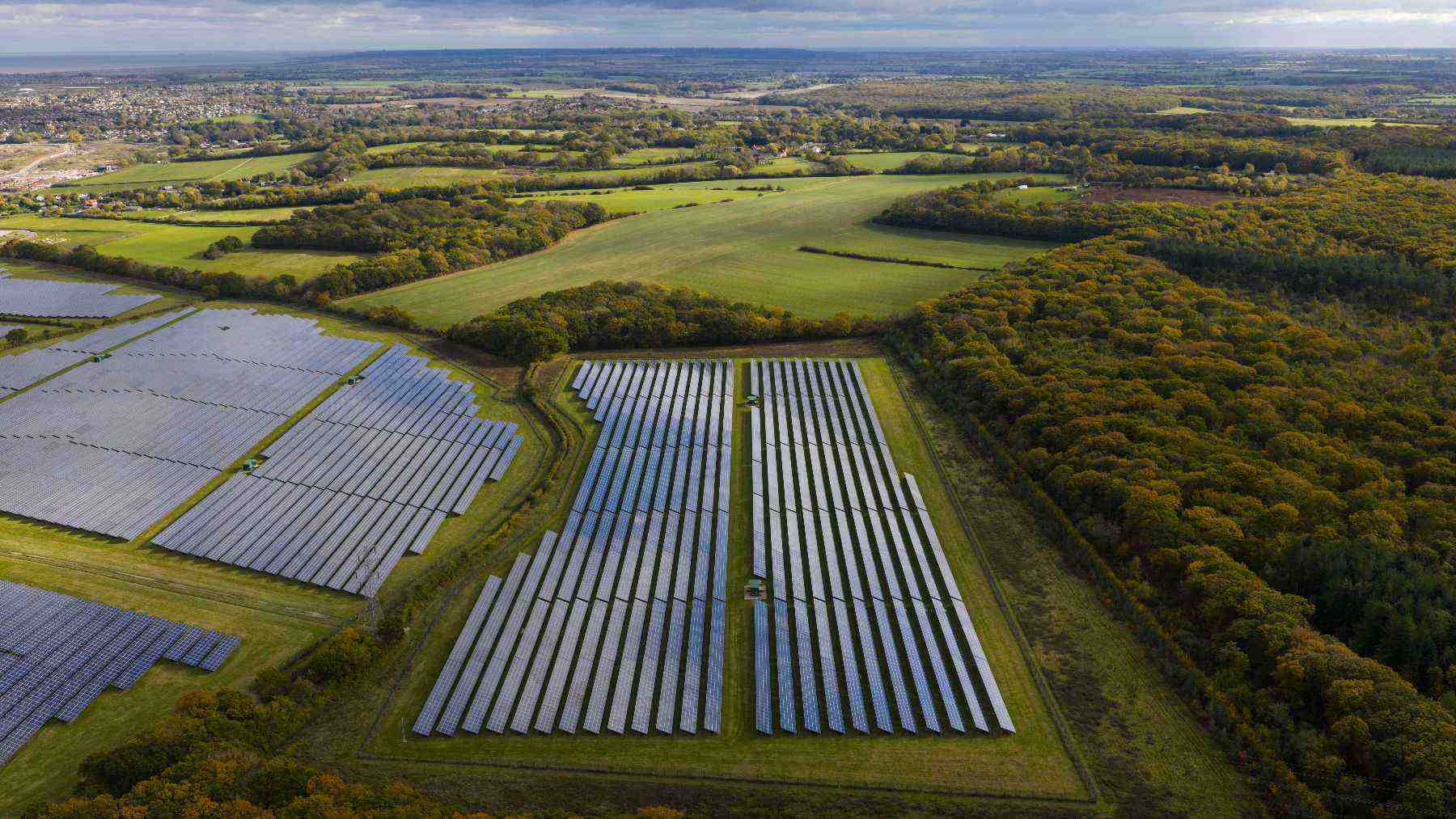
Spread across 55 hectares of Baden-Württemberg countryside, EnBW’s new Gundelsheim solar park looks like many others at first glance — 110,000 photovoltaic panels arranged in long, orderly rows. But walk the edges of the site and the picture shifts: wildflowers bloom in regional seed strips, a wide corridor of open land lets animals move freely through the landscape, and a restored fire pond quietly supports native plants and amphibians.
When EnBW CEO Georg Stamatelopoulos and Environment Minister Thekla Walker opened the 58-MW park together, the message was clear: Gundelsheim was designed to belong to its surroundings, not simply occupy them.
A solar park built around the land, not just on it
At 55 hectares and 110,000 PV modules, Gundelsheim is already the second-largest solar plant in Baden-Württemberg. That scale alone would make it noteworthy. But the site’s most deliberate design choices aren’t measured in megawatts.
What it reflects, though, is the broader philosophy at work here: energy infrastructure and natural habitat don’t have to compete for the same space.
The wildlife corridor running through the park is wide enough for animals to cross the entire site without obstruction. It’s not a token gesture — it’s a genuine passage through what would otherwise be an unbroken grid of panels, and it wasn’t tacked on at the end to satisfy a checklist.
Environmental associations were involved in planning from the start, shaping conservation measures alongside the energy infrastructure. The result is a site where ecological thinking influenced layout decisions, not just landscaping.
Wildflower and fallow strips run throughout the park, planted with seeds sourced from the local region. That specificity matters more than it might seem. Regionally native plants support the insects and pollinators that actually live nearby, rather than generic species that look green on paper. The old grasslands on the site were also preserved, maintaining habitats that took years to establish.
The fire pond that got a second life
Before EnBW arrived, the site already contained a fire pond — a small, utilitarian water feature designed for emergency use, not ecology. Functional, unremarkable, easy to overlook.
As part of the park’s development, the pond received an environmental upgrade. It now provides a functioning habitat for native plants and amphibians, with improved structure around its edges and margins.
That detail is easy to skip past in a press release, but it’s worth pausing on. A feature that existed purely for human safety has been quietly transformed into a living part of the landscape — without removing its original purpose. It’s a small thing. What it reflects, though, is the broader philosophy at work here: energy infrastructure and natural habitat don’t have to compete for the same space. Sometimes the infrastructure is already there, and the question is just whether anyone bothers to think about what else it could do.
The hybrid storage system hiding in plain sight
Alongside the solar panels, EnBW has installed an unusual battery storage system — one that combines two very different technologies in the same location.
Twelve used Audi e-tron electric vehicle batteries form the lithium-ion half of the system, well-suited to fast charging and discharging, making them useful for rapid grid response. The second component is a sodium-ion storage unit with a capacity of around 1 MWh — currently the largest installation of that technology in Europe. The two technologies complement each other rather than duplicate the same function.
Sodium-ion batteries offer stable, long-duration output and rely on raw materials that are widely available, unlike the lithium and cobalt required for conventional EV batteries. Fraunhofer ISE is developing the energy management system needed to coordinate them under real operating conditions, with the research project funded by Germany’s Federal Ministry for Economic Affairs and Energy. Together, the storage system delivers 1.22 MW of output and 2.25 MWh of total capacity.
Wind turbines, a shared substation and what comes next
The solar park is the first phase of something larger. Two wind turbines are planned for the same 64-hectare site, with the approval process already underway — and when complete, Gundelsheim will be a true multi-technology energy park, with solar, wind, and storage operating together in one location.
A shared substation for both solar and wind reduces grid connection costs compared to building separate infrastructure for each technology. That kind of efficiency matters when projects need to make financial sense at scale. Once fully operational, the park is expected to generate enough electricity annually for around 30,000 households. EnBW has described 2025 as a record year for its renewable expansion, both across Germany and specifically in Baden-Württemberg. Gundelsheim fits into that broader push, but it also stands apart from it.
A town that also benefits
The land at Gundelsheim belongs to the town itself. That means the municipality receives both rental income from EnBW and trade tax revenue from the park’s operation — a direct financial stake in a project built on its own ground.
That arrangement matters because the energy transition in Germany often plays out as something done to communities rather than with them. Gundelsheim offers a different model: local land ownership translating into ongoing local benefit. Minister Walker, who attended the opening, described the project as a template for efficient, multi-technology renewable development — combining solar, wind, and storage on a single site without duplicating infrastructure or ignoring the landscape.
The financial, ecological, and social dimensions of Gundelsheim all point in the same direction. It raises a question worth sitting with: if this kind of integrated thinking is possible here, why isn’t it standard practice everywhere else?
Kelly is an experienced writer with 15 years of experience exploring the big stories that shape our world, from tech breakthroughs and space exploration to climate, energy, and the fascinating quirks of science. She has a talent for turning complex ideas into sharp, memorable insights that stay with readers long after they’ve finished reading.
