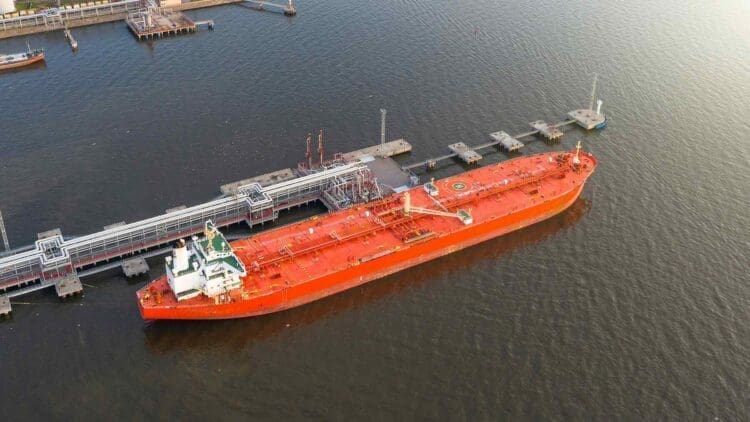

Crude extraction’s real test comes once steady daily production must meet tight schedules, narrow timing windows, and cross‑country crude movements. Hess Midstream’s 2026 guidance emphasizes maintaining consistent day‑to‑day flows, shifting focus away from growth for its own sake toward the often‑overlooked role of crude gathering and transportation in sustaining operations.
The quiet efforts behind every barrel
As pipelines, terminals, and standard handovers operate seamlessly, it is rare that the media reports disruptions in these areas unless a minor event causes a cascading effect that requires decisions. This is the reason why mid‑stream guidance, regardless of whether you evaluate the numbers or not, can be important, as it represents a measure of the expectation that operations should perform under tighter‑than‑normal conditions.
Performance in 2026 is expected to be based on maintaining a stable level of throughput, which is indicated by the flat levels of oil volumes expected for 2026 as compared to 2025 and modest increases in gas. Therefore, the value of the system is best represented by its ability to consistently produce uptime and minimize friction, while continuing to fulfill its contractual obligations without having to rely upon new construction activity.




This focus on performance is also reflected in the company’s capital expenditure plan. The guidance indicates that the company will have significantly lower capital expenditures in 2026 than was previously estimated. This reduction in planned spending supports the view that the build‑out phase has eased, with the system expected to rely more on operational discipline than on additional capacity additions going forward.
Where pressure will be felt most strongly
A fundamental reality for all mid‑stream operations is that “stability” does not necessarily mean “relaxed”. Under normal conditions, reliability becomes paramount when margins for error dwindle. It is within this framework that the guidance creates tension—creating questions regarding whether performance can remain sustainable as expansion slows while commercial expectations continue to increase.
Two elements of the guidance underscore this pressure. Hess Midstream forecasts approximately $150 million in capital expenditures in 2026, a material reduction from prior levels, alongside roughly $1 billion in adjusted free cash flow after distributions through 2028 to support returns and debt reduction.
Together, these signals create a trade‑off. Lower capital spending can improve cash generation and flexibility, but it also increases reliance on existing infrastructure to handle volumes efficiently. In practical terms, the burden shifts to execution: strong performance supports financial targets, while shortfalls leave limited room for compensation through additional build‑out.
What scaling looks like during this phase
In this phase, “scaling” is not defined by aggressive volume expansion. Rather, Hess Midstream forecasts approximately 1.5% annualized gas throughput volume growth and flat oil throughput volume levels from 2026 to 2028. The long‑term financial perspective ties this moderate growth trajectory to factors beyond rapid physical expansion.
To shareholders, the company forecasts annual distribution per Class A share growth of at least 5% through 2028, funded by adjusted free cash flow even at minimum volume commitment levels. This defines scaling in the current phase as transitioning a broad operating footprint into a steadier cash‑generating platform supported by predictable execution and declining capital intensity, rather than a new capital‑spending cycle.
The guidance also highlights financial strength, with leverage expected to fall below 3x adjusted EBITDA. Coupled with lower capital spending, this objective supports a similar underlying message: the narrative is not solely centered around transporting larger quantities of oil but instead centered around developing sufficient operational consistency so that returns can be sustained throughout the cycle.
Execution over expansion
Hess Midstream is treating its 2026 projections as a test of operational scale rather than a promise of renewed growth. The focus has shifted from expansion toward discipline and consistency in delivering returns across the system. In that context, execution becomes the factor that determines whether the strategy can endure through the cycle.