
How Bacteria Impacts the Oilfield Industry
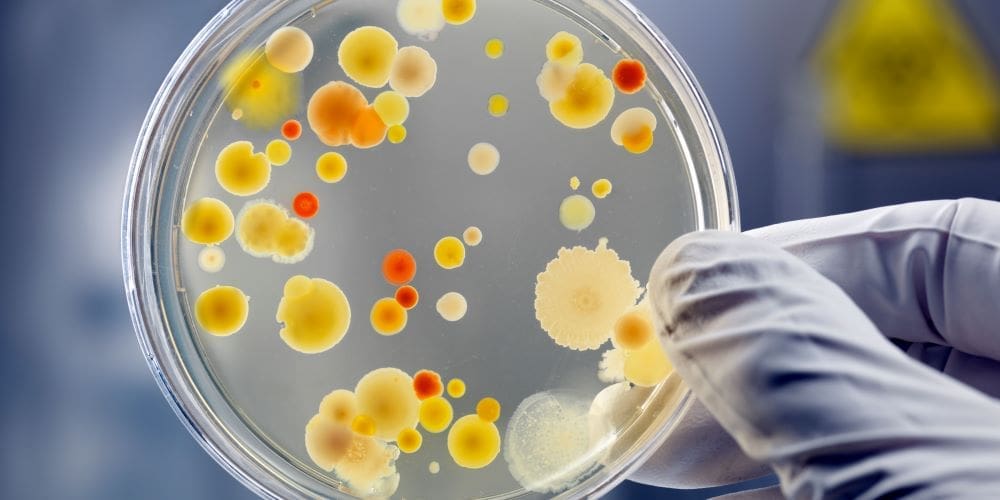
Bacteria can be found everywhere, even in the oilfields! While some bacteria can be useful for various applications, others are harmful, and especially in the oil and gas industry they create havoc by degrading the equipment and metal surfaces. Several bacteria cause corrosion which is responsible for almost $420m in losses every year. Around 70% of pipeline internal leaks are reportedly due to localized corrosion caused due to bacteria.
A variety of bacteria are lurking around the oilfields, mainly segregated into three types – Iron Reducing Bacteria (IRBs), Acid Producing Bacteria (APBs), and Sulfate Reducing Bacteria (SRBs). IRBs utilize the ferric or oxidized iron in their metabolic processes to produce reduced or ferrous iron. They are the primary reason for iron corrosion in the oilfields and cause machinery failures. APBs produce acids as a byproduct of their metabolism that cause severe damage when attached to metallic surfaces, which causes concrete structures to lose integrity, leading to accidents.
SRBs are anaerobic microorganisms that use the conversion of sulfate ions into hydrogen sulfide (H2S) as an energy source and can survive deep down the earth’s crust. H2S is a toxic gas that impacts the workers’ health. H2S when reacts with oxidizers causes fires and metal damage. When dissolved in water, H2S forms a weak acid that causes corrosion.
It helps to protect the metallic surface from corrosion by inactivating the bacteria and other microorganisms present on the metal surface, water, and other fluids.
There are several ways to prevent corrosion in the oil and gas industry. H2S scavengers are chemicals that are used to remove H2S from gas streams and wastewater. According to the Consegic Business Intelligence report, the hydrogen sulfide scavenger market is expected to reach about USD 1,688.21 Million by 2031 from USD 1,222.08 million in 2023. H2S scavengers are also used to eliminate odor emissions.
Glutaraldehyde is an organic compound that acts as a corrosion inhibitor in the oil and gas industry. It helps to protect the metallic surface from corrosion by inactivating the bacteria and other microorganisms present on the metal surface, water, and other fluids. Applying protective coatings between the environment and metal surfaces creates a barrier that restraints the growth of microorganisms, hence preventing corrosion. Carbon dioxide (CO2) is another major corroding agent in the oil and gas industry, which can be reduced by using a new way to capture carbon.
Biocides can also be used to prevent microbial-induced corrosion. However, biocides can be applied to specific problems caused due to microorganisms. Biocides must be applied in concentration on the location and with ample amount of time to have an effect of its chemical interaction to kill, inactive, or disable the microorganisms. Also, nitrate injection can be used to reduce H2S production by changing the formation of bacteria. However, continuous injection of nitrates can cause an increase in Nitrate Reducing Bacteria (NRBs).
Overall, bacteria cause machinery and equipment damage, metal corrosion, and produce harmful gases among others. Several ways to reduce or prevent corrosion include corrosion inhibitors, biocides, injections, coatings, etc. By reducing the impact of bacteria in the oil field industry, we can increase production and efficiency.
