
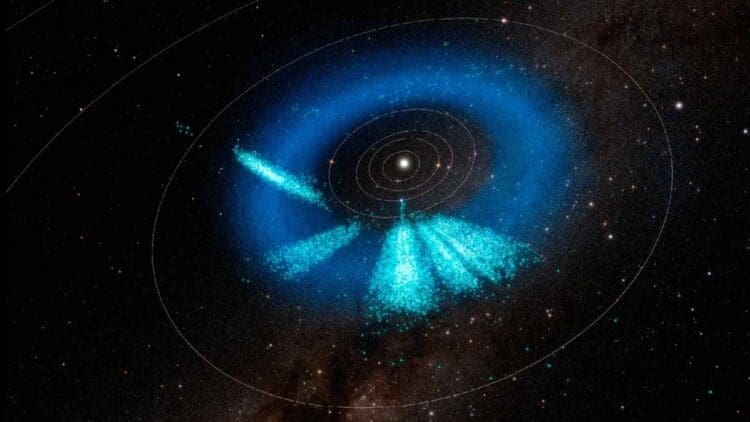

Asteroids have long been cast as the solar system’s buried treasure: metal-rich worlds packed with precious elements, some passing close enough to Earth to make them tempting targets for future mining missions.
But one of the most promising near-Earth candidates may be far less welcoming than it looks. Using one of the world’s most advanced high-speed optical instruments, researchers have clocked the asteroid spinning at an almost unbelievable rate — fast enough to make a safe landing virtually impossible, and possibly hinting at a wider problem among prime mining targets.
The promise of asteroid mining — and its rocky history
Space mining startups once spoke in terms of abundance that bordered on the fantastical. Companies like Planetary Resources and Deep Space Industries promised asteroid landings by 2020, describing off-world metal deposits that could dwarf anything buried in Earth’s crust. The pitch attracted serious investment — and serious credibility.


Neither company survived to see the decade out. Planetary Resources went bankrupt; Deep Space Industries pivoted away from its original mission. Their collapse became a cautionary note the field has never fully shaken.
Into that gap stepped Astroforge, one of the more persistent players in the space mining conversation. The company targeted asteroid 2022 OB5, drawn by two factors: it appeared to be metallic, and its orbital path made it relatively easy to reach. Astroforge claimed that mining a single metal-rich asteroid could supply Earth with precious metals for 200 years. Their first attempt to get a closer look ended badly — the Odin spacecraft, sent on a flyby mission to study 2022 OB5, lost contact with ground controllers shortly after launch and never delivered its data.
A telescope built for speed captures something unexpected
The new study didn’t begin as an investigation into space mining at all. Researchers primarily wanted to test HiPERCAM, a high-speed optical camera mounted on the 10.4-meter Gran Telescopio Canarias in La Palma, Spain. The instrument can capture more than 1,000 frames per second across five simultaneous color channels spanning the full optical spectrum.
Asteroids present a practical challenge for ground-based observers: they’re faint, they move, and observation windows are often narrow. HiPERCAM’s ability to measure both rotation rate and surface composition simultaneously made it well-suited to the task. As lead researcher Miguel R. Alarcon explained, there’s often simply not enough time to do both sequentially. That 2022 OB5 had been selected by Astroforge — and might be metallic — made it a more interesting test subject, though Alarcon was clear that demonstrating the instrument’s capabilities was the primary goal.
The team’s surface analysis placed 2022 OB5 within the “X-complex” taxonomy group. That classification lends some weight to the idea that the asteroid is metallic, but stops well short of confirming it.
One rotation every 92 seconds — and what that really means
The rotation measurement was where things got striking. The study, published in Icarus, found that 2022 OB5 completes a full rotation once every 1.542 minutes — roughly 92 seconds — earning it the classification of “ultra-fast rotator.”
That number carries real physical consequences. At that spin rate, centrifugal acceleration at the asteroid’s equator runs nearly 100 times greater than the surface gravity that would otherwise hold a lander in place. A spacecraft attempting to touch down wouldn’t simply struggle to grip the surface — it could rebound and be flung back into space entirely.
“A spacecraft trying to land or anchor itself would have an extremely difficult time remaining attached,” Alarcon told New Atlas. Without a highly sophisticated anchoring system, surface operations would likely be impossible. The broader implication he drew is pointed: orbital accessibility isn’t enough. Knowing how to reach an asteroid is a different problem from knowing whether you can do anything once you get there, and determining the rotation state, he argued, has to be part of any realistic mission assessment.
A wider pattern among the most reachable targets
The finding about 2022 OB5 alone would be notable. The study’s wider conclusion is more troubling for the industry.
Ultra-fast rotation appears to be common among the smallest and most energetically accessible near-Earth asteroids — not an anomaly specific to this one target. The asteroids easiest to reach on paper may, as a class, be among the hardest to physically operate on.
This creates a structural problem for space mining business cases. Most have prioritized low delta-v targets — objects reachable with minimal fuel — without fully accounting for actual surface conditions. If rapid spin rates are widespread among those targets, the calculus changes considerably.
Astroforge’s response — and what comes next
Astroforge CEO Matt Gialich pushed back on the concern. He argued that the company’s anchoring approach — using magnetism rather than mechanical gripping — can generate attachment force well in excess of the centrifugal forces involved. The spin rate, in his framing, is a solvable engineering problem.
The company is pressing ahead with a landing mission called DeepSpace-2, planned for later this year. Whether 2022 OB5 remains the specific target is unclear. Gialich noted that Astroforge is characterizing many candidate asteroids using Earth-based telescopes, suggesting flexibility on which rock it ultimately approaches.
DeepSpace-2 will be the most direct test yet of whether those engineering claims hold up against physical reality. If magnetic anchoring works as described, it could reframe the rotation problem as manageable. If it doesn’t, the study’s findings will carry considerably more weight — and the industry’s list of viable targets may turn out to be shorter than anyone has publicly acknowledged.

Carlos is an engineer with strong expertise in technical and industrial topics. He previously worked at international companies such as Siemens and speaks Spanish, German, English, and Italian.