
Kazakhstan officially partners with Russia to build new nuclear power plant
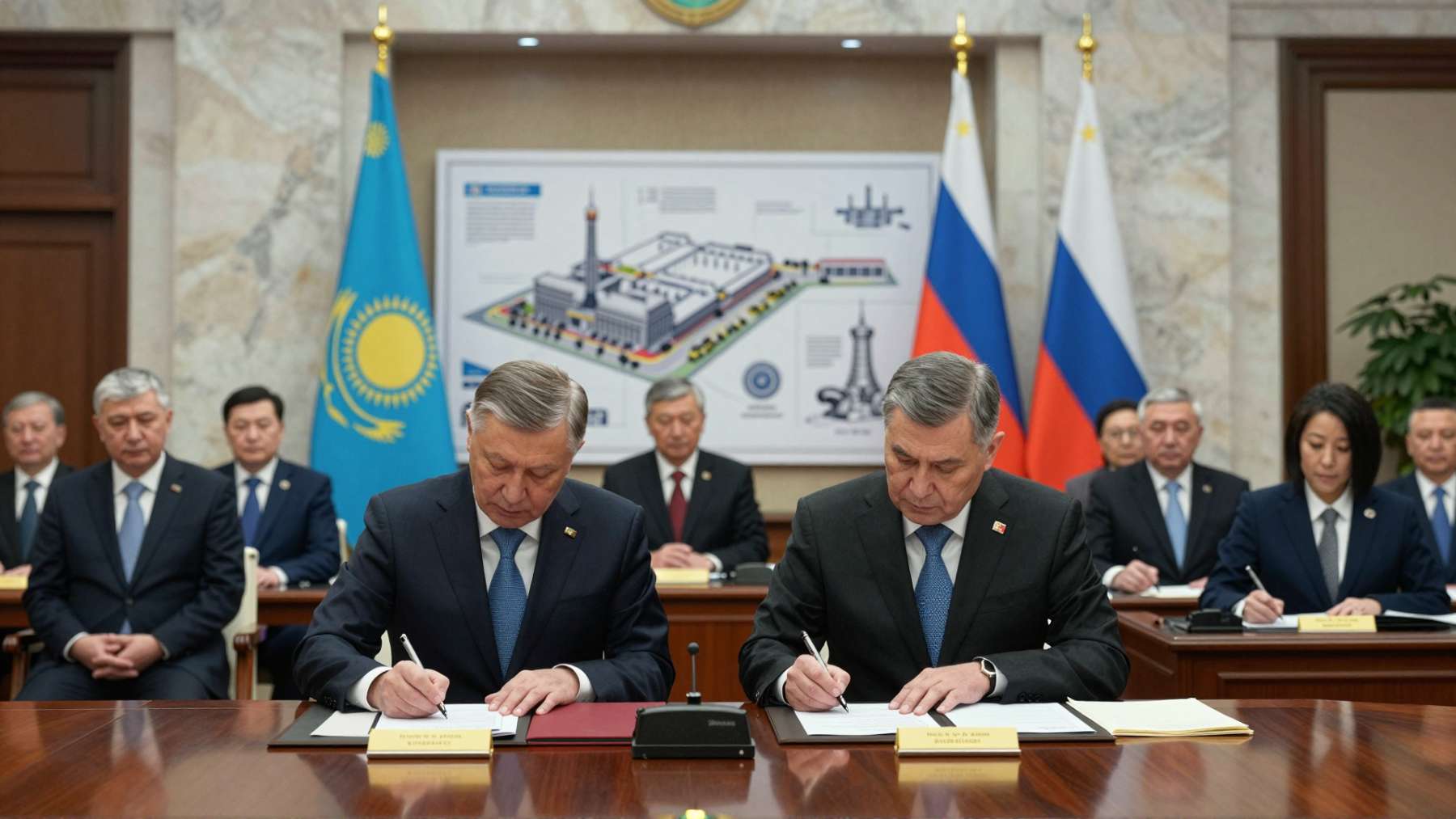
Kazakhstan announced last week that it has officially partnered with Russia to develop a new nuclear power plant — formalizing agreements on a project Russia had already been quietly advancing. The two neighboring countries had been engaged in extensive preliminary work before the partnership was made official.
Kazakhstan formalizes nuclear partnership with Russia
Kazakhstan’s announcement last week confirmed what had been developing quietly for some time. The country has officially partnered with Russia to build a new nuclear power plant, signing agreements that formalize a relationship already in motion. This is not a project starting from scratch — Russia had been conducting extensive preliminary work before any formal partnership existed.
The announcement marks a meaningful transition. Signed agreements signal that both governments are now committed to advancing the project through its next phases, and for Kazakhstan, this represents a concrete step toward establishing domestic nuclear power generation.
Across the world, interest in nuclear energy appears to be growing, and the formalization of this partnership fits into a broader pattern of international momentum.
Russia shares a northern border with Kazakhstan. That proximity had already facilitated early collaboration on the project well before the formal agreements were announced.
Why Russia was already involved before the formal deal
It is not unusual for a country with established nuclear expertise to begin technical groundwork before a partnership is officially signed. Russia, through its state nuclear energy corporation Rosatom, has developed nuclear plants in several countries and routinely conducts site assessments and feasibility studies during early-stage discussions.
In Kazakhstan’s case, Russia was already engaged in extensive preliminary work prior to the new agreements. This kind of early involvement reflects both the technical complexity of nuclear development and the depth of the existing relationship between the two states. Sharing a long border, the two countries have maintained close economic and political ties, which likely made informal coordination on a project of this scale easier to initiate.
The formal agreements now convert that early engagement into a committed development phase. Once agreements are signed, project timelines, responsibilities, and financial arrangements typically become more defined — both countries have moved well beyond the exploratory stage.
What the partnership means for Kazakhstan’s energy plans
Kazakhstan joining a formal nuclear partnership places it among a growing group of countries actively working to build or expand nuclear capacity. The deal is not simply a diplomatic gesture. It represents a practical commitment to developing operational nuclear power generation within the country.
Nuclear energy requires years of planning, regulatory development, and construction before a plant produces electricity. By formalizing this partnership now, Kazakhstan is positioning itself to move through those stages with a partner that brings established expertise. The specifics — including the plant’s capacity, exact location, and projected timeline — have not yet been fully detailed in available reporting.
What is already clear is that Kazakhstan views nuclear power as part of its longer-term energy strategy. Partnering with a country that has decades of nuclear development experience reflects a deliberate choice about how to pursue that goal.
Global nuclear expansion provides broader context
Kazakhstan’s announcement does not exist in isolation. Across the world, interest in nuclear energy appears to be growing, and the formalization of this partnership fits into a broader pattern of international momentum.
Currently, 34 countries have operational nuclear power plants. That number has remained relatively stable for years, but what is changing is how many countries are actively working to join that group — dozens of additional nations are now pursuing new nuclear plant projects at various stages of development.
Progress on these projects is rarely linear. Development timelines shift, financing arrangements evolve, and regulatory processes take time. Recent reporting broadly suggests that momentum on the international stage is building rather than stalling, driven by energy security concerns, pressure to reduce carbon emissions, and advances in reactor technology that have prompted a reassessment of nuclear power in countries that had previously been cautious.
Russia has positioned itself as a key partner for countries seeking to enter nuclear power for the first time or expand existing capacity. Kazakhstan’s partnership is one example of that dynamic playing out in practice.
Key takeaways
Kazakhstan has officially signed agreements with Russia to develop a new nuclear power plant, formalizing a project Russia had already been advancing through extensive preliminary work. The two countries share a northern border, and that geographic proximity had facilitated early collaboration before the formal partnership was announced.
The deal places Kazakhstan among dozens of countries currently working toward new or expanded nuclear capacity, alongside the 34 nations that already operate nuclear plants. Broader international momentum for nuclear energy development appears to be increasing. Specific details about the plant’s capacity, location, and construction timeline are expected to emerge as the project moves forward.

Carlos is an engineer with strong expertise in technical and industrial topics. He previously worked at international companies such as Siemens and is multilingual.
