
Sandia National Laboratories develops microwave process to upcycle spent lithium-ion battery cathodes into new domestic supply of critical materials
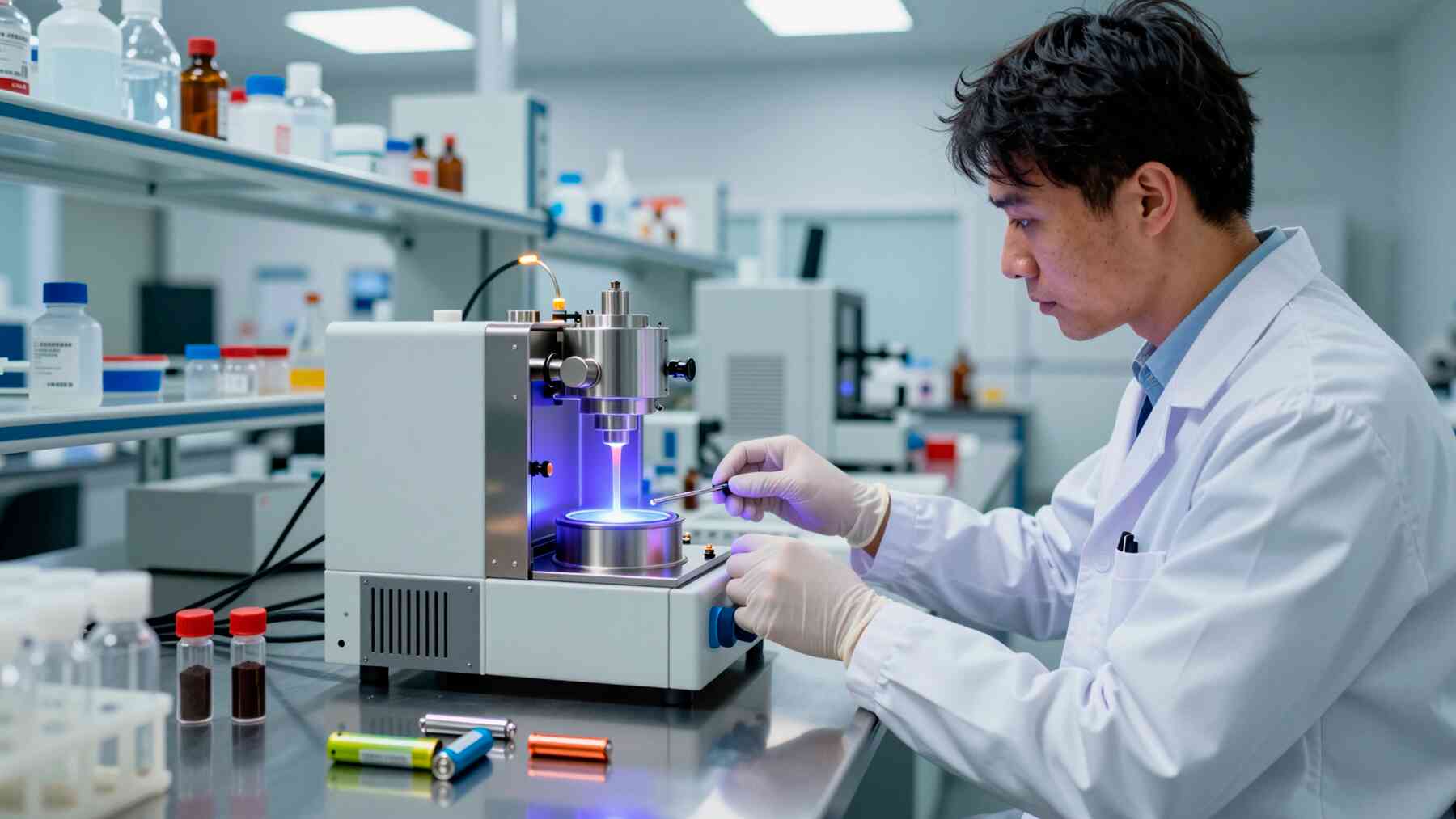 AI-made
Researchers at Sandia National Laboratories have developed a microwave-based process to recover cathodes from spent lithium-ion batteries and remake them into new ones that meet current industry standards—using less energy and a fraction of the time required by conventional methods.
The advance carries implications beyond the lab. Battery cathodes depend on minerals like cobalt and lithium sourced from a small number of countries, leaving U.S. manufacturers exposed to fragile supply chains. Sandia’s approach aims to turn the coming wave of retired electric vehicle batteries into a domestic source of those critical materials.
Sandia Team Develops Microwave Upcycling Method for Battery Cathodes
Sandia’s researchers built their process around a microwave reactor—comparable in size and power to a household oven but more adjustable. The device uses a large positively charged ion, similar to the active ingredient in hair conditioner, to break old cathode powder into thin layers called nanosheets. What emerges is a material that can be chemically updated to meet current manufacturing standards, not simply cleaned and reused.
Sandia’s approach differs from work underway at Argonne’s ReCell Center, which uses high-temperature processes similar to original cathode manufacturing.
The method does more than recycle. It upcycles—transforming spent cathode material into new cathodes that match what the auto and electronics industries require today. Sandia has filed two patents on the technology and submitted it to the R&D 100 Awards this year. Compared to conventional high-temperature furnace approaches, the microwave process requires less energy and significantly less time, which is central to the team’s argument for commercial adoption.
Why Battery Cathode Recycling Is a Supply Chain Priority
Lithium-ion battery cathodes depend on critical minerals—particularly cobalt and lithium—sourced from a narrow set of countries. The Democratic Republic of the Congo alone supplies roughly 70% of the world’s cobalt, a concentration that creates genuine vulnerability for U.S. manufacturers.
As electric vehicles age and retire, a growing volume of spent battery packs will need somewhere to go. That accumulation represents a potential domestic source of the same critical minerals currently imported from abroad. Existing recycling methods add another complication: they cannot easily update cathode chemistry to reflect how the industry has evolved. A cathode made 10 to 15 years ago was built to different specifications than what automakers prefer today, and standard recycling returns old material, not updated material.
How the Microwave Process Works
The microwave reactor converts old cathode powder into nanosheets with notable efficiency—95% of the input material becomes nanosheets, up from 60% with earlier approaches. Processing time drops from seven days to two hours.
Nanosheets matter because they expose the entire material surface to ion exchange. That allows researchers to substitute some of the expensive cobalt with cheaper nickel, a swap the auto industry has already embraced for improved cathode performance. The exchange happens throughout the whole material, not just at the surface. Microscopic defects that accumulate during years of battery use are also repaired, and impurities are removed—steps that conventional recycling methods cannot address without many additional procedures.
The cobalt displaced during nickel substitution is not discarded. A metal-organic framework developed by Sandia geochemist Anastasia Ilgen selectively captures it from the reaction mixture. That recovered cobalt can produce an additional cathode, effectively yielding two new cathodes from a single spent one.
Economic Potential and Path to Commercialization
Preliminary economic modeling, using a tool developed by Argonne National Laboratory, suggests the Sandia method could increase cathode recycling profits by at least 30% compared to current state-of-the-art recycling approaches. The figure is preliminary; a full technoeconomic analysis is still underway.
In spring 2025, the team participated in the DOE Energy I-Corps program, interviewing 80 industry leaders in battery recycling to assess market fit and understand the challenges companies face. They are now actively seeking partners for licensing agreements, cooperative research arrangements, and Technology Commercialization Fund proposals. One challenge looms over all of it: recycled cathodes must be cost-competitive with imported cathode materials to gain any real traction.
Broader Applications and Ongoing Research
The microwave upcycling method is not limited to lithium-ion batteries. Researchers say it could extend to sodium-ion and zinc-ion chemistries, provided the cathode material is a layered intercalation compound.
Sandia’s approach differs from work underway at Argonne’s ReCell Center, which uses high-temperature processes similar to original cathode manufacturing. The low-temperature method avoids that energy cost entirely. Funding came from Sandia’s Laboratory Directed Research and Development program, with technology development supported by Energy I-Corps. The team continues refining ion exchange efficiency while working toward a complete technoeconomic analysis—and the central question of whether this scales commercially still hinges on closing the cost gap with imported materials.
Kelly is an experienced writer with 15 years of experience exploring the big stories that shape our world, from tech breakthroughs and space exploration to climate, energy, and the fascinating quirks of science. She has a talent for turning complex ideas into sharp, memorable insights that stay with readers long after they’ve finished reading.
