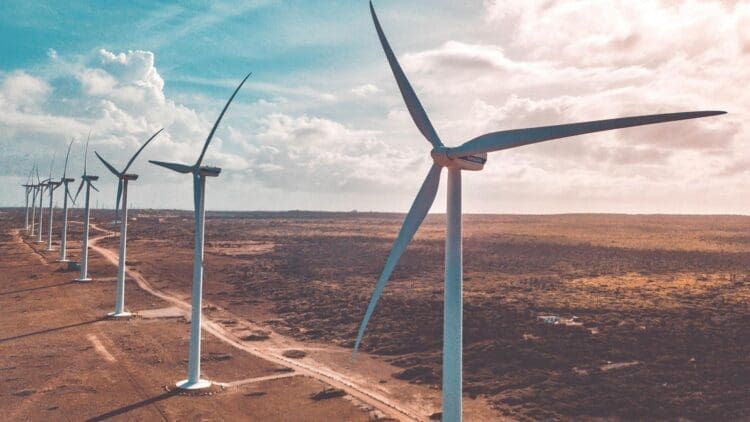

Every night at wind farms across Europe, bats fly through the dark in the path of spinning turbine blades — and many don’t survive the encounter. The scale of the problem has long frustrated both conservationists and the wind energy industry, which faces mounting legal pressure to protect bat populations under European and Spanish wildlife regulations.
For years, the available solutions — lights, ultrasound emitters — offered only partial answers. Now, after more than six months of field trials, a Spanish technology company says it has developed a detection system that delivers results no previous approach has matched.
A deadly blind spot in the green energy transition
Wind energy’s rapid expansion across Europe has brought a growing reckoning over its effects on protected wildlife. Bats — classified under the order Chiroptera — are among the most affected. They navigate by echolocation, not vision, which offers no protection against a spinning turbine blade. Their ecological role is substantial: bats suppress insect populations, pollinate plants, and serve as indicators of broader ecosystem health. Losing them at scale is not a minor side effect of the clean energy transition.




European and Spanish legislation takes this seriously. Regulations require wind farm operators to halt turbines that record high collision rates involving protected species — bats included. That creates a compliance burden for operators and, in theory, a strong incentive to find systems that actually work.
The problem is that existing deterrents haven’t delivered consistent results. Lights and ultrasound emitters — the two most widely deployed approaches — show limited reliability when weather changes, visibility drops, or conditions vary across sites. They represent a first generation of solutions built before better tools existed. That gap left the industry in an uncomfortable position: legally obligated to protect bats, but without technology capable of reliably doing so.
How BatMonitor works: heat, algorithms, and split-second decisions
Minsait’s BatMonitor addresses the reliability problem at its root by abandoning visible-light detection entirely. The system uses thermal cameras that capture body temperature and emissivity — a measure of an object’s ability to emit radiant energy. A bat in flight produces a distinct thermal signature, detectable in complete darkness, through fog, or under artificial light, making weather conditions and visibility largely irrelevant where earlier systems had failed.
Artificial intelligence operates across two distinct phases. In the first, the system performs real-time image analysis, scanning for the movement patterns and body contours characteristic of bat flight. When the algorithm confirms a detection, it triggers an automatic response — sending an alert to software called Babel, also developed by Minsait, which then issues a stop command to the turbine’s control system.
Babel’s role is easy to underestimate but practically essential. Wind farms run on a variety of SCADA (Supervisory Control and Data Acquisition) systems, and different turbine manufacturers use different control protocols. Babel acts as a universal translator, interpreting those varying protocols so that BatMonitor can function across turbine types without custom integration at every site.
The system also generates a complete record of every detection, every shutdown, and the associated video footage — an audit trail that gives operators documented evidence of compliance with regulatory requirements for bat protection.
85% fewer bat deaths — and turbines that stay running longer
After more than six months of field trials conducted across different seasons, BatMonitor’s results are notable. According to Minsait, the system achieved an 85% reduction in bat mortality at tested wind farm sites. The trials were designed to evaluate performance under varying real-world conditions, and the company reports high detection accuracy throughout.
That accuracy carries a second-order benefit that matters considerably to operators. Conventional approaches often rely on blanket preventive shutdowns — stopping turbines during periods when bats are likely to be present, regardless of whether any are actually detected nearby. BatMonitor only stops a turbine when its sensors confirm a bat in the vicinity, which means more time generating electricity and improved overall energy availability.
High detection precision also means fewer false positives. An unreliable system that triggers shutdowns on insects, birds, or sensor noise erodes operator confidence and increases downtime without any conservation benefit. Minsait’s results suggest BatMonitor avoids that failure mode.
The findings were presented at WindEurope’s annual event in Madrid, held April 21–23. The conference brought together more than 500 companies and 16,000 professionals from across the onshore and offshore wind industry — a significant venue for a technology making its case to the sector it aims to serve.
From bats to birds: a broader vision for wildlife-safe wind energy
BatMonitor doesn’t exist in isolation. It builds on an earlier Minsait system designed to protect birds — a different challenge requiring different tools. That bird protection system uses 3D radar to detect avian presence in the airspace around a wind farm, monitoring flight trajectories continuously, 365 days a year, regardless of visibility conditions. Once a bird is confirmed, computer vision identifies the species using ornithological classification criteria, and the algorithm calculates probable approach trajectories before autonomously triggering turbine stops only for animals on high-risk collision paths.
According to Minsait, that system can prevent up to 80% of collisions involving protected bird species, with results trending toward zero. Wind farm operators also gain access to monitoring dashboards with quantifiable metrics, graphs, and video records of bird activity and turbine interactions.
Together, the two systems suggest a maturing toolkit for wildlife-compatible wind energy. Thermal cameras for bats, 3D radar for birds — each tailored to the sensory and behavioral profile of the species it protects. Babel’s cross-platform compatibility means both could potentially be deployed at the same site without redundant integration work.
The broader trajectory is worth watching. As Europe continues scaling up wind capacity to meet its climate targets, regulatory pressure on biodiversity impacts is unlikely to ease. If AI-driven wildlife monitoring can demonstrate consistent field results — as BatMonitor’s six-month trial suggests is achievable — these systems may shift from voluntary innovation to baseline regulatory expectation. For the wind industry, that would reframe wildlife protection not as a constraint on expansion, but as a technical problem with a measurable, deployable solution.