
Minsait’s thermal camera system slashed bat deaths at wind farms by 85% while keeping turbines running longer
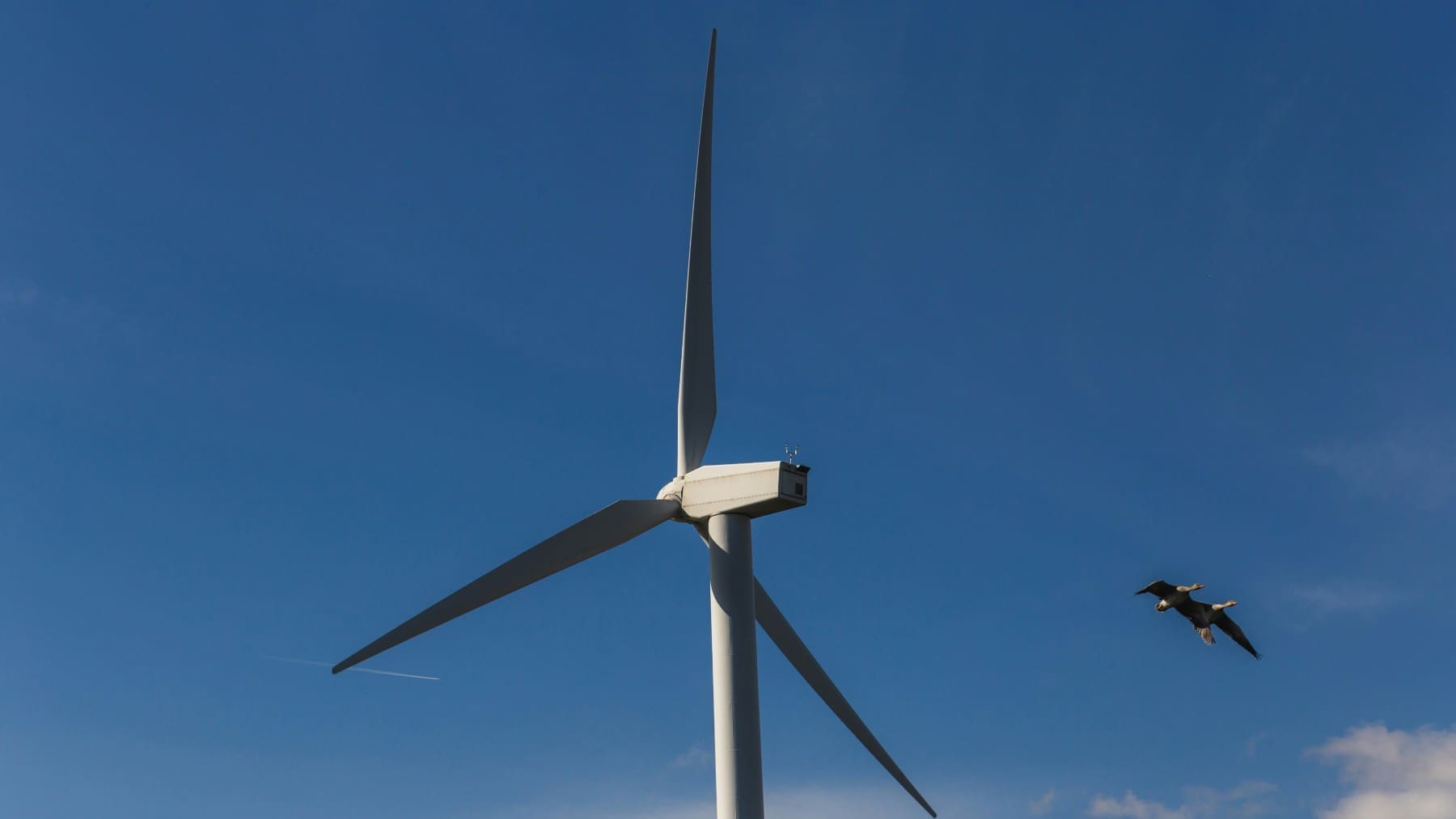
Wind turbines are one of clean energy’s most visible symbols — and one of wildlife conservation’s more complicated problems. Across Europe, spinning blades kill thousands of bats each year, a protected species whose role in controlling insects and pollinating crops makes their decline a measurable ecological risk. Regulators on both sides of the Atlantic have taken notice, requiring wind operators to document collisions and, in some cases, shut turbines down.
At WindEurope’s annual summit in Madrid — where more than 500 companies and 16,000 industry professionals gathered in late April — Spanish tech firm Minsait presented a system it says fundamentally expands what’s technically achievable.
A collision course between clean energy and wildlife
Bats occupy an awkward position in European environmental law: fully protected under both EU and Spanish legislation, yet routinely killed by the infrastructure being built to fight climate change. Wind turbines pose a documented lethal risk, striking bats during nocturnal foraging flights. The ecological stakes are concrete — bats suppress insect populations and support pollination cycles, so their decline creates problems that reach well beyond conservation circles.
Rather than emitting light or sound, its thermal cameras passively capture body temperature and emissivity — the capacity of a living body to radiate energy.
Previous mitigation efforts have relied on lights and ultrasound deterrents, and both share a critical weakness: performance degrades in adverse weather, low visibility, or glare — precisely the conditions in which bats are most active and hardest to track. That gap leaves wind operators caught between regulatory pressure to protect species and the operational reality that broad preventive shutdowns reduce energy output and cut into revenue.
BatMonitor: how thermal vision and AI stop turbines before bats get close
BatMonitor, Minsait’s response to this problem, works on a different physical principle. Rather than emitting light or sound, its thermal cameras passively capture body temperature and emissivity — the capacity of a living body to radiate energy. That signature stays detectable at night, in fog, and under strong artificial light: conditions that render conventional systems unreliable. The result is a sensor layer that doesn’t lose effectiveness when the environment turns difficult.
Artificial intelligence processes the thermal imagery in two sequential stages. The system first analyzes the live feed in real time, scanning for movement patterns and animal contours consistent with bat flight. When the algorithm registers a confirmed detection, it moves to stage two: automatically issuing a stop command through a software layer Minsait calls Babel.
Babel’s function is essentially translation. Wind farms run on a range of control protocols and SCADA systems depending on turbine manufacturer and installation age. Babel interprets those different technical languages and routes the shutdown command appropriately — making BatMonitor turbine-agnostic and deployable across mixed fleets without custom integration work for each individual unit.
An 85% reduction — and fewer unnecessary shutdowns
The headline figure comes from more than six months of field testing conducted across different seasons, exposing the system to the full range of conditions a working wind farm actually encounters. Across those trials, BatMonitor demonstrated an 85% reduction in bat mortality — an outcome that improves on what light- and ultrasound-based systems have historically achieved.
Equally significant is what the system avoids doing. Because detection is precise rather than precautionary, turbines stop only when a bat is genuinely at risk. That specificity eliminates the broad preventive shutdowns that have long been the default risk-management approach — shutdowns that protect wildlife in theory while reducing a turbine’s availability for power generation in practice. Minsait’s developers argue this dual benefit resolves a trade-off the industry has accepted as unavoidable.
The system also generates a continuous audit trail. Detection events, stop commands, and associated video footage are all logged, giving operators documented evidence for environmental compliance reviews. Under European and Spanish legislation, demonstrating active protection measures for bat species is a regulatory requirement, and quantifiable records carry real weight in that process.
Birds were first — bats are next in a broader wildlife protection strategy
BatMonitor didn’t emerge in isolation. Minsait developed an earlier system targeting bird collisions, which uses 3D radar to monitor flight trajectories across a wind farm’s airspace around the clock. Once a bird is detected, computer vision applies ornithological classification criteria to identify the species, then an algorithm projects possible approach paths before autonomously issuing stop alerts to turbines at elevated collision risk. That system has demonstrated the capacity to prevent up to 80% of protected bird collisions, with performance trending toward zero.
Together, the two platforms outline a broader strategy: technology-driven coexistence between wind energy infrastructure and the wildlife it intersects with. Operators using either system gain monitoring dashboards with quantifiable metrics, charts, and video records that support ongoing studies of species interaction at specific sites.
The key question going forward is whether results at scale match the field-trial numbers, and whether regulators begin formally recognizing AI-based detection systems as compliance-grade mitigation tools. If they do, the economics of wildlife protection at wind farms could shift considerably — moving systems like BatMonitor from competitive differentiator to industry baseline.
Daniel García is an Editor-in-Chief with strong expertise in structural work and engineering principles. He combines this technical foundation with deep knowledge of energy, spatial design, and emerging technologies, bringing a forward-thinking and analytical approach to editorial leadership.
