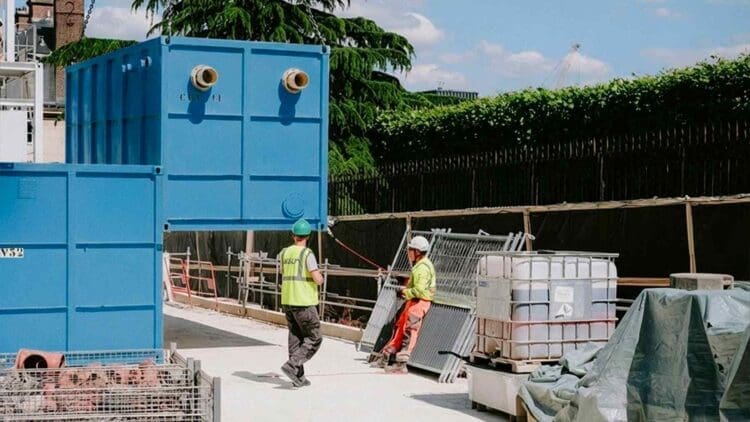

The latest company to pursue a captivating initiative is Nel ASA, which recently secured a $7 million contract to supply PEM electrolyzer equipment for U.S. deployment. The hydrogen landscape is rapidly moving away from the conventional approaches of executing energy initiatives and generating hydrogen in general. A key reason for this is not just the availability of technological innovation or scientific expertise but it is largely because of the willingness of companies to invest millions of dollars into projects. There is also an emergence of companies that are looking to benefit from the viability of the energy source.
Assessing Nel ASA’s contribution to the United States’ hydrogen energy landscape
Nel ASA is one of the veteran companies in the hydrogen industry, as it has a history dating back to 1927. For it to be still relevant in the modern landscape is a testament to the company’s ability to adapt and adopt modern energy generation strategies. Nel ASA specializes in PEM and Alkaline electrolyzer technology for the production of renewable hydrogen.
It has shown a good ability to decarbonize various industries such as transportation, refining, steel, and ammonia. In a display of commitment and dedication to maintaining its momentum, Nel ASA has landed another important order in the fast-growing green hydrogen market, securing a $7 million contract to supply proton exchange membrane (PEM) electrolyzer equipment for deployment in the United States.




The project underscores the rising role of hydrogen in grid management and industrial decarbonization. It also highlights the increasing willingness of U.S. utilities to invest in renewable hydrogen infrastructure. For Nel, the agreement amplifies or strengthens its grip in one of the world’s most promising hydrogen markets.
Analyzing the $7 million contract to supply PEM electrolyzer equipment
There has been an ongoing trend in the 2026 energy landscape where companies are investing massive amounts of money. This demonstrates the urgency to meet energy objectives. In this instance, the order was placed by the Douglas County Public Utility District (DCPUD) in East Wenatchee, Washington.
The utility will use Nel’s PEM electrolyzer technology to produce green hydrogen using renewable electricity generated from its hydroelectric assets. This represents a unique milestone for Nel, as it is officially the first green hydrogen plant the company has sold that will be owned and operated by a public utility.
DCPUD has been a pioneer in advancing hydrogen adoption in Washington State. The utility played a key role in influencing legislation that allows public utilities to produce and market renewable hydrogen. This was and continues to be integral to the projects that are able to materialize according to plan in 2026. By investing in electrolyzer infrastructure, DCPUD is positioning itself as a leader of the clean energy transition.
Understanding what the $7 million contract achieved for the company
There is great optimism and excitement as to what the agreement might signal for future hydrogen initiatives. Nel’s Chief Commercial Officer, Todd Cartwright, said the following:
“We are excited to work with a visionary customer like DCPUD, as this will be the first green hydrogen plant we have sold that will be owned and operated by a public utility. “The flexible operation of our PEM electrolyzers is enabling the district to balance load with demand.”
PEM electrolyzers are gaining more value and significance mainly because of their rapid response and operational flexibility. Unlike traditional industrial loads, these systems can quickly amplify production up or down, making them appropriate for managing intermittent renewable energy sources like solar and wind.
Could Nel ASA manage to transform the United States’ future hydrogen production?
In DCPUD’s case, the electrolyzer will absorb excess electricity from the Wells Hydroelectric Project during periods of low demand. Ramping turbines up and down typically increases mechanical wear and maintenance costs, so the utility will avoid this by diverting surplus power into hydrogen production.
The hydrogen produced is useful across multiple sectors such as transportation, industrial applications, and energy storage. The contract adds to Nel’s growing momentum in North America.