
Offshore wind platforms are getting bigger than anyone expected, and a quiet Baltic Sea shipyard just became the center of it all
 AI-made
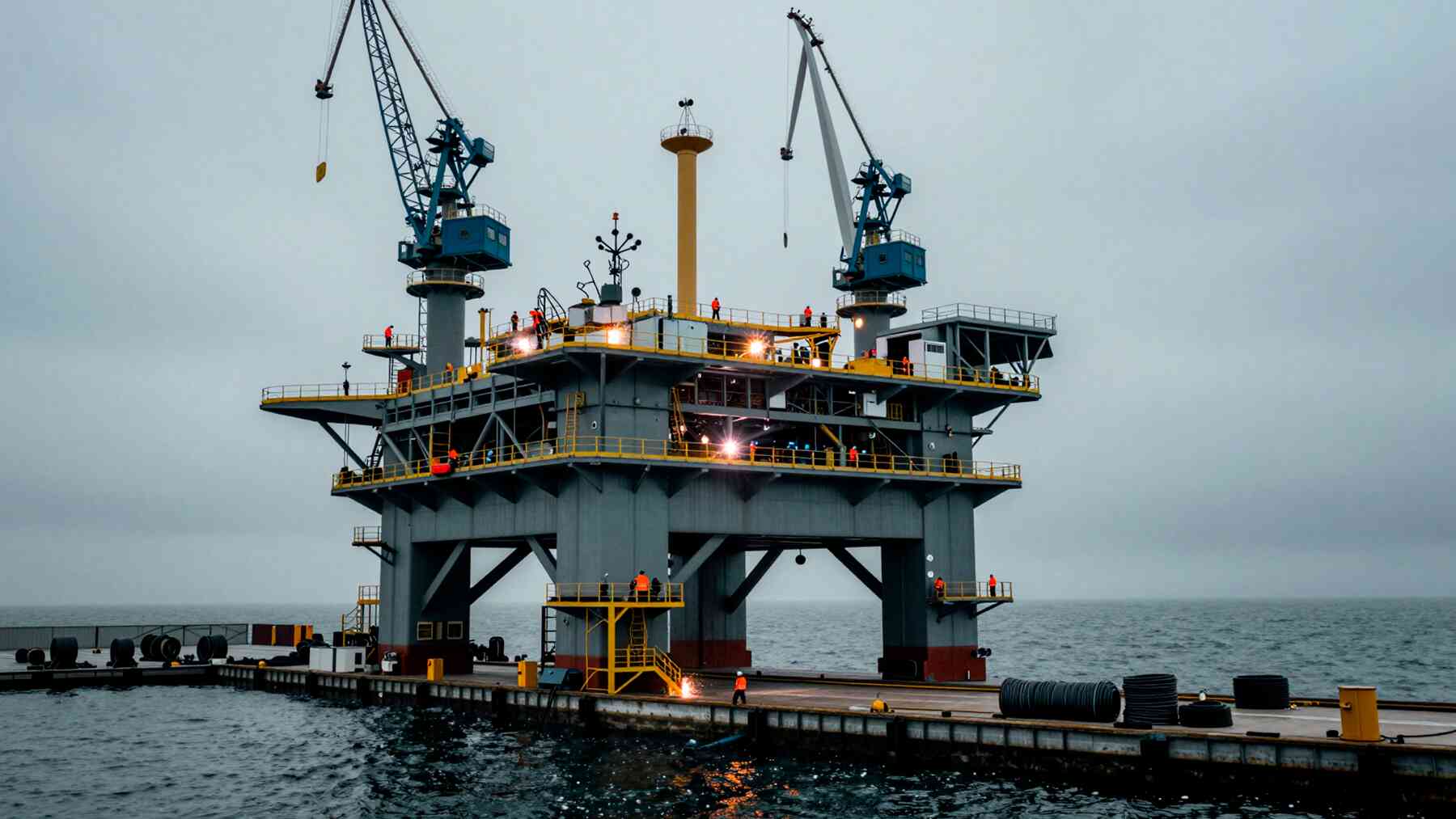
At a shipyard on Germany’s Baltic Sea coast, something larger than usual is taking shape. The Neptun wharf in Rostock—better known for building ferries and research vessels—is preparing to host construction of an offshore converter platform in the 2GW-plus category, a scale that would have seemed ambitious just a few years ago.
It is a quiet but telling signal. Germany’s offshore wind sector is not just growing — it is graduating to a new class of infrastructure, and the contracts that define it are starting to land closer to home.
A new scale of ambition for offshore wind
Offshore converter platforms are the unsung workhorses of wind energy transmission. They sit in the middle of the sea, collecting high-voltage direct current from wind turbines and converting it so electricity can travel efficiently to shore. The bigger the platform’s capacity, the more power it can handle — and the fewer platforms you need to serve a given wind farm cluster.
The Rostock shipyard’s history with complex marine vessels gives it the heavy-lift infrastructure and skilled workforce a project of this scale demands.
Europe’s offshore wind sector is moving toward platforms in the 2GW-plus category, pushed by the scale of new wind farm developments and the need to move more electricity through fewer, more powerful connections. What once represented an engineering stretch is quickly becoming the new baseline. Earlier converter rigs operated at lower capacity thresholds—the jump to 2 GW-plus is not incremental. It represents a meaningful redesign of how offshore grids are planned and built.
Siemens Energy and Smulders: the partnership behind the platform
Siemens Energy, the German energy technology company, has won the contract from grid operator 50Hertz to deliver the new offshore converter platform. Its partner is Smulders, a Belgian steel fabricator with deep experience in large offshore structures, operating via a dedicated joint venture called Neptun Smulders Offshore Renewables. Together with Siemens Energy, they will handle the heavy structural work and the advanced electrical systems that make a converter platform function.
The fabrication will be a cross-border effort: the platform’s massive, multi-story topside housing the electronics will be built at the Neptun wharf in Rostock. Meanwhile, Smulders will manufacture the heavy steel jacket foundation at its facility in Vlissingen, Netherlands. The Rostock shipyard’s history with complex marine vessels gives it the heavy-lift infrastructure and skilled workforce a project of this scale demands. Pairing Siemens Energy’s electrical expertise with this joint fabrication capability looks like a deliberate choice—one where technical precision and structural scale carry equal weight.
Production comes home: what it means for Germany
One of the less-discussed dimensions of this contract is where the work is actually happening. Offshore converter platform production has not always stayed close to the markets it serves. For Germany — a country that has made offshore wind a cornerstone of its energy transition — having this kind of infrastructure built domestically carries real weight.
Rostock and the broader Baltic Sea region stand to benefit from the industrial activity a project at this scale generates, even though the platform will ultimately serve wind farms located in the North Sea. Supply chains, skilled labor, and port logistics all feed into a construction effort of this complexity, and when the high-value topside work happens at home, the economic multiplier stays local. Germany has also been working to strengthen its domestic energy infrastructure manufacturing base, reducing dependence on supply chains that stretch across multiple borders. A contract of this size, placed at a German shipyard, fits that direction—even if it was never framed in explicitly political terms.
What comes next for offshore grid infrastructure
This project does not exist in isolation. Europe has a significant pipeline of offshore wind development planned for the coming decade, and each new wind farm cluster will need grid connection infrastructure to match. Demand for large converter platforms is not a one-time event. It is a structural feature of the energy transition.
The move to 2GW-plus capacity platforms could reshape how grid operators and developers approach offshore infrastructure planning. Larger platforms mean fewer installations for equivalent capacity, which ripples through cost models, logistics, and long-term maintenance calculations in ways the industry is still working out.
Siemens Energy’s position in this segment is worth watching. Winning a contract at this scale, at precisely the moment the market is shifting toward higher-capacity platforms, puts the company near the front of a queue that will only grow longer. The Neptun wharf may be quiet now, but as offshore wind ambitions continue scaling upward across the North Sea and Baltic, and as the infrastructure required to support them grows more complex ahead of the project’s planned 2034 grid connection, projects like this one offer a clear preview of what the next generation of energy construction looks like and where it will be built.
Kelly is an experienced writer with 15 years of experience exploring the big stories that shape our world, from tech breakthroughs and space exploration to climate, energy, and the fascinating quirks of science. She has a talent for turning complex ideas into sharp, memorable insights that stay with readers long after they’ve finished reading.
