
Petrobras and Pemex partner to drill deep pre-salt formations in Gulf of Mexico off Campeche coast
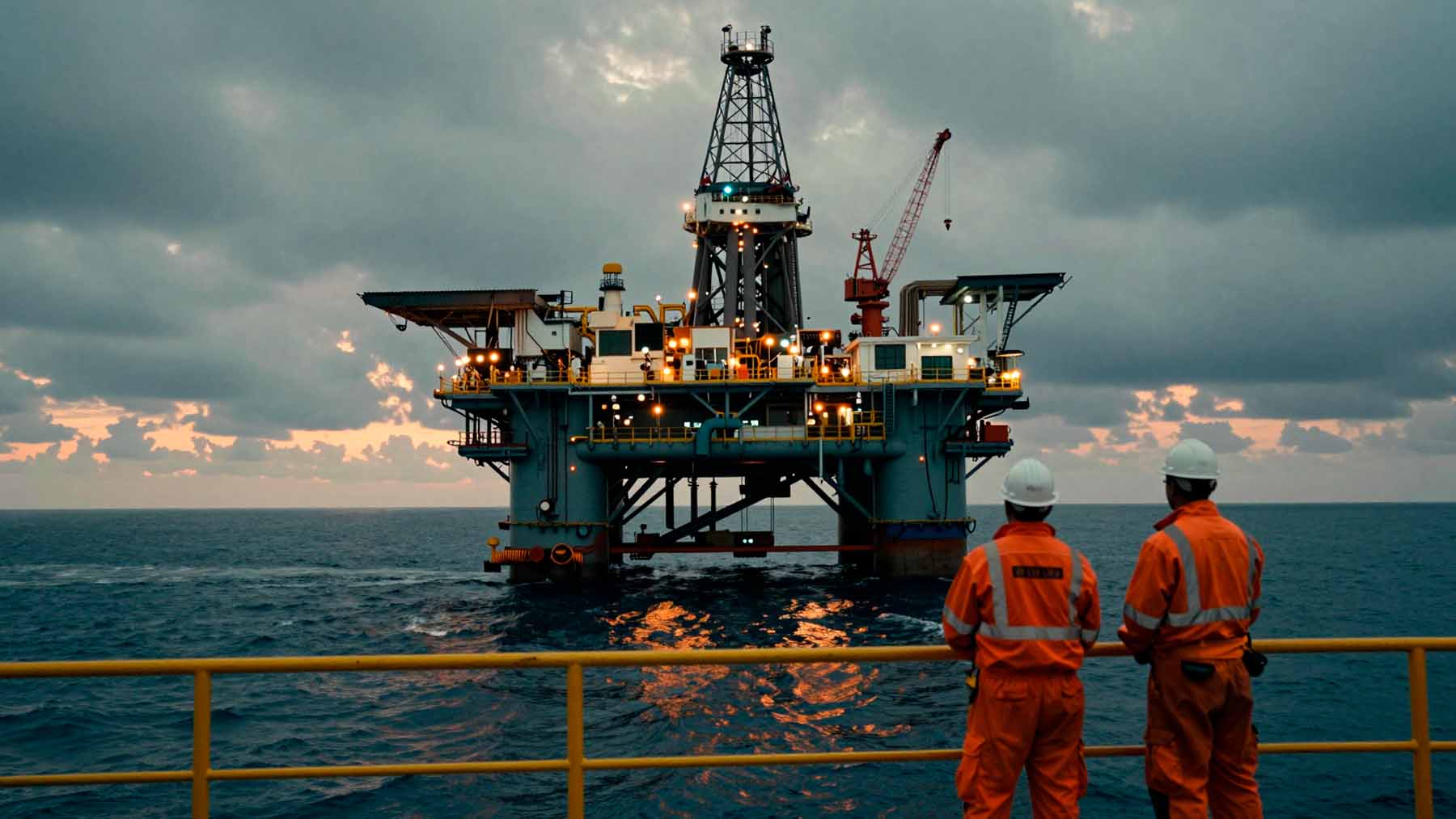 Image generated with artificial intelligence
Latin America’s two largest oil companies have quietly joined forces to probe one of the most ambitious—and risky—frontiers in offshore drilling. In recent weeks, teams from Petrobras and Pemex began analyzing seismic and geological data from deep beneath the Gulf of Mexico off Mexico’s Campeche coast. They’re targeting rock formations up to 160 million years old that have never been tapped outside Brazilian waters.
The effort marks the first time Petrobras has attempted to replicate its pre-salt success beyond Brazil.
Two Latin American oil majors launch joint Gulf of Mexico pre-salt exploration
Petrobras’ head of exploration and production, Sylvia Anjos, confirmed the scope of the joint program during an Aug. 7 media briefing. The companies aren’t just looking at the pre-salt zone—they’re also planning to search beneath sedimentary rocks formed by mud and sand avalanches deep below the sea surface, and under younger, shallower salt formations.
Petrobras developed much of this capability over two decades, and even then, pre-salt wells remain among the most technically demanding in the industry.
The target rock layers are roughly 160 million years old. That’s eight times older than the productive formations currently tapped on the U.S. side of the Gulf, where oil sits trapped in rocks laid down about 20 million years ago. The geological contrast is striking—and deliberate.
This would be the first time anyone has attempted pre-salt drilling of this kind outside Brazilian waters. Petrobras built its expertise through a series of massive offshore discoveries near Rio de Janeiro starting in 2006, which transformed Brazil into a hemispheric energy powerhouse. Replicating that outside home territory is a different challenge entirely.
Why Pemex and Petrobras are targeting source rock rather than conventional reservoirs
The logic behind targeting source rock comes down to where oil actually originates. Pre-salt source rock is where organic material—ancient marine life, plant matter—was crushed and cooked under extreme heat and pressure until it transformed into petroleum. Conventional reservoir rocks are just places where oil migrated and got trapped over time. Source rock can be far richer.
That’s the prize. But Pemex already tried once. In 2018, the company drilled more than 25,600 feet below the sea floor at the Campeche site, penetrating the salt layer. The well was declared unproductive—which sounds like a dead end, though geologists say it isn’t necessarily.
“Apparently what Pemex found did not scare them away,” said Mark Rowan, a Colorado-based geologist and consultant specializing in deep Gulf of Mexico discoveries. “That suggests there was no absolute play-killer, and possibly something that gave them real reason to keep testing.” The data gathered from that 2018 well may now guide the joint effort.
Petrobras brings something Pemex simply doesn’t have on its own. “Pemex alone doesn’t have the technology or the capital for this kind of play,” Rowan said. Pre-salt drilling requires specialized equipment, techniques, and institutional knowledge built up over years of trial and error in Brazilian waters.
Technical, financial, and environmental risks are substantial
Drilling through salt sounds straightforward. It isn’t. Under extreme heat and pressure deep underground, salt behaves more like a liquid than a solid—penetrating it safely requires methods that most operators don’t have. Petrobras developed much of this capability over two decades, and even then, pre-salt wells remain among the most technically demanding in the industry.
The financial exposure is enormous. Deepwater drilling can easily cost hundreds of millions of dollars per well, with no guarantee of economic viability even if hydrocarbons are found. The older, deeper pre-salt target adds another layer of uncertainty on top of already steep costs.
Chevron and Shell have pumped crude from sub-salt fields for more than 30 years. But those operations target younger formations. What Petrobras and Pemex are pursuing is, according to experts, on a different level of complexity and risk altogether—genuinely uncharted territory, and the industry knows it.
What a successful find could mean for Pemex, Mexico, and global oil supply
The stakes for Pemex are hard to overstate. The company carries heavy debt, has seen production decline for years, and has struggled with a reputation for inefficiency. A major pre-salt discovery would be the most significant development in its 88-year history—and potentially a lifeline.
The scale of what’s possible becomes clear when you look at Brazil. Petrobras’ Tupi field, discovered in 2006, has yielded 4 billion barrels of crude since coming online in 2010. Based on average international oil prices over that period, that’s more than $300 billion in economic value. A comparable find off Campeche would reshape Mexico’s energy future entirely.
Geopolitical disruptions in the Middle East—including the ongoing Iran war—have exposed the risks of concentrating so much of the world’s oil supply in a single region. New Atlantic Basin reserves would carry real strategic weight. Still, history counsels caution. Previous attempts to replicate Petrobras’ pre-salt success in Angola, Gabon, and the Republic of Congo largely failed, and the outcome off Campeche is far from certain, however favorable the geology may appear.
Petrobras brings specialized technology and expertise
The Petrobras-Pemex partnership is targeting pre-salt rock formations roughly 160 million years old beneath the Gulf of Mexico off Mexico’s Campeche coast—the first attempt of this kind outside Brazil. Petrobras brings specialized technology and expertise; Pemex brings access and local knowledge. A 2018 Pemex well penetrated the salt layer but was declared unproductive, though geologists say the data may still prove useful. Drilling risks are significant: salt behaves like a liquid under pressure, wells can cost hundreds of millions of dollars, and economic viability isn’t assured. If successful, a discovery on par with Brazil’s Tupi field would represent the largest development in Pemex’s history and add meaningful new supply to global markets.
Kelly is an experienced writer with 15 years of experience exploring the big stories that shape our world, from tech breakthroughs and space exploration to climate, energy, and the fascinating quirks of science. She has a talent for turning complex ideas into sharp, memorable insights that stay with readers long after they’ve finished reading.
