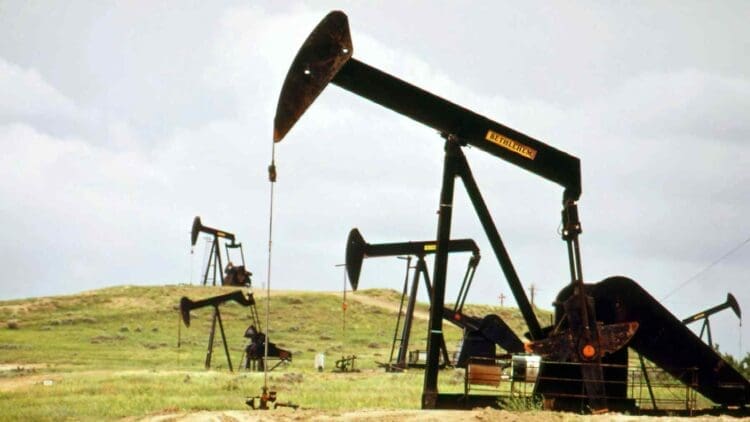

While increasing domestic crude oil production can provide an immediate increase in barrels available for use domestically, a national oil company’s continued emphasis on upstream activities usually sends a broader signal. That signal goes beyond the near‑term need to meet domestic supply requirements and reflects longer‑term strategic priorities.
More than a simple issue of volume
PetroChina emphasized the improvement of its ability to produce domestic oil and gas supplies as one of the primary themes presented in its last quarterly update on its operations.
PetroChina has identified increased exploration and development (E&D) as a top priority for its upstream operations and has framed E&D as a stabilizing factor throughout all aspects of its overall energy value chain. Instead of viewing domestic crude as solely a measure of production, PetroChina views domestic crude as a foundational source of resiliency and continuity.




The end of the 14th Five-Year Plan was a period where upstream performance became a major contributor to maintaining operational and financial stability during an increasingly unstable external environment. Therefore, domestic production becomes part of a larger strategic framework or story, versus being viewed as a standalone goal.
Added significance of upstream intensity
Typically, oilfield development requires substantial ongoing investment in terms of capital expenditure over long periods of time prior to reaching stabilization in terms of total production volumes. PetroChina has acknowledged these realities by combining enhanced development with efficiencies and improved recoveries in existing reservoirs.
PetroChina’s upstream footprint spans some of China’s most prolific hydrocarbon‑producing basins, many of which have been producing oil and natural gas for decades. Enhancing domestic crude output in these environments is therefore less about opening new opportunities and more about efficiently managing and extending known resources over time.
As one of China’s leading crude oil suppliers within the energy system, even modest increases in PetroChina’s domestic production could have broad implications for supply reliability. Thus, PetroChina can achieve both reliability and support for its longer-term development objectives by sustaining production from mature assets and adding new capacity.
While PetroChina has pursued intensification in its upstream activities as a response to mitigate the effects of possible future supply disruptions, the Company is portraying its actions as a measured response rather than an expansionist endeavor for its own sake.
The projects driving CNOOC’s offshore ambition
PetroChina’s emphasis on domestic crude output is driven by how effectively it can extract value from known resources, using intensified upstream development to stabilize production rather than pursue large‑scale discoveries, making execution discipline as critical as geological potential.
PetroChina has tied its focus on domestic crude output directly to numerous upstream initiatives that enhance reserves-to-production conversion ratios and support base-level production. These initiatives are being implemented across multiple operating environments, including both traditional oilfields and newer development zones.
Domestically, this enhances supply security as onshore growth opportunities continue to dwindle. Internationally, it provides PetroChina with a platform to pursue foreign developments from a position of greater internal stability. From either perspective, PetroChina is utilizing upstream development as an operational anchor rather than an experimental growth vehicle.
Through integration of the above-mentioned initiatives with other corporate-wide efficiency and structural optimization goals, PetroChina is presenting domestic upstream development as part of a holistic systems approach—one that will provide stability regardless of whether the Company chooses to adapt to the evolving nature of the global energy landscape.
Beyond the numbers
In essence, PetroChina’s renewed emphasis on domestic crude production reflects less a pursuit of scale and more a focus on certainty. By turning mature assets into long‑term stabilizers, the company offers a clearer view of how national oil companies may balance reliability and transition pressures going forward.