
Onsite laboratories, responsible for quality control and assurance at refineries, operate as the backbone of their operations ensuring that they are meeting industry standards, complying with regulatory requirements, and consistently producing a product to their targeted specifications.
To do this, a refinery’s onsite QA lab must constantly analyze samples of pretreated materials, production, and blending, and ultimately verify the quality of their products prior to distribution. The lab ensures the product is not out of compliance by being below spec or incurring unnecessary waste by being over a target spec. The tests are well established through the American Society for Testing and Materials (ASTM) and other standards, with long established requirements for how the tests are conducted.
However, onsite refinery labs are still looking for tools that allow them to perform tests more quickly, optimally in minutes rather than hours, to verify the quality of products at key stages in the process. By optimizing efficiencies in onsite QA in this way, labs can have a significant impact on the speed gasoline can be brought to market.



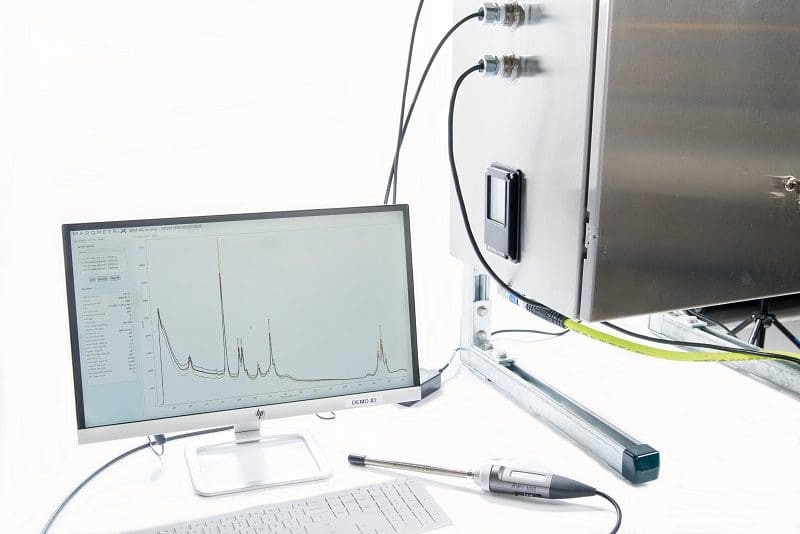
With this in mind, refinery labs are increasingly turning to advanced Raman spectroscopy analyzers that can produce highly reliable and accurate results in less than a minute. The equipment, which is more compact and affordable than Raman systems of the past, accelerates the verification of certified products and enables the refinery to expedite processing and distribution with the highest degree of confidence in the results.
Certifying a blend
For refineries, certification of a gasoline blend is a multi-step process. After an operations crew completes the physical blending, the onsite lab receives samples to ensure the blend is homogeneous. Once the fuel from the blend tank is verified, the product goes through the traditional certification practices according to ASTM specification standard D-4814.
Traditionally, a lab uses an octane engine test to analyze the blend. A one-cylinder engine is used to combust the fuel. Two fuel samples are taken to identify and bracket the octane level, which is then compared to a known standard that has been blended by a third-party laboratory for verification. This analysis typically takes several hours. The gasoline is then transferred to a rack distribution tank and all lines are closed to protect the integrity of the blend.
At this point, the lab will test a sample from the rack tank to verify the blend’s Research Octane Number (RON), American Petroleum Institute’s (API) gravity and Reid Vapor Pressure (RVP) to ensure it matches what was certified in the blending tank. When the product is deemed “of like kind,” it is ready to be released for distribution via the refinery’s truck rack.
To expedite this verification, refineries like U.S. Oil & Refining in Tacoma, Washington are increasingly turning to advanced Raman spectroscopy analyzers that can produce results in less than a minute using established models, instead of the two to three hours using an Octane engine.
“We wanted to find a technology that could improve laboratory efficiency and expedite our logistics so we can get our gasoline to the customer faster,” says Christopher Sticka, Lab Manager at U.S. Oil & Refining. “So, we purchased a Raman analyzer at the beginning of 2022 and began building the associated models for octane.”
Expediting QA with Raman spectroscopy
Raman spectroscopy is a laser-based optical analysis technique for measuring compositions through the vibrational properties of molecules. Since its discovery in the 1920s, Raman spectroscopy has revolutionized process analysis with its nondestructive mode of operation.
For many years Raman equipment has had a reputation for being expensive, cumbersome, and difficult to use. Now advancements in the stability and portability of solid-state Raman systems and technological improvements in lasers, optics and detectors have made the technique faster and more accessible for real-time inline analysis.
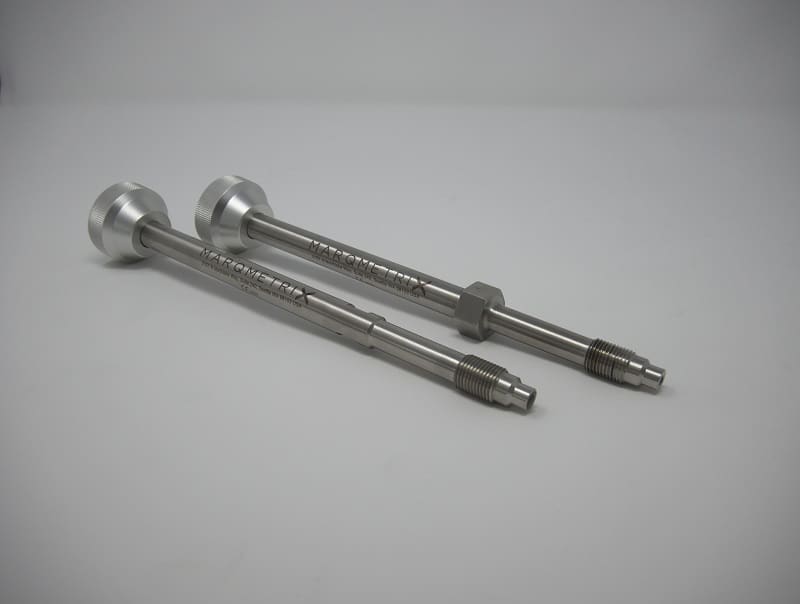
With spectroscopy, samples of the gasoline blend are collected using a 785nm excitation laser and a non-contact probe through the sample container that produces a unique spectral fingerprint identifying the chemical composition and molecular structure of the gasoline. The distribution of the spectral peaks describes the molecules’ composition while the signal intensity correlates linearly with concentration.
“U.S. Oil has always been interested in [Raman spectroscopy] but the price point ten years ago was close to three quarters of a million dollars,” says Sticka. “It is hard to find an instrument that you could potentially buy for a laboratory in that context.”
Over time, Sticka continued to monitor the development of Raman spectroscopy, and in 2022 selected a commercial technology from Seattle-based MarqMetrix. Founded by scientists from the University of Washington, the company specializes in compositional analysis utilizing Raman spectroscopy and has pioneered advancements in Raman for use in process analysis.
The MarqMetrix All-in-One that U.S. Oil purchased is designed to produce identical and repeatable results from unit to unit, in a package 80 percent smaller than previous Raman instruments. Each device is nearly an exact copy so common mathematical models can be applied across systems to produce consistent results.
To date, results from the Raman spectroscopy analyzer have matched U.S. Oil’s expectations and now their onsite lab is using the unit to additionally analyze the refinery’s naphtha pretreats to identify various compositions on the front end before it goes through the reforming process. They are also using spectroscopy to measure the net difference conversion as those molecules get reformed.
According to Sticka, there are other potential advantages. With a Raman system, the contact probe can be placed directly into the process stream without having to collect the gas sample, take it offline, or analyze the sample by gas chromatography. Raman’s direct measurement produces readings every few seconds as compared to traditional GC techniques. Online continuous measurement also eliminates a potential safety risk from taking samples directly from the processing line to the lab.
“The analyzer can be used to identify sulfur peaks online without having to collect samples,” adds Sticka.
Similarly, the spectroscopy can be modeled to identify concentrations of carbon dioxide, carbon monoxide, oxygen level, and hydrogen sulfide ratios.
Raman spectroscopy is quickly gaining traction as a highly efficient, accurate and reliable solution offering the potential to transform the speed and logistics of sampling gasoline blends so that refineries can get their product to market faster.
For more information on Raman solutions, visit the MarqMetrix website at www.marqmetrix.com or call 206.971.3625.
Headline photo: Raman’s direct measurement produces readings every few seconds as compared to traditional GC techniques.