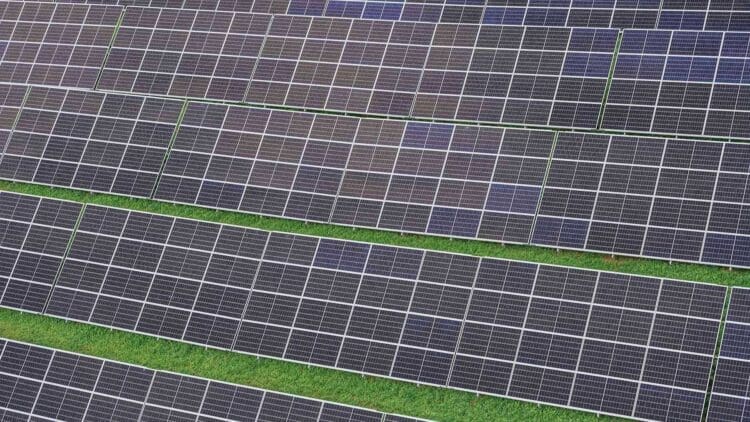

The United States is aiming to diversify the energy portfolio of every state to ensure that there is a wide range of energy sources that people can rely upon. This means there is plenty of room available for developers to come up with and execute energy initiatives, especially considering that the nation has strict objectives that it wants to meet during the clean energy transition. The U.S. continues to be among the leading solar energy producers, with domestic companies playing a massive part in assisting the nation in maintaining its position. Renewable America completes construction of the Pearl Crop solar facility in California.
A general overview of the United States solar energy landscape as of 2026
California, Texas, and Florida are the states that dominate U.S. solar energy generation. California leads the way with a total of 45,200 GWh of production, Texas is second with the Longhorn Solar project playing a vital part in its position, and Florida, also known as the Sunshine State, is in third place.
Renewable America is a leading provider of distributed energy resources. It serves the community with small utility-scale, locally generated solar plus storage facilities and community micro-grids that work in association with the distributed grid. Solar plus storage facilities are increasing in popularity because developers have discovered that they are capable of eliminating the intermittency issues that have troubled the advancement of solar.

Renewable America has finally completed constructing the Pearl Crop solar facility in California
Renewable America recently announced that it has completed the construction of the 1.9 MWdc commercial solar projects with Pearl Crop, Inc. (Pearl Crop). Pearl Crop is a food processing company that has numerous sophisticated and captivating facilities in central California.
2026 has shown the limitless ability that energy companies have to pursue projects in a variety of fields because industries like data centers demand an abundance of electricity.
Pearl Crop specifically turned toward Renewable America to transform its operations through commercial solar. Its facilities have high energy demands, and the company faced increasing energy costs. Just like many other companies, Pearl Crop has energy targets that it needs to meet if it is to continue generating profit without incurring too many losses.
The agreement between Renewable America and Pearl Crop is said to cover four different projects over three different locations. These are Ripon, Linden, Stockton, CA with the latter being the largest site which will use solar for 86% of its energy demands, granting Pearl Crop approximately $230,000 in annual utility cost savings.
Now more than ever, energy companies have a wide range of methods through which they can generate revenue, as companies from other industries are desperate to reach agreements.
Analyzing the importance of the Renewable America and Pearl Crop agreement
When companies reach agreements of this magnitude, it is essential that they both be satisfied, considering that they are set to be associated with each other for an extended period of time. Ardeshir Arian, who is the President and CEO of Renewable America, stated the following:
“We’ve had a collaborative and beneficial partnership with Pearl Crop from agreement to completion, and it’s fulfilling to see three of the project sites running on solar power. These projects foster energy autonomy in the local communities and contribute to our statewide carbon neutrality targets.”
Looking ahead: Have Renewable America and Pearl Crop created a blueprint?
In the energy industry, companies learn from each other and adopt similar strategies for executing projects. The two companies involved in this initiative will be watched closely with many people aiming to adopt a similar agreement. Renewable America is providing a turnkey solution as it will be able to serve as a developer and EPC for the four-project portfolio.
Interestingly, the year 2026 has seen many groundbreaking projects in California, and the main reason for this is that it already has plenty of resources that complement the solar landscape. As such, companies are able to rely on the resources that are already available in California to build their own facilities.
Prince is a versatile writer focused on energy, automotive, environmental, and general news topics. He makes complex technical and policy issues clear, engaging, and accessible for a broad audience.