
Wind energy capacity in the U.S. is struggling to expand.
Fortunately, one major initiative resumed at the start of 2026.
Developers are facing intense resistance in the United States despite a higher demand for clean power.


These delays not only set back climate targets but also threaten thousands of union jobs and economic transformation.
Work has restarted for now, but will construction finish, or will there be another interruption?
How green progress is being halted in the U.S.
Not long ago, wind power was the cheapest approach to expand green capacity.
Recently, the industry hit a wall.
High interest rates made borrowing for large projects unaffordable.
Supply chain disruptions and geopolitical tensions are rising. This makes investors reluctant to provide funding.
Simultaneously, higher material expenses are squeezing profit margins. Construction can no longer be completed at the original promised prices
Federal resistance is increasing due to concerns about potential security risks.
Furthermore, transmitting electricity from wind farms to cities is challenging. Curtailment becomes unavoidable, leading to a greater lack of confidence in these projects.
Many companies are now being forced to pause construction or cancel contracts.
This sudden halt creates a dangerous power gap.
Growing metropolises with data centers and electric infrastructure require baseline power. It creates a direct threat to the nation’s future energy reliability.
Without wind energy, they remain tethered to aging, carbon-heavy grids.
Lengthy permitting processes create long-term vulnerability
A prolonged energy gap has led to a critical emergency in 2026.
Ambitious climate goals have been set, and states are racing to meet deadlines. However, the slowed timeline for wind adds complexity.
The primary bottleneck is long permitting procedures. Federal, state, and local approval must be granted before development can occur.
Across the U.S., the Trump administration has blocked over 165 new projects.
Reviews often take years to complete. In high-inflation environments, prolonged delays result in higher equipment and labor costs.
Legal challenges increase uncertainty. Local lawsuits can pause progress for months.
This increases the risk of immediate power shortages for cities. Beyond grid instability, planning for efficient data-driven capacity becomes impossible.
The Empire Wind project is among those facing regulatory issues.
Fortunately, the developers could prove to the court why further disruption would impact the community.
New York wind energy project finally back on track
The Empire Wind initiative made a compelling case in its legal action to prevent disruption to ongoing construction.
The court granted a preliminary injunction to the offshore project on January 2, 2026.
The argument suggested that sudden governmental suspension of an active project could cause “irreparable harm.”
Equinor has now moved construction forward at the South Brooklyn Marine Terminal. The 73-acre assembly site is 15-30 miles south of Long Island.
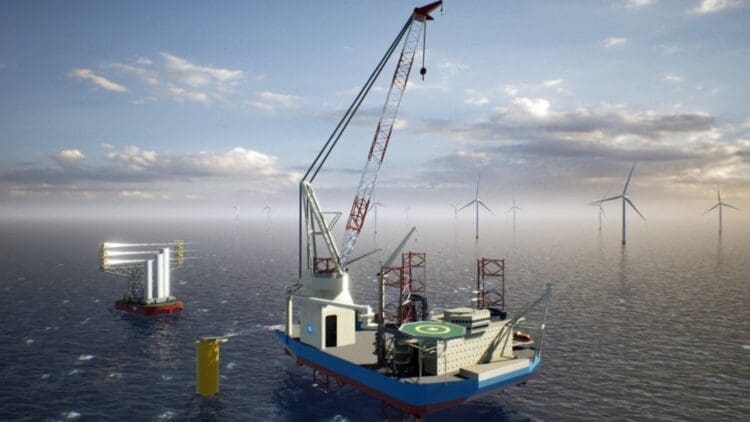
A specialized installation ship will use four massive hydraulic legs to “walk” above the waves.
Once they reach the seabed, the hull lifts out of the water. This ensures a steady platform for precision construction in the Atlantic.
The benefits of the Empire Wind project
Phase 1 will deploy 54 giant turbines. In phase 2, the number of turbines will increase to nearly 138.
Once Empire Wind 1 is operational, it will generate 810 MW of power. 500,000 homes will receive clean energy.
The electricity will flow directly into the city grid through a Brooklyn substation. It also supports over 1,000 union jobs.
Its expected full operational date is in 2027 – if there are no additional disruptions.
The scale of this project is immense. Once complete, its electricity can power two cities the size of San Francisco.
This project represents a major shift toward energy independence for New York.
Federal resistance will remain a potential challenge. Nonetheless, it remains vital for a grid strained by modern digital demands.
Anke Maree is a writer with a clear and engaging editorial style. Her work focuses on making complex topics accessible, informative, and relevant for readers across different areas of interest.