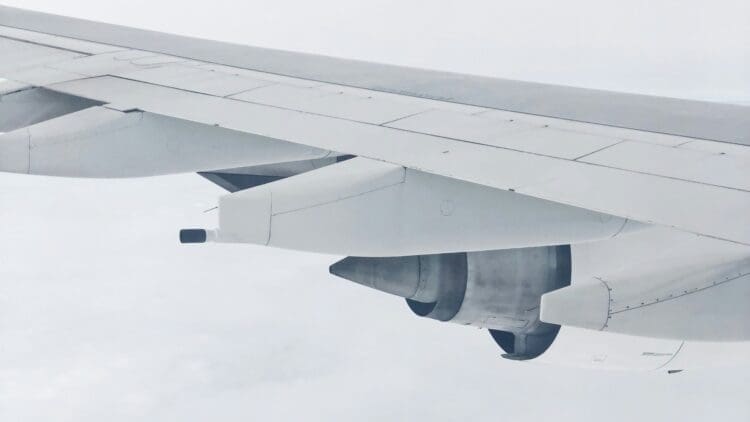

Aviation accounts for 2–3% of global CO2 emissions today. Left unchecked, that share could climb to 20% by 2050 — even as the rest of the economy decarbonizes. The industry needs a fuel solution that works with existing engines, existing infrastructure, and existing supply chains, starting now.
In the Netherlands, one facility is attempting something no European producer has tried before: making sustainable aviation fuel, and only sustainable aviation fuel, at industrial scale.
A fuel problem that can’t wait
Aviation’s decarbonization challenge is uniquely stubborn. Unlike cars or power grids, planes can’t be plugged in or quickly converted to run on batteries at commercial scale. The physics of flight demand energy-dense liquid fuel, and that reality isn’t changing anytime soon.
That’s what makes sustainable aviation fuel strategically important. SAF can reduce lifecycle greenhouse gas emissions by up to 85% compared to conventional fossil jet fuel — a meaningful reduction at a moment when the industry has formally committed to reaching net-zero emissions by 2050. With that deadline fixed and air travel demand continuing to grow, near-term solutions matter as much as long-term ones.
SAF is also a drop-in fuel. It works in existing jet engines and moves through existing airport infrastructure without modification — no new planes, no new fueling systems, no waiting for a technology revolution. That compatibility makes it one of the few decarbonization tools aviation can actually deploy right now.
What makes Delfzijl different
Most SAF produced today is a secondary output — a by-product that emerges alongside renewable diesel from facilities primarily designed for road transport fuels. SkyNRG’s plant in Delfzijl, Netherlands, breaks from that model entirely.
The Delfzijl facility is Europe’s first plant built and operated with one exclusive purpose: producing sustainable aviation fuel. Nothing else comes out of it. That distinction reflects a deliberate engineering and commercial choice to optimize every part of the process around jet fuel output, rather than treating SAF as an afterthought to a broader refining operation.
When the plant begins operations in 2027, it’s planned to produce 100,000 tons of SAF per year — a volume expected to displace 250,000 tons of CO2 compared to an equivalent quantity of fossil jet fuel. KLM Royal Dutch Airlines has already signed on as the facility’s anchor customer, providing the kind of long-term demand signal that makes large capital investments viable.
Turning waste oils into jet fuel
The feedstocks entering the Delfzijl plant aren’t clean, refined inputs. They’re low-quality waste oils — materials that would typically be destined for incineration rather than any productive use. SkyNRG pre-treats these feedstocks before introducing them to the core conversion process, removing impurities that would otherwise compromise fuel quality or equipment performance.
At the heart of the facility is Topsoe’s HydroFlex™ hydrotreating technology, a proven system for converting biogenic feedstocks into high-grade liquid fuels. The collaboration between SkyNRG and Topsoe required novel engineering work specifically aimed at maximizing SAF yield — a different target than the mixed fuel outputs most hydrotreating configurations are designed to produce.
“No one else has done this,” SkyNRG CEO Philippe Lacamp has said of the facility’s design. “Topsoe has been willing to embrace the challenge, be innovative and work with us to find a novel approach to maximise SAF output.”
The fuel produced meets international aviation standards and can be blended with conventional jet fuel, making it immediately usable across the global airline network.
Scaling toward millions of tons
Delfzijl isn’t the endpoint of SkyNRG’s ambitions — it’s the proof of concept. The company’s longer-term vision targets SAF production facilities capable of generating millions of tons per year by 2040, a scale that would represent a fundamentally different contribution to aviation’s emissions trajectory.
Topsoe is involved in that planning as well, working with SkyNRG on new combinations of feedstocks and technologies that go beyond waste oils. The roadmap anticipates that future facilities will need to draw on a broader range of inputs as demand grows and waste oil supply reaches its limits.
SAF’s compatibility with existing global fuel infrastructure gives it a scalability advantage that hydrogen and electric propulsion currently can’t match. Airlines don’t need to retrofit fleets or overhaul supply chains to begin using it. That’s not a minor footnote — it’s the whole argument for prioritizing SAF in the near term.
As Lacamp has put it, defossilizing aviation fast enough requires partnerships with world-leading technology companies. The Delfzijl plant is the first concrete test of whether that collaborative model can deliver at industrial scale. If it does, it may define the template for what comes next across Europe and beyond.