
MIT engineers have created a paper-thin film 100 times lighter and 20 times more powerful than solar panels that could turn almost any surface into a power source
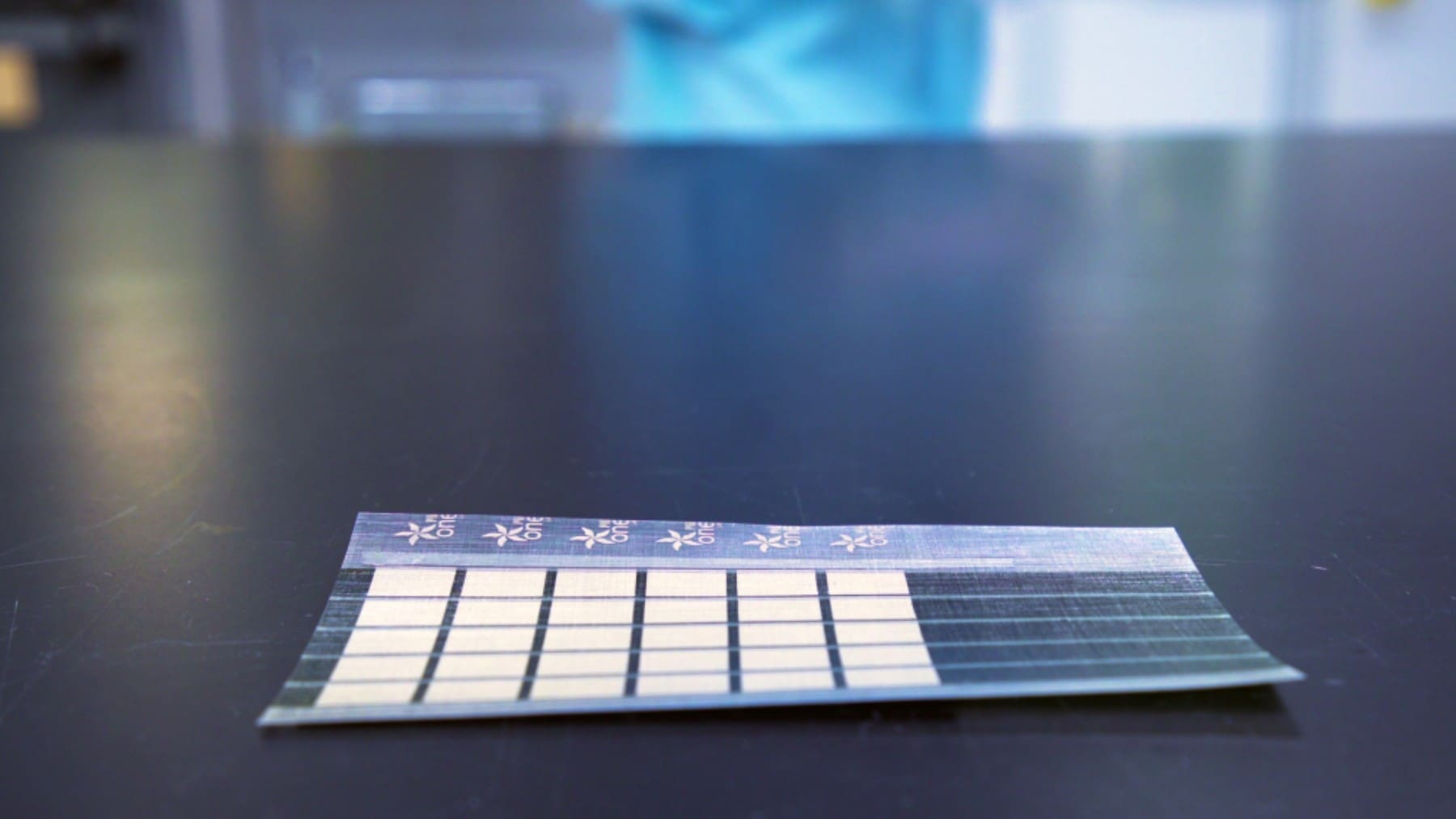 Credits: MIT researchers, Melanie Gonick
MIT engineers have developed the next generation of versatile solar cells.
They have an ultralight, thinner-than-hair design that addresses the limitations of conventional solar panels.
It has the potential to increase universal access to clean power, regardless of remoteness or confined spaces.
Its high flexibility enables lamination onto various surfaces, including boat sails, drone wings, clothing, and disaster relief tents.
This flexible product is manufactured with organic materials, but its composition raises concerns about long-term durability.
Will the MIT team be able to solve the technology’s degradation problem?
How global solar adoption has hit a ceiling
Solar capacity has rapidly expanded.
More cost-effective silicon panels and government subsidies made it a dominant energy force.
However, the environmental, economic, and logistical challenges tied to rigid panel designs have limited growth.
Solar cells are encased in thick glass and supported by heavy, stern frames.
This has restricted installation to reinforced rooftops and expansive, flat land.
The technology’s significant weight and footprint have excluded millions from access to green energy.
Many historic districts, remote terrains, and cities are forced to rely on carbon-heavy power sources instead.
The resulting energy gap complicates the global energy transition.
While developing regions lack adequate grid systems, dense cities have limited surface space for installation. Disaster zones and isolated areas face difficulties in transporting these fragile panels.
This pushes several nations behind on their climate target deadlines. Increasing energy demand also increases the risks to fragile infrastructure.
The digital strain on traditional grids
The explosive growth of AI and data centers is driving the need for adaptable solar power.
Modern digital infrastructure uses immense power. When its supply is interrupted, global networks and cloud computing will fail.
It is a great concern, as AI hardware is straining the capacity of conventional utility providers.
The world’s aging energy systems were never meant to support these intensive, high-speed loads.
Critical digital systems must be protected by integrating power generation directly into facility structures.
Conventional panels cannot be used for specialized cooling systems and the lightweight architecture of modern data hubs.
It places extreme pressure on tech companies that must meet strict climate mandates while ensuring 24/7 operational stability.
Fortunately, an MIT team has engineered a versatile technology that could help bridge this energy gap.
The latest report from the MIT engineers elaborates on the design specifications.
A powerful, paper-thin solar film revolution
The next generation of thin solar films has been created. It was developed using scalable printing techniques.
The MIT engineers created the solar cells with semiconducting inks. Electronic material layers were deposited onto a three-microns-thick substrate.
Screen printing was used to apply an electrode, completing the module. The product is a flexible, ultra-thin power source that is one-hundredth the weight of traditional panels.
This manufacturing method is faster and less energy-intensive.
A high-strength fabric called Dyneema was used to increase cell durability.
The benefits of the Dyneema-reinforced solar film
This adaptive solar is transformative for energy deployment.
The film generates nearly 330 watts of electricity per pound. This is almost 20 times the power-to-weight ratio of conventional cells.
Its high flexibility enables lamination onto various surfaces, including boat sails, drone wings, clothing, and disaster relief tents.
The fabric can be rolled and unrolled over 500 times. Despite its thinness, it maintains 90% of its initial power capacity.
Carbon-based molecules and polymers were used in the inks to make the technology organic.
It has significant potential to increase access to clean energy. However, its environmental vulnerability must be overcome first.
The cells’ organic nature makes them vulnerable to moisture and oxygen exposure. To prevent rapid degradation, the researchers must develop thin, transparent shields.
Solving the protective packaging problem will be the final step toward commercial deployment. Soon, major tech companies can directly supply data centers with more efficient and reliable solar power.
Anke Maree is a writer with a clear and engaging editorial style. Her work focuses on making complex topics accessible, informative, and relevant for readers across different areas of interest.
