
Winter ice knocked boards off four Virginia hydropower dams, forcing operators to lower reservoirs up to eight feet
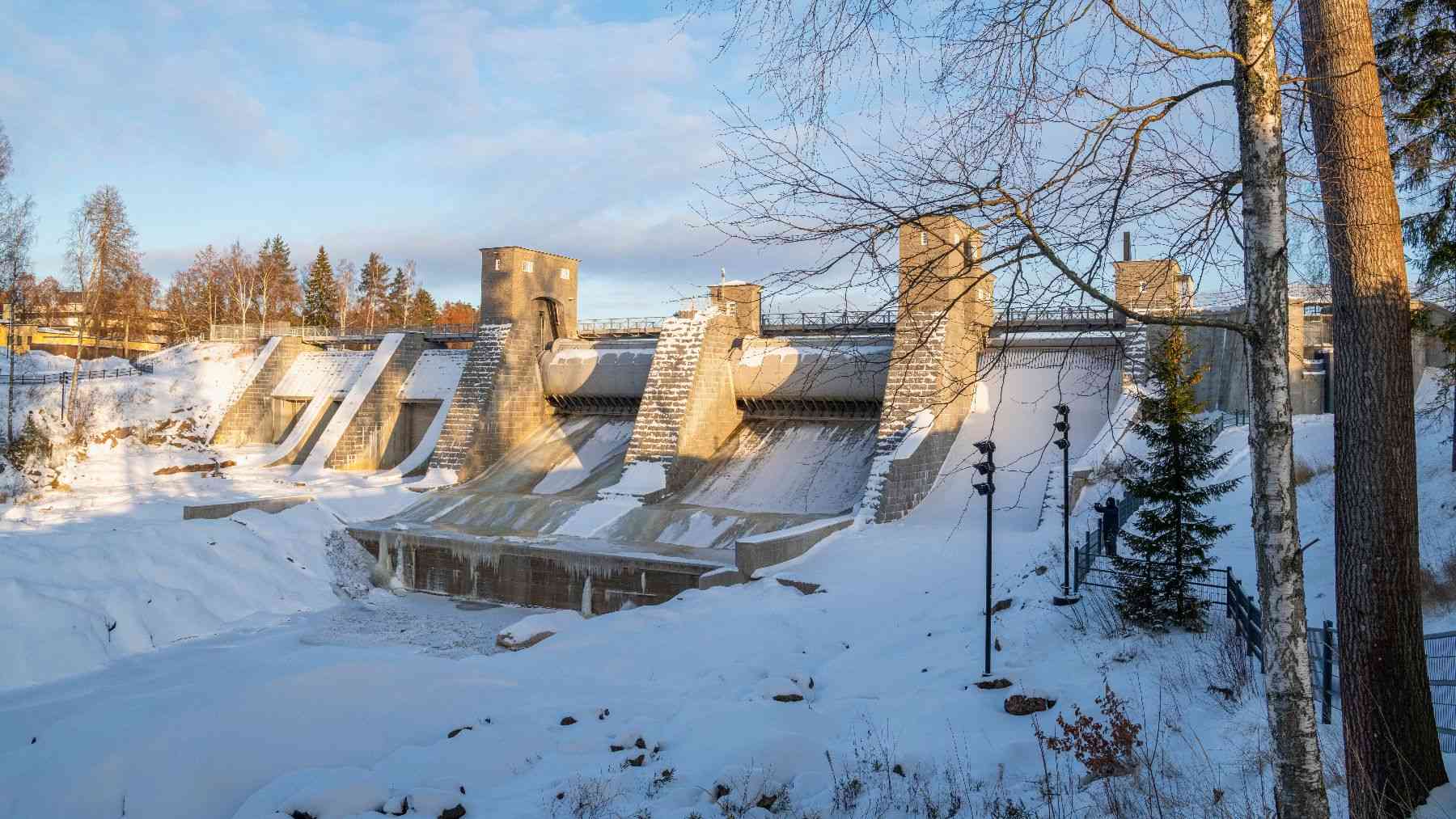
Floating ice sheets can cause serious damage to hydroelectric plants.
Hydroelectric plant operators usually fight to keep their reservoirs full.
The more water the reservoir has, the more power it can generate. However, in winter, things work differently.
Allowing the water and ice to escape downstream also cleared the ice blockages, preventing catastrophic backups that could flood surrounding riverbanks.
When water gets frozen, it can become as hard as stone, threatening the entire infrastructure.
That is what happened in the 2010 winter freeze that overwhelmed the historic Byllesby-Buck project in Virginia’s New River.
How did maintenance operators manage to protect the aging hydro dam from the crushing winter ice?
The historic Byllesby-Buck project on Virginia’s New River
The Byllesby–Buck Hydroelectric Project is a historic, dual-plant run-of-the-river renewable energy facility.
It was built in 1912 and is located in the rugged mountains of southwest Virginia.
The dual-plant run-of-the-river system is operated by Appalachian Power, a utility provider based in Carroll County, Virginia.
As a run-of-the-river hydro facility, the Byllesby–Buck Hydroelectric Project does not rely on massive water storage or deep artificial lakes.
Instead, the natural, ongoing current of the New River flows into the reservoirs behind the Byllesby and Buck dams.
Francis turbines act as the mechanical heart of hydroelectric generation.
As water rushes down from the reservoir, it enters the turbine runner.
The pressure and kinetic energy of the rushing water force the heavy runner to spin at high speeds.
The high rotation spins the connected generator shaft, converting hydraulic energy into electrical power.
Removable wooden flashboards act as a failsafe, managing the water pressure and also preventing flooding.
When sub-zero temperatures turn a slow-moving river into heavy ice sheets
Sub-zero temperatures can freeze the top layer of the river water, turning it into thick solid sheets of ice.
As the water continues flowing underneath, it can cause the ice to break forth and push outward with brutal force.
The shifting, glacier-like ice sheets can knock against dam walls and flashboards with such immense pressure that they cause damage.
The brutal winter weather in 2010 brought about the same conditions at the Byllesby-Buck hydro dams on Virginia’s New River.
When the river froze, thick sheets of ice smashed against the dams and started ripping away the removable wooden flashboards.
With some of the flashboards gone, the hydro dam threatened to flood, and there were ice blockages.
The century-old Francis turbines were also put under extreme structural stress.
Maintenance crews had to intervene before something catastrophic happened.
Dropping more flashboards and lowering the reservoir
Seeing that some of the flashboards were gone, maintenance operators proactively started removing even more of them.
By stripping away more of the flashboards, water and ice were allowed to escape downstream.
Doing so intentionally drew down the water levels in the reservoirs by as much as eight feet.
As a result, less pressure was exerted on the Francis turbines, preserving the century-old hydro engine.
Allowing the water and ice to escape downstream also cleared the ice blockages, preventing catastrophic backups that could flood surrounding riverbanks.
The historic powerhouses and their original Francis turbines survived the 2010 winter intact.
Finally, Appalachian Power was able to resume normal generation once the spring thaw cleared the river.
Keeping Appalachian hydro plants resilient against winter extremes
While keeping reservoirs completely full is the industry standard, desperate times do call for desperate measures.
If left unaddressed, the crushing ice sheets could have caused serious damage to the historic Byllesby–Buck Hydroelectric Project.
Proactively removing additional flashboards lowered the reservoir level by up to eight feet.
And that strategy is what successfully prevented flooding while preserving the plant’s century-old hydro engines.
Proactive engineering and adaptive seasonal operations are what keep the historic Appalachian hydro plants resilient against winter extremes.


Lindi is a copywriter and marketing professional with over 10 years of experience across finance, fintech, luxury lifestyle, and renewable energy. She writes with a keen interest in the business and innovation shaping the energy transition.
