
Western Canada’s natural gas pipelines ran at near-full capacity in 2025 as WCSB production hit record levels
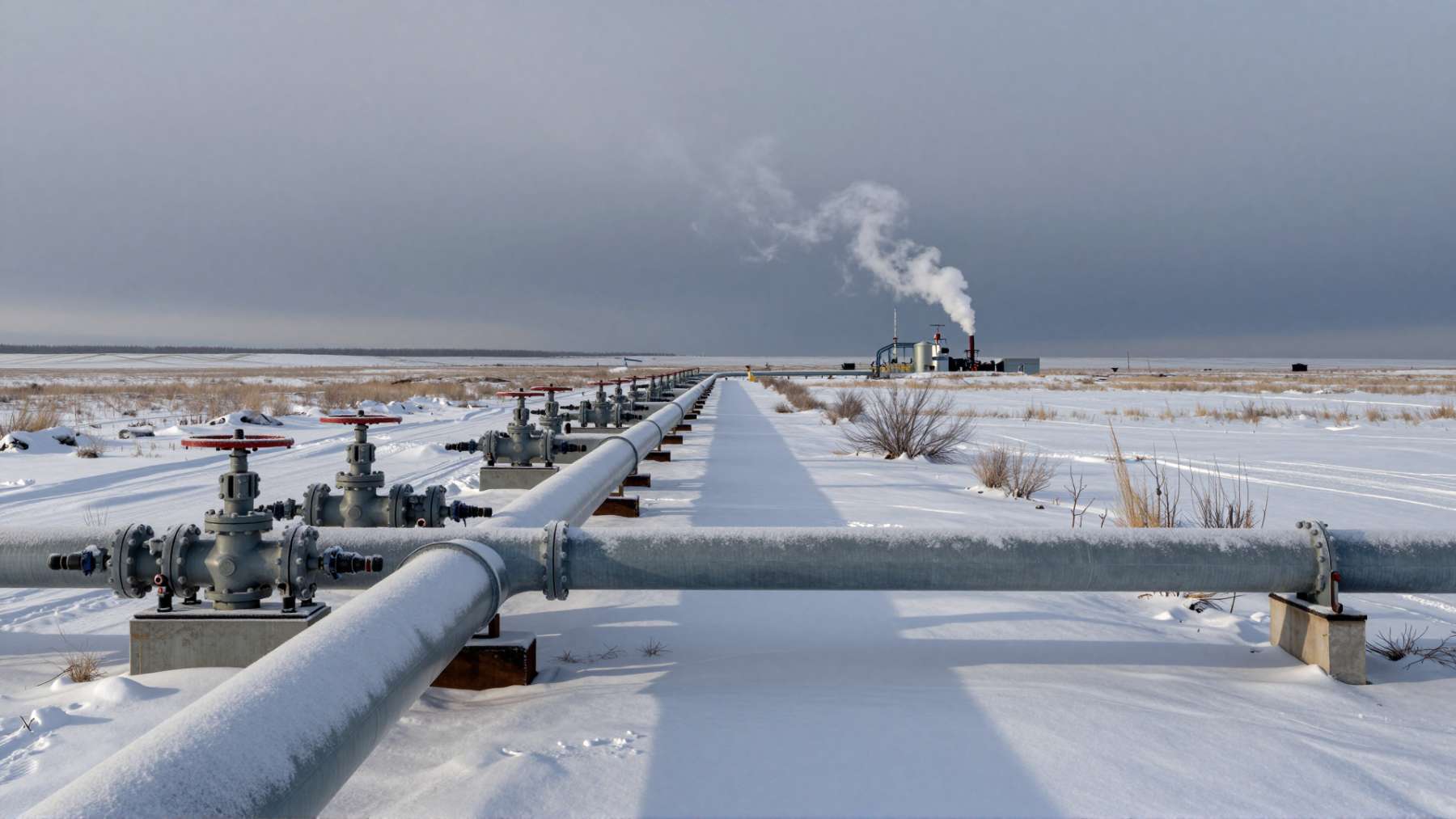
Western Canada’s natural gas pipelines spent most of 2025 running at, or beyond, their limits. According to data released June 3, 2026, by the Canada Energy Regulator, major transmission pipelines moving gas out of the Western Canada Sedimentary Basin maintained near-full or above-capacity utilization rates across key delivery points throughout the year — a pattern the regulator attributes to record-high production in the basin.
CER data shows near-full pipeline utilization across WCSB network in 2025
The Canada Energy Regulator published its market snapshot on June 3, 2026, documenting pipeline performance across the Western Canada Sedimentary Basin for the full calendar year. What emerges is a picture of a network operating under sustained pressure.
All four major transmission pipelines — NGTL, Alliance, Westcoast, and Foothills — reported high utilization rates throughout 2025. In several cases, throughput did not merely approach available capacity. It exceeded it. The CER identifies record-high natural gas production in the WCSB as the primary driver.
Cold weather also brings higher rig activity, storage withdrawals, and increased heating demand — all adding to the volume moving through the network simultaneously.
Record WCSB production and extreme winter cold drove throughput above capacity
Record basin production set a high baseline for utilization across every major pipeline, and weather pushed several key points over the edge early in the year.
Extreme cold swept much of Canada and the United States in January 2025, sharply elevating heating demand across affected regions. The effect was most visible at NGTL’s East Gate key point, where throughput reached 5.68 Bcf/d in Q1 2025 — 16.1% above Q1 2024 levels and roughly 14% above the available capacity recorded in January 2025.
The Westcoast Pipeline followed a similar pattern. Abundant supply from the Montney Formation in northeastern British Columbia, combined with elevated heating demand in Vancouver, the Lower Mainland, and the U.S. Pacific Northwest, kept Westcoast at or above capacity continuously from November 2024 through March 2025.
Throughput increases recorded across all major pipeline key points
Year-over-year gains were not limited to a single pipeline or season. Throughput rose across all four systems in 2025.
At NGTL’s Upstream James River key point — a critical passage for gas produced across northwest to west-central Alberta and British Columbia — average throughput rose 3.2% year-over-year, from 11.76 Bcf/d in 2024 to 12.13 Bcf/d in 2025. The largest quarterly jump came in Q1, when throughput averaged 12.70 Bcf/d.
NGTL East Gate posted a 5.4% annual increase, with average throughput rising from 4.88 Bcf/d to 5.14 Bcf/d. Alliance Pipeline throughput at the Saskatchewan border grew 3.0%, reaching 1.60 Bcf/d — consistently full during winter months and, at times, over-utilized by as much as 7%.
The Foothills Pipeline at Kingsgate moved from 2.48 Bcf/d in 2024 to 2.55 Bcf/d in 2025. Winter utilization at that key point exceeded 95% during peak periods, a pattern the CER notes occurred for the second consecutive season.
Seasonal patterns and physical factors explain capacity fluctuations
Understanding why throughput can exceed reported available capacity requires a brief look at how natural gas pipelines behave in cold weather.
When temperatures drop, gas molecules compress. More gas fits within the same volume of pipe, which means more can be shipped. That physical reality is one reason both available capacity and throughput tend to rise during winter months.
Cold weather also brings higher rig activity, storage withdrawals, and increased heating demand — all adding to the volume moving through the network simultaneously. These factors compound one another during sustained cold snaps. Throughput can exceed reported available capacity for more technical reasons too: a timing gap often exists between when capacity estimates are made and when actual shipments occur, and ambient temperature changes, unplanned outages, or downstream constraints can all shift a pipeline’s effective capacity between those two moments.
The contrast between Q1 and Q4 2025 illustrates this clearly. January’s extreme cold drove throughput well above capacity at several key points, while mild conditions in November and December had the opposite effect, moderating Q4 volumes compared to the sharp spike seen at the start of the year.
Pipeline network connects WCSB production to Canadian and U.S. markets
The four pipelines covered in the CER snapshot form the backbone of western Canada’s natural gas export and domestic delivery infrastructure.
NGTL handles the bulk of intra-Alberta and inter-provincial flows. Alliance carries liquids-rich gas to the Chicago area, crossing into the United States near Elmore, Saskatchewan. Westcoast, also known as the BC Pipeline, serves markets within British Columbia and connects to pipelines supplying the U.S. Pacific Northwest. Foothills links Alberta’s NGTL West Gate to Kingsgate, British Columbia, where it connects with the Gas Transmission Northwest Pipeline — a system that supplies California, Nevada, and the U.S. Pacific Northwest.
The CER requires major pipeline companies to report daily throughput and available capacity data every quarter, published on Open Government and Pipeline Profiles. That public record gives researchers and market participants consistent visibility into network performance. The 2025 data, released June 3, 2026, confirms that the WCSB pipeline network spent the year operating with little room to spare.

Carlos is an engineer with strong expertise in technical and industrial topics. He previously worked at international companies such as Siemens and is multilingual.
