
Iberdrola inaugurates 58 MW battery storage system at Campo Arañuelo solar complex in Spain
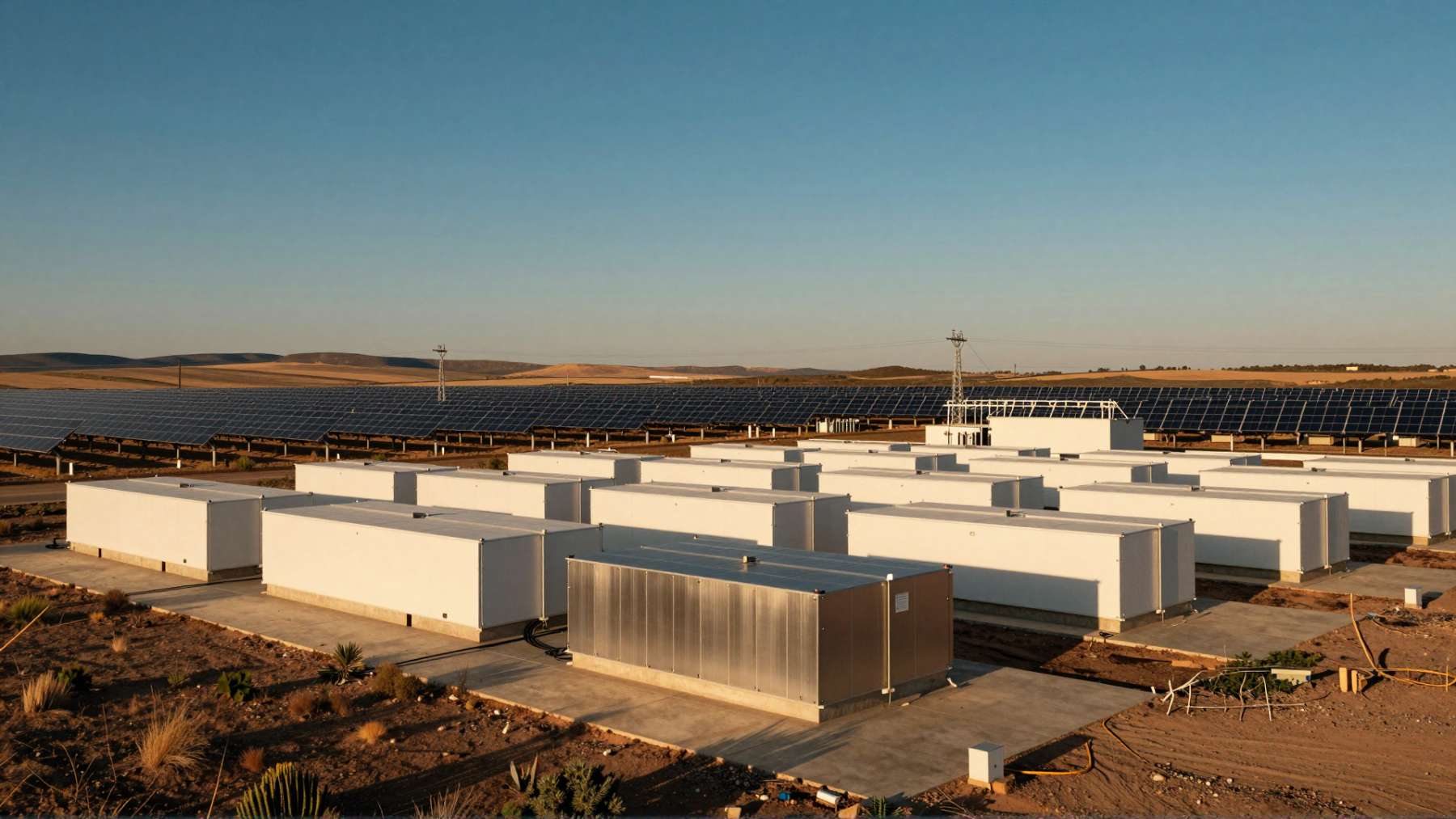
Iberdrola inaugurated Spain’s largest battery energy storage system in June 2026, bringing online a 58 MW / 120 MWh facility integrated into the Campo Arañuelo solar complex in Cáceres. The project, built around two lithium-ion battery modules connected to the site’s existing solar plants, sets a new benchmark for grid-scale storage in the country.
Spain’s largest battery storage system goes live
The Campo Arañuelo facility sits in Cáceres, in the Extremadura region, drawing on solar generation from two existing plants on the same site. Each of the two LFP lithium-ion battery modules holds roughly 60 MWh of capacity, together reaching 120 MWh total. They connect directly to Campo Arañuelo I and II, allowing stored energy to flow from generation to grid without leaving the complex.
Iberdrola describes the project as Spain’s largest battery energy storage system to date — a claim that reflects both the scale of the installation and its integration into an operating solar asset. That model is one the company has been replicating across multiple markets.
The company also secured a contract from the New South Wales government for the 100 MW Kingswood project, designed to supply roughly 65,000 homes at peak demand.
Why Iberdrola built the project
The core purpose is straightforward: store solar energy when generation exceeds immediate grid demand, then release it when consumption peaks. Solar output is inherently variable, and without storage, surplus production either goes to waste or forces operators to curtail generation entirely.
Iberdrola frames battery storage as central to electrification and renewable integration. As more households and businesses adopt electric vehicles, heat pumps, and other electric appliances, electricity demand is growing in ways that don’t always align with when the sun shines. Batteries help close that gap. The company already operates around 200 MW of battery storage capacity across Spain, and grid stability, Iberdrola says, depends increasingly on this kind of flexible capacity.
Implications for Spain’s electricity grid
Solar generation follows a predictable pattern: output climbs sharply during daylight hours and falls to zero at night. That mismatch between supply and demand is one of the central challenges facing a grid that relies heavily on renewables, and battery systems like the one at Campo Arañuelo address it directly by shifting generation across time.
When batteries absorb excess solar output at midday and dispatch it during evening peak hours, the grid requires less backup from fossil-fuel plants. Over time, that can reduce both emissions and operating costs across the wider electricity system. EV charging and heat pump usage tend to spike in the evening, well after solar output has fallen — storage capacity that bridges that gap makes large-scale electrification considerably more practical.
With Iberdrola’s Spanish battery portfolio now at around 200 MW, the country is building a meaningful foundation of grid-scale storage to underpin its renewable transition.
Iberdrola’s broader global battery storage expansion
The Campo Arañuelo inauguration is one piece of a much larger international push. As of the end of Q1 2026, Iberdrola held 683 MW of battery storage capacity globally — a 157.6% increase compared to the same period in 2025. That rate of growth reflects how quickly the company is scaling this segment of its business.
Australia has become a significant focus. Earlier in 2026, Iberdrola brought online the 65 MW Smithfield battery project in Sydney, capable of supplying around 20,000 homes. The company also secured a contract from the New South Wales government for the 100 MW Kingswood project, designed to supply roughly 65,000 homes at peak demand. Separately, a 180 MW battery project in Queensland — part of the broader Broadsound development, which also includes 376 MW of solar capacity — is expected to come online in July 2026.
In Portugal, Iberdrola launched battery installations at the Alcochete I and Algeruz II solar plants in the Setúbal district. The two systems together will provide 180 MWh of combined storage and 45 MW of output capacity — enough to supply more than 10,000 homes for up to four hours.
Poland is another active market. In January 2026, Iberdrola secured EUR 44 million in funding from the Polish National Fund for Environmental Protection and Water Management for three battery projects with a combined capacity of 160 MW.
Taken together, the Campo Arañuelo system represents Spain’s contribution to a global storage buildout that is moving quickly. The 58 MW / 120 MWh facility sets a new domestic benchmark, connects directly to operating solar assets, and fits within an international strategy built around pairing renewable generation with flexible storage. Iberdrola’s global battery portfolio has more than doubled year-on-year, with further projects in Australia, Portugal, and Poland set to add hundreds of megawatts more before the end of 2026.

Carlos is an engineer with strong expertise in technical and industrial topics. He previously worked at international companies such as Siemens and is multilingual.
