
Kentucky’s Wolf Creek Dam sat on limestone riddled with hidden water routes, so engineers built a deep concrete ‘underground shield’ from 1,197 piles to stop seepage and restore Lake Cumberland

The Wolf Creek Dam in Kentucky is a vital example highlighting the importance of routine inspection and maintenance.
Thousands of water-control structures across the United States are rapidly aging beyond their design lifespans.
They hold back massive reservoirs to protect local communities and support economies.
Repairing all structures in need of maintenance will require approximately $24 billion and 50 years, based on historical funding levels.
When giant embankments weaken over time, the risk of structural failures increases.
Can these legacy facilities be reinforced before hidden flaws turn into sudden catastrophes?
How America’s legacy controlled water storage is nearing a dangerous end of the line
Today, most major dams are associated with hydroelectricity production.
However, long before this development, American communities used these giant structures for water management.
Early designs stored periodic discharge for crop irrigation and routed reliable drinking water to growing towns.
During the twentieth century, the United States experienced several floods across its regions.
Extreme seasonal rainfall, saturated soil, storm surges, and snowmelt were primary causes.
To curb flood catastrophes, engineers scaled up dam construction to control major rivers.
Beyond preventing downstream floods, the large barriers also secured regional economies.
This was driven by industrial water supply, reservoir formation, and commercial barge navigation.
Between 2004 and 2013, federal dams helped prevent $485 billion in flood damages, averaging $8 saved for every $1 invested.
However, since construction peaked decades ago, America’s dams are facing rapid age-related deterioration.
More than half of key federal flood-control dams have reached or surpassed their 50-year design life.
This leaves thousands vulnerable to internal wear.
The ongoing struggle to save aging federal dams
Over decades, aging dams have faced constant water pressure, changes in soil, and extreme floods.
This strain has intensified in recent years as accelerated climate change worsens extreme weather patterns.
As a result, tiny cracks form in embankments and concrete dams, enabling water to seep through.
The water can also dissolve porous rock layers underneath.
These structural faults easily go unnoticed, but when left unchecked, they can be disastrous.
For example, hidden internal erosion creates weak spots and can trigger sinkholes.
This can result in sudden barrier failures that threaten downstream communities.
The size of the nation’s federal dam network makes maintenance complex, as roughly 3,600 structures are federally owned.
The U.S. Army Corps of Engineers operates half of them and manages about 750 major flood-control and multi-purpose dams.
Repairing all structures in need of maintenance will require approximately $24 billion and 50 years, based on historical funding levels.
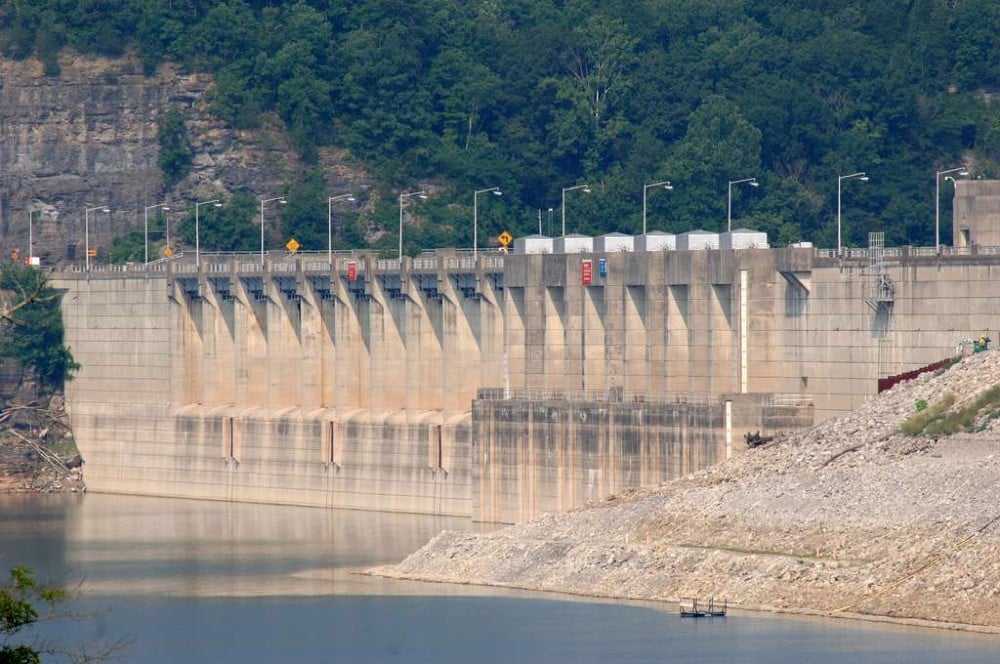
Wolf Creek Dam in Jamestown, Kentucky, clearly demonstrated the dangers.
Kentucky’s close encounter with structural failure
The scale of some of America’s reservoirs can be surprising to many people.
The twelfth-largest reservoir in the U.S. and the second-largest east of the Mississippi River is Lake Cumberland.
Wolf Creek Dam holds this lake back.
It is situated atop porous, water-carved limestone.
Water seeped beneath the 4,000-foot structure, pushing Wolf Creek into a state of failure. This placed it among the Corps’ highest-risk projects.
Restoring structural integrity and lake capacity
A large concrete barrier wall was built inside the foundation to stop the leaks.
After drilling and filling 1,197 overlapping concrete piles, the final one was placed on March 6, 2013.
Each one measures about 4 feet in diameter and extends 275 feet deep into the bedrock.
This barrier blocks water from flowing through the eroded limestone beneath the embankment.
The project required 290,000 cubic yards of concrete and ended up costing approximately $600 million.
However, this did secure downstream safety and reliable water storage.
Once the wall was completed, engineers could safely raise Lake Cumberland’s water level. This returned Wolf Creek to full service.
By reinforcing this previously hidden flaw, Kentucky could avoid unforeseen disasters. Ultimately, dams that have not seen an upgrade in decades require immediate inspection and upkeep.

Anke Maree is a writer with a clear and engaging editorial style. Her work focuses on making complex topics accessible, informative, and relevant for readers across different areas of interest.
