
About 3,000 young alewives were found dead along Maine’s Androscoggin River, prompting a hydropower plant to stop its turbines
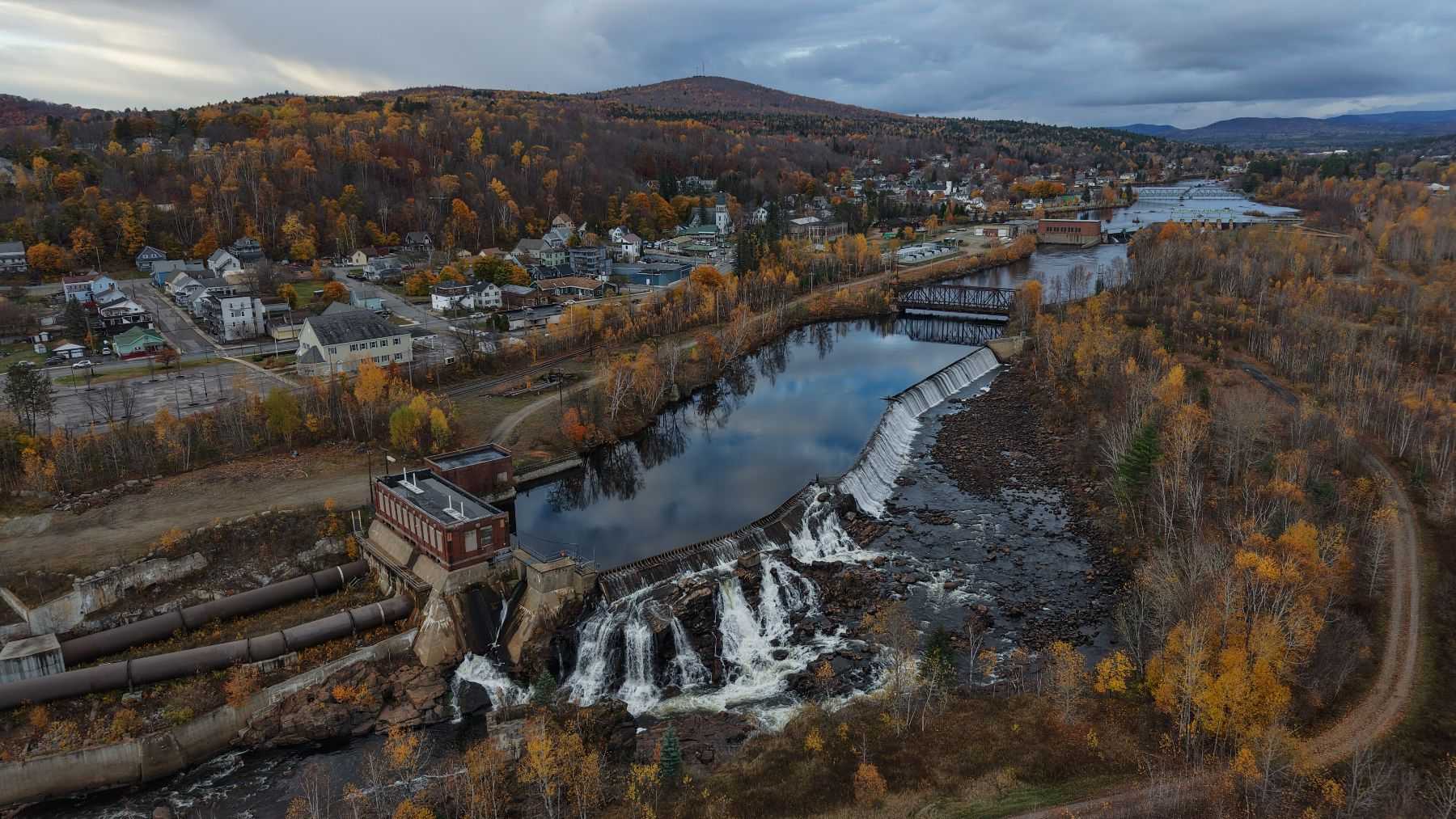 Ascended Dreamer - Own work (https://commons.wikimedia.org/wiki/File:Androscoggin_Cascade_NH_10-25-25.jpg) - CC BY 4.0
A hydropower plant in Maine had to stop its turbines after a routine procedure caused an ecological disaster.
Hydroelectric energy is critical to stabilizing America’s power grid by providing flexible, baseload clean electricity.
However, the infrastructure frequently blocks the historic paths of thousands of migratory fish traveling hundreds of miles.
The incident prompted environmental organizations like Friends of Merrymeeting Bay to file a complaint with the Federal Energy Regulatory Commission.
When standard operations fail to protect these sensitive species, ecocatastrophes inevitably follow.
Can facility operators prevent these disasters in the future?
How hydropower is essential to regional energy resilience
America’s power grid has relied on hydroelectric energy for years.
Today, this source is more relevant than ever, as it provides flexible, baseload electricity that quickly adjusts to fluctuating demand.
This makes hydro facilities exceptionally valuable assets.
Yet some regions continue to rely on fossil fuels despite having operating hydropower plants.
New England exemplifies this historic dependency, with coal and oil as the primary generation sources.
Today, its regional grid continues to rely on these carbon-heavy fuels, with natural gas producing over half of total electricity.
In Maine, natural gas accounts for almost 38% of utility-scale power generation.
This is despite the 51 operating large-scale hydropower plants that provide approximately 700 MW of capacity.
Consequently, regions like New England, especially Maine, face difficulties in meeting aggressive climate mandates.
Maine law requires achieving 80% renewable electricity by 2030 and a carbon-free grid by 2040.
However, even if local hydropower scales up, operators face immense pressure to maintain environmental conservation.
The environmental risks tied to legacy hydroelectric infrastructure
Hydropower dams are heavily reliant on surrounding river networks.
Unfortunately, they also pose severe ecological risks to river ecosystems.
Aging dams hinder natural water flows and block vital aquatic migration routes.
Furthermore, migrating species face severe risks during seasonal downstream runs.
Without proper mitigation procedures or nature-based infrastructure, mortality rates can significantly increase.
Conserving migrating fish species like river herring and alewives in Maine is vital for several reasons.
They maintain regional biodiversity and ecosystem health, transferring vital marine nutrients inland to freshwater and forest food networks.
Economically, healthy fish runs support commercial fishing, processing, and coastal tourism.
The fish also play a significant role in the region’s cultural heritage.
That is why a recent ecological disaster at the Brunswick hydropower plant has raised major concerns.
The incident prompted environmental organizations like Friends of Merrymeeting Bay to file a complaint with the Federal Energy Regulatory Commission.
The Free the Andro Coalition also filed a separate complaint.
The ecological disaster at Brookfield’s hydroelectric plant
Hydroelectric dams risk drying up rivers and disrupting vital habitats and spawning grounds.
However, they also present physical hazards to young migrating fish.
On October 11, 2026, the Brunswick plant on Maine’s Androscoggin River struck disaster.

An upstream lake drawdown directed thousands of migrating alewives directly toward the dam.
During this downstream run, a turbine had operated for four hours.
As a result, roughly 3,000 young alewives were killed, washing ashore at Pinette’s Landing.
It was determined that the fish suffered trauma from sudden pressure drops and rotating turbine blades.
Triggering swift action from regional environmental advocates
The aforementioned environmental organizations filed separate complaints on October 13, 2026.
They argued that the plant operator, Brookfield Renewable, failed to manage downstream passage efficiently.
Furthermore, the turbines operated recklessly during a peak migration window.
Brookfield responded by shutting down all turbine operations to prevent further mortality.
The operator defended its actions as compliant with emergency protocol.
However, the incident ended up escalating public pressure.
Stricter operating conditions and comprehensive investigative oversight are now being demanded as the facility attempts relicensing.
The ongoing conflict highlights a critical dilemma that several other aging hydropower plants could face.
Ultimately, upgrading legacy infrastructure with modern, nature-based components is key to protecting regional hydropower development.

Anke Maree is a writer with a clear and engaging editorial style. Her work focuses on making complex topics accessible, informative, and relevant for readers across different areas of interest.
