
Deformed fish began appearing near a hydroelectric dam in the Amazon until scientists traced the damage to a river that has been disappearing for 10 years
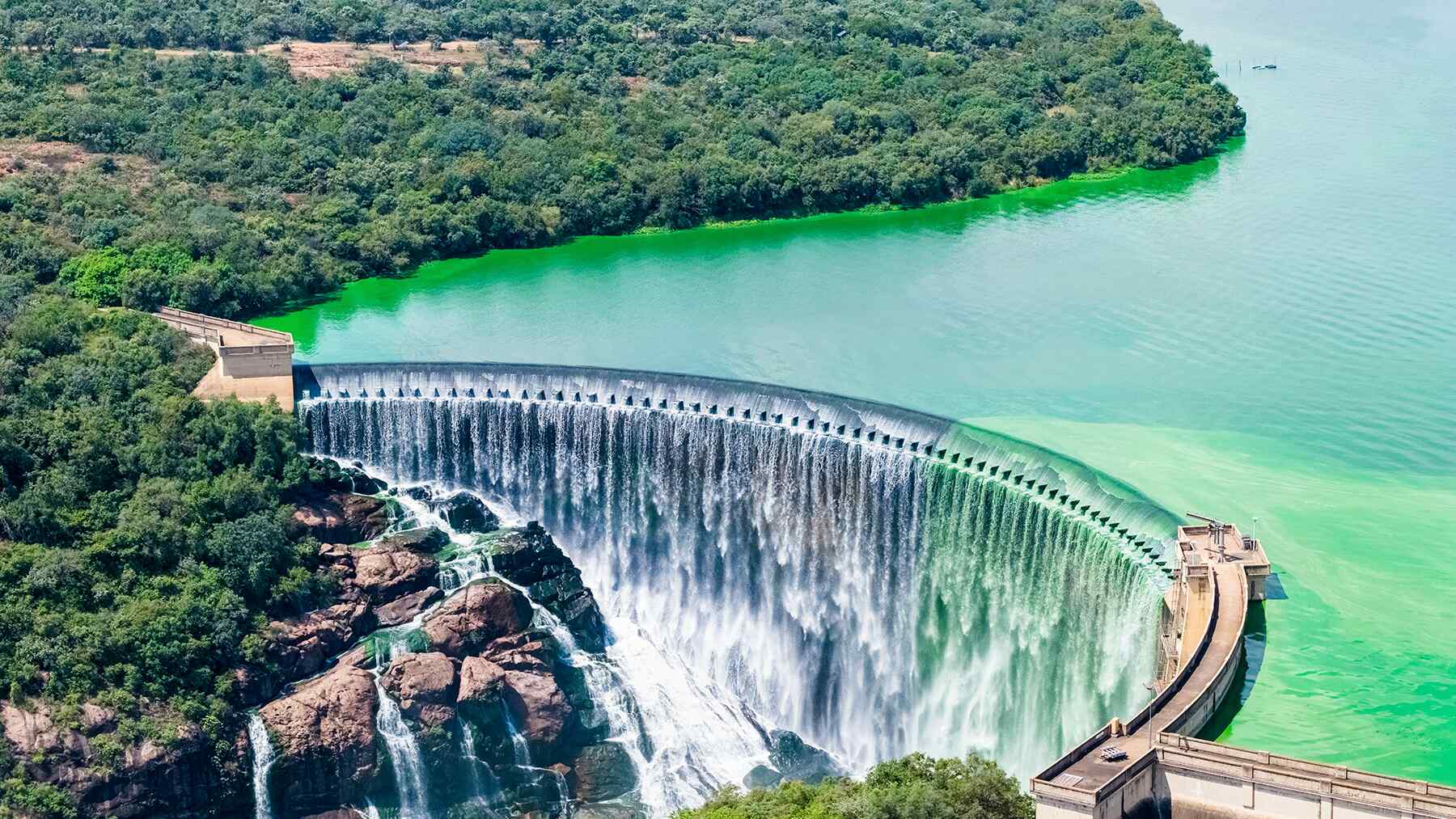 Credits: Energies Media Internal edition
Hydroelectric dams are supplying the world with substantial clean power, but the infrastructure is not as sustainable as once believed.
Every action has a reaction, and mankind’s desire to advance has always left something or someone to suffer the consequences.
Global industrialization was integral to pushing society into the future, but it slowly began to shorten the planet’s lifespan.
This means low-carbon, sustainable, secure energy grids now require baseload clean power to maintain operations and complete the global transition.
Now, renewable energy and electrification are deemed to save Earth, but will they truly?
How an advancing world has affected the environment
Years ago, human and animal labor were key to get things done. But it became difficult to enjoy the fruits of this labor while trying to keep pace with a growing population.
By the 18th and 19th centuries, these limitations began to impact manufacturing. Shifting from wood and rudimentary tools to mechanization became integral.
Production capabilities improved significantly, enabling manufacturing to scale up more easily and quickly.
The relentless pursuit of progress was set in motion, and with each advancement, the natural landscapes began to suffer.
Cities and industries were growing, which meant that forests had to be cleared and land segmented to keep up. Waterways were modified, disrupting natural habitats and migratory pathways.
Resources and fossil fuel extraction increased along with demand, leading to soil and water contamination.
All of this has set the stage for long-term ecological consequences. Today, despite human intervention, the problem persists.
The hidden costs of transitioning to clean energy
The Industrial Revolution’s heavy reliance on fossil fuels resulted in unprecedented greenhouse gas emissions.
Global climate change became inevitable, with the shifting atmospheric patterns and their effects still felt today.
At first, transitioning to renewable energy became the answer to this growing crisis.
Then, global electrification of carbon-heavy sectors such as transportation was seen as a complement to this shift.
However, the world is more technologically evolved and is now driven by smart devices, the IoT, and data computing.
This means low-carbon, sustainable, secure energy grids now require baseload clean power to maintain operations and complete the global transition.
Renewable infrastructure has to be scaled up, and often incorporates energy storage systems to overcome intermittency.
Unfortunately, this worsens the environmental footprint of wind and solar, which is why many nations are leaning toward hydroelectricity.
Now, recent insights about an Amazon dam could also tip the scales.
The relationship between hydroelectricity dams and local species
Several river-based hydropower projects are set to expand across the U.S. But before any project can and should move forward, the local impacts must be carefully considered.
The Amazon’s Xingu River illustrates how large-scale hydroelectric dams can affect the surroundings.
The findings are detailed in the study “Belo Monte Dam impacts: Protagonism of local people in research and monitoring reveals ecosystem service decay in Amazonian flooded vegetation,” published in Perspectives in Ecology and Conservation.
The Belo Monte dam’s long-term ecological effects
Vast stretches of the river, particularly the Volta Grande region, have lower water levels and changed dynamics.
Reduced natural flood pulses disrupt river connectivity with floodplains, altering critical feeding and breeding grounds for aquatic species.
Water temperature changed, oxygen levels depleted, and nutrients became lacking due to altered flow.
As a result, local fish populations became malformed due to physiological stress.
The Belo Monte crisis is a stark warning about the long-term costs of hydroelectric projects in ecologically sensitive regions.
Immediate intervention will be required to ensure the survival of these aquatic species and to prevent an ecosystem collapse.
Without urgent evaluation of environmental flows and vital monitoring programs, aquatic life will not survive large-scale modifications. Renewable energy may be integral to mitigating climate change, but responsible development plans are needed.
Anke Maree is a writer with a clear and engaging editorial style. Her work focuses on making complex topics accessible, informative, and relevant for readers across different areas of interest.
