
Researchers discovered a material where tiny internal vibrations can control electricity and may unlock a new generation of batteries
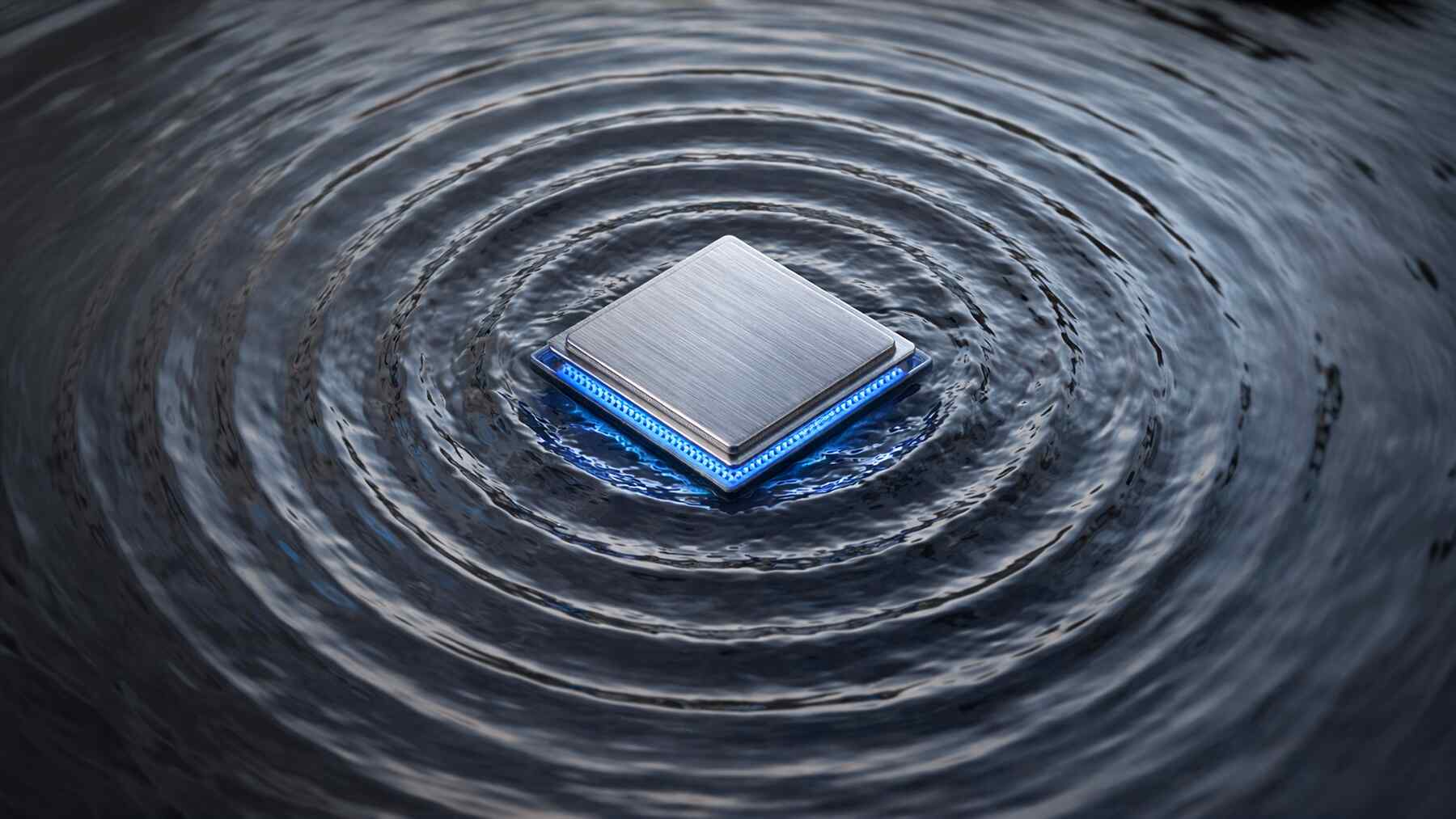 Credits: Mike Lewinski, Energies Media internal edition
A material has been created to lower the taxing costs of smart technological advancements.
High-tech innovations are evolving at a record speed, especially as they become more integral to daily operations by the minute.
Unfortunately, this means that global electricity demands are peaking with new records, offering an equal amount of solutions and problems.
You can review the study “Unraveling scattering contributions to the nonlinear Hall effect in topological insulator Bi2Te3” published in Newton.
Will the latest material design help the world break free from its energy paradox by rectifying currents?
How advanced technology is changing the world
Smart, high-tech innovations of today enable the world to live in a way that seemed like science fiction decades ago.
Physical publications such as newspapers and magazines have been replaced by social media. The click of a button has replaced postcards and letter writing as long-distance communication.
Travel time has been cut short, and books and libraries had to make way for the Internet of Things (IoT).
Shopping no longer has to be a perfectly timed outing due to online platforms, and AI is basically everywhere.
Thanks to all these advancements, the world has been connected in ways that were once unimaginable.
However, while this technological evolution is fast-tracking the future, the seemingly uncontrolled rapid growth could end up slowing itself down.
If researchers cannot find ways to overcome the taxing costs of advanced technologies, the effects will be felt globally.
Seeking ways to think outside the “paradox box”
AI constantly undergoes intensive training to keep up to date with the world events.
This endless amount of knowledge also requires substantial amounts of power. However, the greater the power, the greater the responsibility.
Existing infrastructure and the global grid are under tremendous pressure to provide electricity to keep data centers running. This is where the energy paradox comes in.
Renewable energy, such as solar, has become synonymous with data center development. This at least attempts to keep carbon footprints as low as possible.
Enter the energy paradox where the hardware still struggles to manage high-frequency currents. This makes advanced computing needed for AI inefficient.
Most conventional semiconductors face obstacles with output. More specifically, during the conversion or rectification of electrical currents, which experiences energy losses.
Fortunately, researchers found a way to overcome these obstacles by focusing on the quantum side of things.
The gatekeeper to managing the output
In their study, researchers explored the nonlinear Hall effect (NLHE) to address AC and DC output issues.
You can review the study “Unraveling scattering contributions to the nonlinear Hall effect in topological insulator Bi2Te3” published in Newton.
They essentially developed a material known as a “topological insulator,” which consists of exfoliated bismuth telluride (Bi2Te3).
Bi2Te3 is a unique semiconductor that acts as a “quantum gatekeeper.” On the inside, it is an insulator, but on the outside, electrons can flow across the surface.
“Tiny internal vibrations,” or rather phonons, dictate how the power flows. This insight allowed the team to control the NLHE to rectify currents with low energy loss.
The benefits of controlled vibrations
Bi2Te3 increases stability and effectively the performance of NLHE-based devices.
The material’s increased control enables efficient electrical current management at room temperature. The energy tax is reduced since AC can be converted to DC with high sensitivity.
These insights open new doors to durable and efficient energy-harvesting technologies.
Global energy demands will continue to increase, and most likely reach even higher peaks. At least the new material’s smallest movements can help the world break the “energy paradox.”
We can finally start to move beyond advanced technology’s taxing costs. However, it does not mean the digital evolution is over.
So innovations that prevent energy waste are key to keeping the future sustainable.
Anke Maree is a writer with a clear and engaging editorial style. Her work focuses on making complex topics accessible, informative, and relevant for readers across different areas of interest.
