
Belgium is sinking 23 concrete blocks weighing 22,000 metric tons into the sea to build a giant “outlet” that collects power from wind farms and sends it to ports and airports
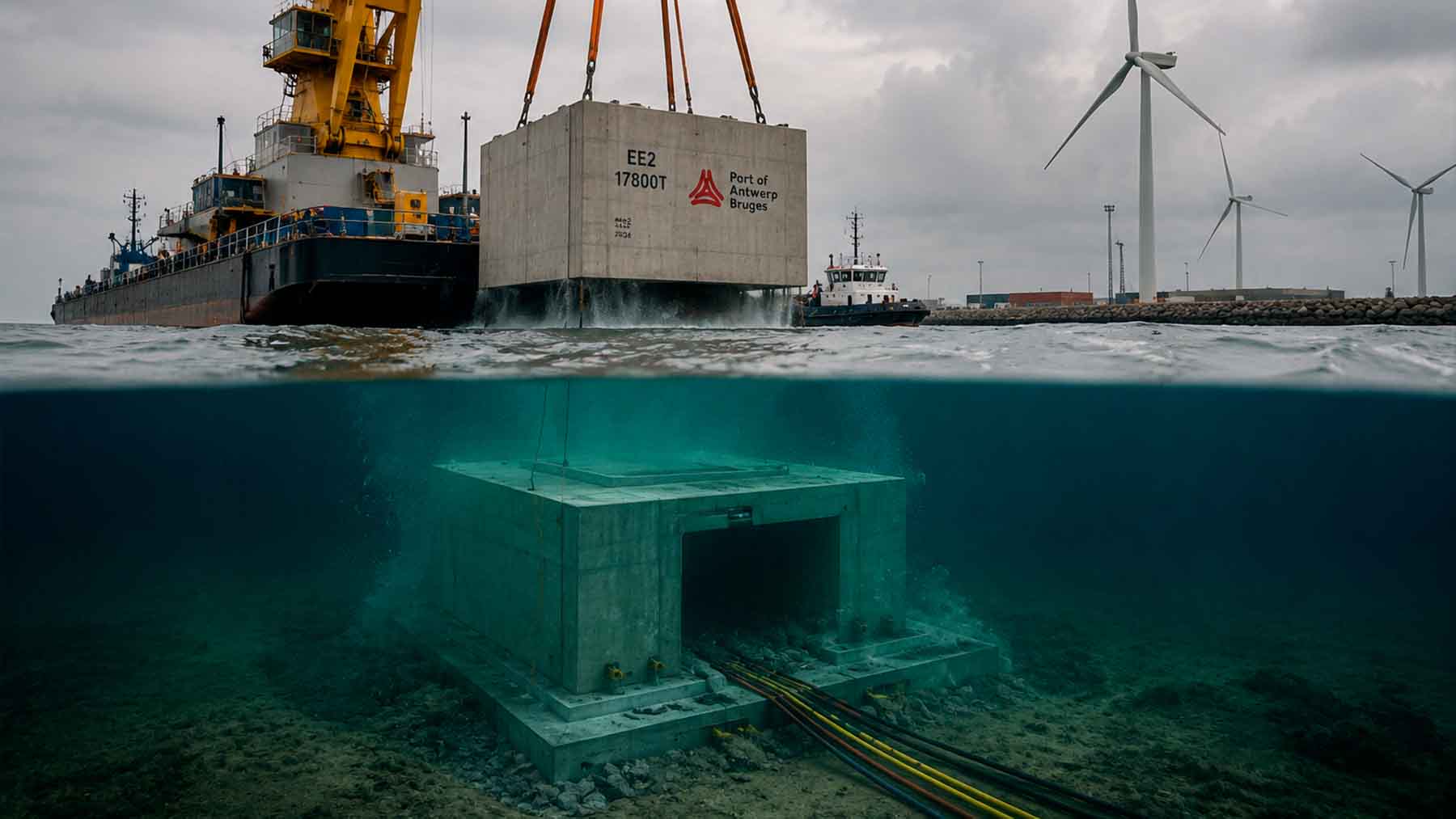 Image generated with artificial intelligence
Belgium is plunging 23 concrete blocks into the North Sea for its giant “outlet” that collects wind power.
Strict global climate targets are pushing countries to connect offshore clean energy to onshore electric grids.
However, this race is not only about decarbonizing, but also about meeting rising coastal electricity demands.
The key to these targets is replacing fossil fuels with clean electricity, especially across transportation, heavy industry, and manufacturing.
Belgium is leading the shift with its innovative offshore engineering project.
Will the energy the nation collects and transmits be enough to power vast expanses?
How coastal constraints complicate the green shift
Nearly 95 million people live along Europe’s diverse coastlines. This represents almost 21% of the European Union’s population.
This is one of the many reasons that these regions face rapid electricity growth.
Beyond the typical demands from AI data centers, European ports are mandated to supply vast volumes of power.
This supply is intended for docked ships, requiring an estimated 6 to 13 terawatt-hours of electricity each year by 2030.
Simultaneously, heavy industries along shorelines are decarbonizing with electric power.
For these reasons, electricity consumption has been surging to record highs.
Historically, it has been difficult for these nations to meet these demands with local renewable energy.
Strict zoning limits and widespread local opposition are additional complications for densely populated regions with scarce land.
Consequently, coastal grids have primarily remained carbon-heavy to prevent destabilization.
But as global climate targets tighten, innovation is needed to accelerate the green transition.
International targets driving Belgium’s offshore shift
2026 served as a prime example of the effects of global warming as it accelerates.
Set to rank among the hottest years ever recorded, the world faced extreme weather events. While some experienced prolonged heatwaves, others had to brave severe cold snaps.
As a result, the pressure to decarbonize has become more vital than ever.
Global climate frameworks commit nations to achieving zero carbon emissions by 2050.
The key to these targets is replacing fossil fuels with clean electricity, especially across transportation, heavy industry, and manufacturing.
Belgium, as a member of the EU, is mandated to reduce greenhouse gas emissions by 55% by 2030 compared to 1990 levels.
The backbone of the nation’s energy strategy is offshore wind.
The goal is to boost capacity to 5.8 gigawatts, which will require new high-voltage grid infrastructure.
Consequently, a centralized hub, financed by the European Investment Bank, is rising in the North Sea.
A concrete island powered by wind energy
The Princess Elisabeth Island project is being developed by Belgian grid operator Elia Group.
Located nearly 28 miles off the coast, it is the first artificial energy island in the world.
The project’s primary goal is to collect and transmit offshore wind energy efficiently.
It will serve as a central offshore power “outlet,” bundling cables from surrounding wind farms in the zone.
Once completed, up to 3.5 GW of green electricity will be transmitted to the mainland.
A nature-inclusive design providing domestic and cross-border power
The 23 sand-filled concrete caissons form the outer perimeter of the artificial island.
It will also integrate environmental features, including underwater relief structures for marine species, bird-nesting ledges, and gravel beds.
Subsea cables from individual wind turbines will supply power to high-voltage electrical stations on the island.
The electricity is converted, stabilized, and carried to coastal ports and cities with specialized subsea cables.
Currently, Princess Elisabeth Island is under construction in the North Sea and is making steady progress.
The remaining caissons are being placed to complete the foundation ring. Once the civil work has been completed, Elia Group will deploy the high-voltage electrical stations.
If all goes accordingly, mainland grids and international interconnectors will be fully connected by 2030.
Ultimately, this innovative hub will secure Europe’s clean energy independence.
Anke Maree is a writer with a clear and engaging editorial style. Her work focuses on making complex topics accessible, informative, and relevant for readers across different areas of interest.
