
Scientists laid proposed floating wind farms over a map of Spain’s Mediterranean wildlife and found 135 vulnerable species inside the potential impact zone, including blue sharks, mollusks, and sponges
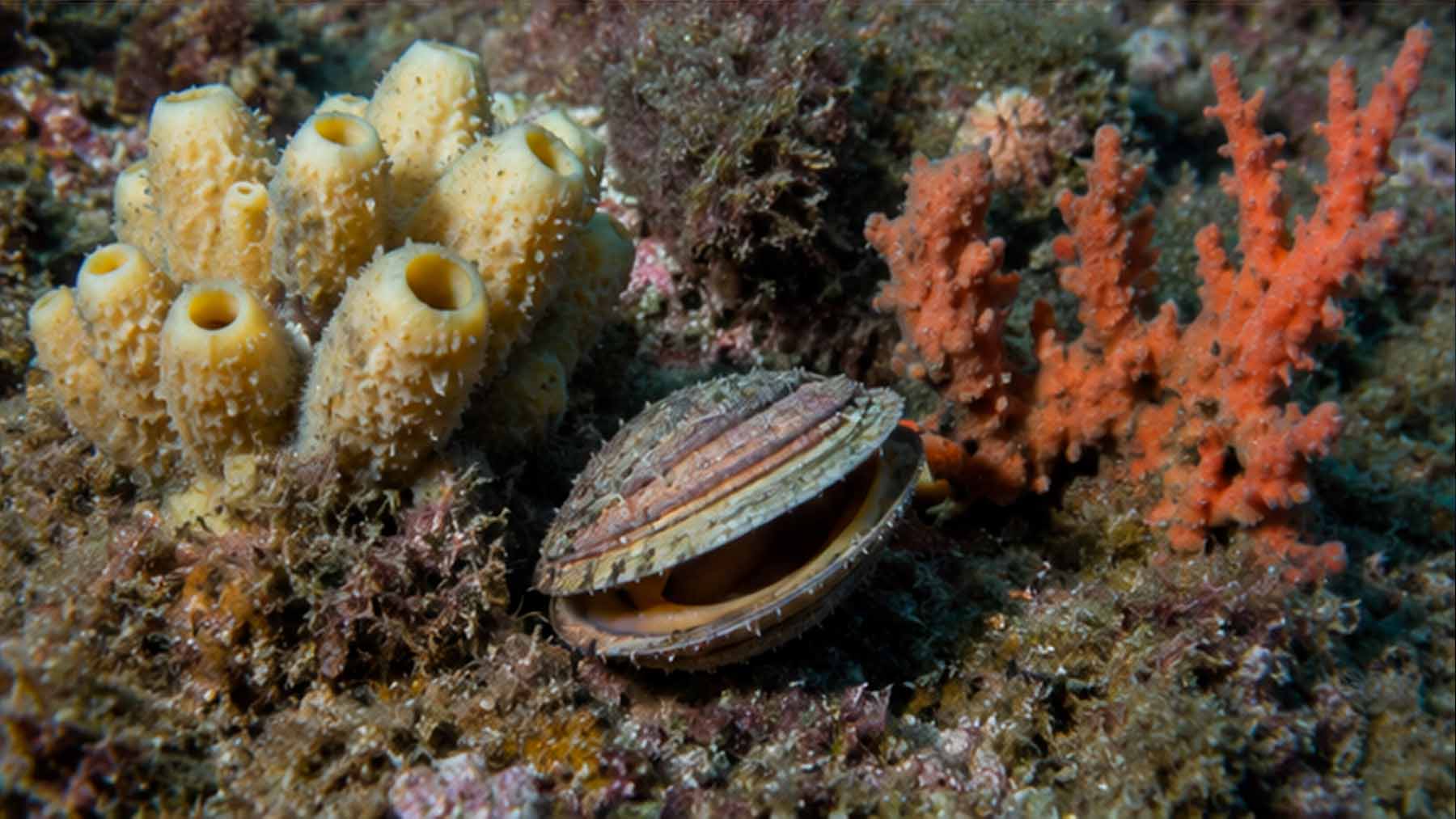 Image generated with artificial intelligence
Proposed floating wind projects in the Mediterranean could put over 130 vulnerable marine species at risk.
Worldwide, nations are urgently expanding offshore infrastructure to meet ambitious climate goals.
Floating installations, in particular, are rising to unlock higher power potential in deeper waters.
Assessing the potential impacts of floating Offshore Wind Farms on policy-relevant species: A case study in the Gulf of Roses, NW Mediterranean.
The Spanish Mediterranean could open new maritime territories for clean generation, but environmental concerns have been triggered.
Will developers find a way to balance green capacity with ocean biodiversity conservation?
How scaling up offshore will drive the clean transition
Globally, wind power is among the top clean electricity producers.
However, deployment of modern onshore turbines has faced many challenges.
It has historically led to significant opposition from locals who are concerned about noise and visual pollution.
Additionally, these facilities require a vast spatial footprint, raising the potential of disrupting habitats and vulnerable wildlife.
As grids undergo rapid electrification and AI data centers continue to evolve, more installed capacity will be needed.
Without it, widespread power fluctuations and blackouts can become more frequent worldwide.
Furthermore, the global renewable energy transition is heavily reliant on replacing fossil fuels with green sources.
To satisfy ambitious decarbonization regulations while meeting growing electricity demands, the sector has moved offshore.
Deploying offshore turbines overcomes land-based constraints. It also ensures delivery of clean power directly to major coastal hubs.
Unfortunately, standard fixed-bottom turbines are limited to shallow depths, which are quickly filling up across global coastlines.
The wind sector’s move into the deep ocean
Beyond limited depths, standard offshore turbines also often compete with commercial fishing and maritime vessels.
These barriers are being addressed by deploying floating turbines to tap vast wind resources in deeper waters.
The floating platforms are anchored to the seabed with specialized cables, enabling deployment further out at sea.
Many nations are now capitalizing on this technology.
Developers are now increasingly interested in the Spanish Mediterranean.
New proposed projects will open renewable generation in target areas like the Gulf of Roses and Cap de Creus.
The region, in particular, offers extremely strong and consistent wind resources near major coastal energy markets.
These factors make it a prime location for future growth of floating offshore capacity.
However, before any developments can proceed, it must be proved that the installations will not disrupt fragile maritime wildlife.
The Spanish National Research Council conducted studies to evaluate the potential ecological impact in vulnerable zones.
Mapping risks across the most sensitive waters
The Gulf of Roses and Cap de Creus have several vital ecological zones.
The proposed floating installations were mapped to evaluate industrial stressors interacting with protected ecosystems.
Using a Generalized Impact Assessment, underwater noise, habitat degradation, and structural vibrations were checked.
Finding up to 135 vulnerable, policy-relevant species in the potential impact zone
After analysis, it was found that up to 135 marine species would be affected by the industrial stressors.
These species are prioritized under EU directives, the Barcelona Convention, and national laws.
They are legally protected by conservation frameworks, and the proposed wind projects present direct threats.
The vulnerable species critical to regional biodiversity include:
- Deep-sea invertebrates, such as sponges and corals
- Sharks, such as the blue shark
- Rays, such as the giant devil ray
- Seabirds, such as the Mediterranean gull and Balearic shearwater
- Marine mammals, such as the bottlenose dolphin and fin whale
The discovery of these 135 vulnerable species within the potential impact zones set a vital boundary for floating wind expansion.
It demonstrates that capacity growth in the Spanish Mediterranean must occur with strict layout planning.
Furthermore, policymakers and developers must consider vulnerable ecological hotspots when proposing future projects.
Ultimately, the study highlights that regional floating wind capacity must protect marine biodiversity, not compromise it.
The study can be reviewed using APA CITE: Wawrzynkowski, P., Molins, C., & Lloret, J. (2025). Assessing the potential impacts of floating Offshore Wind Farms on policy-relevant species: A case study in the Gulf of Roses, NW Mediterranean. Marine Policy, 172, 106518.
Anke Maree is a writer with a clear and engaging editorial style. Her work focuses on making complex topics accessible, informative, and relevant for readers across different areas of interest.
