
Five spillway openings at Washington’s Wells Dam guide over 90% of several juvenile salmon runs safely past turbines
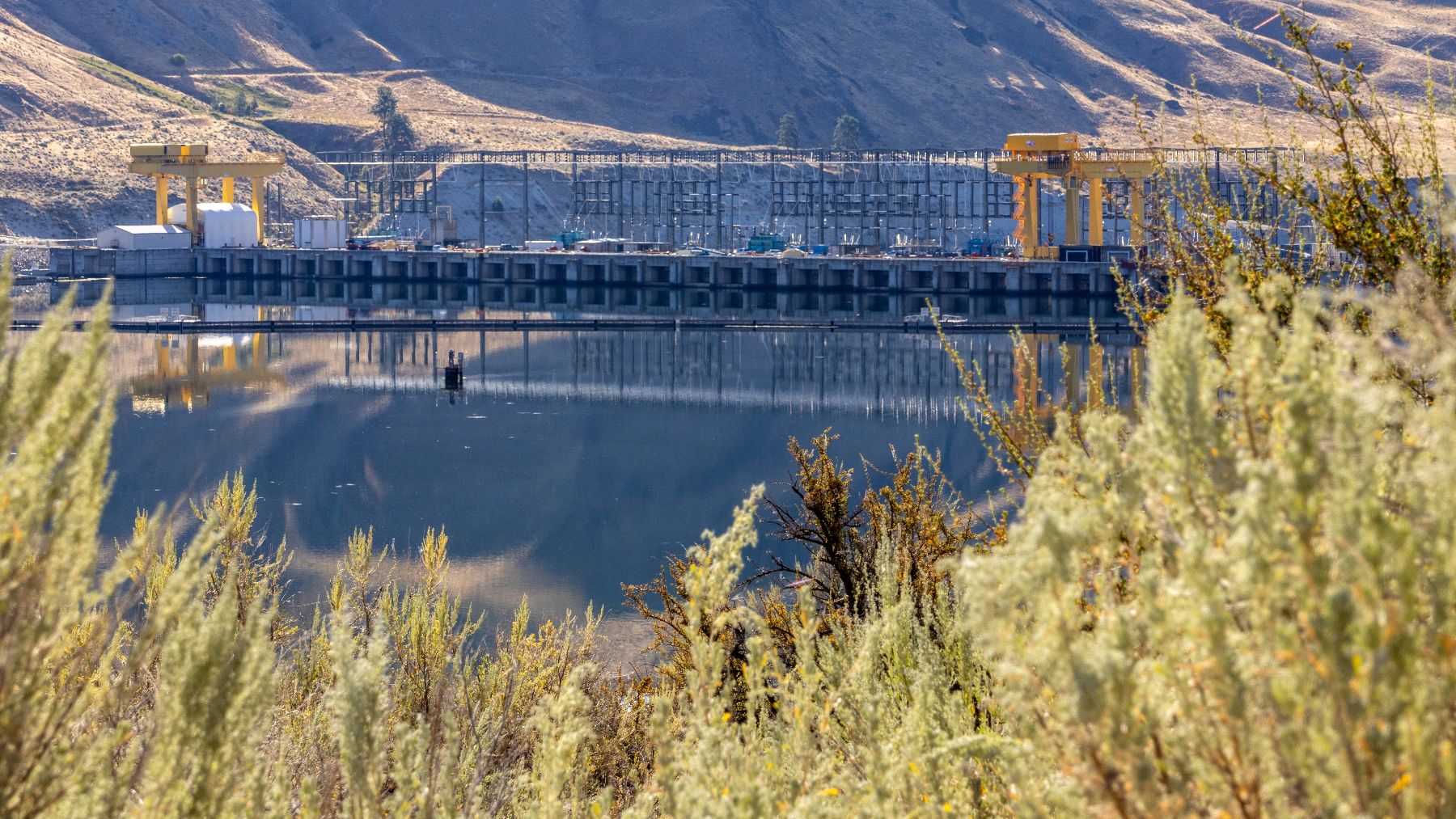
Wells Dam has unique surface openings that help guide young native fish away from danger.
As electricity demand rises across the U.S. Pacific Northwest, hydroelectric plants become more fundamental in balancing strained grids.
In Washington, the Columbia River plays an essential role in the state’s hydropower production.
It offers a clear blueprint for existing dams undergoing urgent upgrades, as well as prospective developments worldwide to protect biodiversity.
However, the facility’s structures present serious hazards for migrating fish vital to the region’s culture, economy, and ecology.
Will diverting juveniles to safety truly protect local biodiversity?
How hydroelectric energy has become more vital for higher power consumption
The Pacific Northwest is experiencing record levels of electricity consumption.
The region’s average power usage is roughly 22,000 megawatts, with seasonal demand peaking at over 35,000 megawatts.
This high demand is driven by data center expansion, rapid population growth, and widespread electric vehicle adoption.
In some parts of the region, data centers account for almost 25% of total power demand.
Over the coming decades, regional annual energy consumption is projected to grow by up to 3.1%.
As expected, this sudden load surge is severely straining the area’s electrical grid.
Utilities are pressured to prevent dangerous rolling blackouts and rely on fossil fuels during peak demand spikes.
By continuously burning fossil fuels, harmful emissions in the atmosphere rise.
This significantly slows the achievement of clean transition goals and threatens state climate targets.
Solar and wind capacity have played an essential role in curbing these emissions, but they remain inherently intermittent.
This makes legacy hydropower dams even more relevant today.
A fine line between balancing clean power generation with biodiversity conservation
Hydropower in the United States continues to play a crucial role in clean electricity generation.
In the Pacific Northwest, it supplies approximately 85% of regional power.
Dams on the Columbia River provide high-capacity, carbon-free energy, specifically underpinning Washington State’s entire green shift.
Unfortunately, these legacy hydroelectric plants also create physical barriers along historical fish migration corridors.
In Douglas County, migrating salmon and steelhead populations are especially vulnerable to artificial river barriers and spinning turbines.
When these fish runs decline, it affects the local ecosystem, fishing economies, and tribal heritage.
This is why preserving local biodiversity remains essential to the region and must be prioritized.
For Douglas County PUD, this has become an immense challenge.
The utility must balance dedicated environmental protection for native fish with maximum power production.
Fortunately, the Wells Dam provides a crucial blueprint for achieving this balance.
A Juvenile Fish Bypass System is the site’s secret weapon.
The Wells Dam’s innovative hydrocombine design
Wells Dam, completed in 1967, harnesses the Columbia River’s natural flow.

It differs from traditional hydropower plants, as it features a unique hydrocombine design.
This design integrates the switchyard, powerhouse, spillway, and fish facilities into one unit.
Five specialized bypass openings were added to the spillway structures in the late 1980s.
By learning the different migration schedules of young salmon, the design helps improve their protection.
Boosting juvenile survival without sacrificing power generation
Juvenile salmon migrate downstream near the water column’s top.
The five openings use this natural migration instinct, guiding fish seamlessly into bypass channels.
The smolts are then safely guided past the dam before reaching the spinning turbines.
Clean power generation thus continues while over 90% of juvenile runs are routinely guided.
As a result, migration survival rates exceed 95%.
Despite being constructed in the 1980s, the system remains fully operational and highly efficient today.
The surface bypass system proves that environmental conservation and hydropower can coexist.
It offers a clear blueprint for existing dams undergoing urgent upgrades, as well as prospective developments worldwide to protect biodiversity.
Ultimately, fish protection systems are key to keeping legacy dams relevant in modern society, enabling America’s green shift to progress.
Anke Maree is a writer with a clear and engaging editorial style. Her work focuses on making complex topics accessible, informative, and relevant for readers across different areas of interest.
