
At Scotland’s Pitlochry Dam, salmon swim through 34 connected pools to reach Loch Faskally as visitors watch
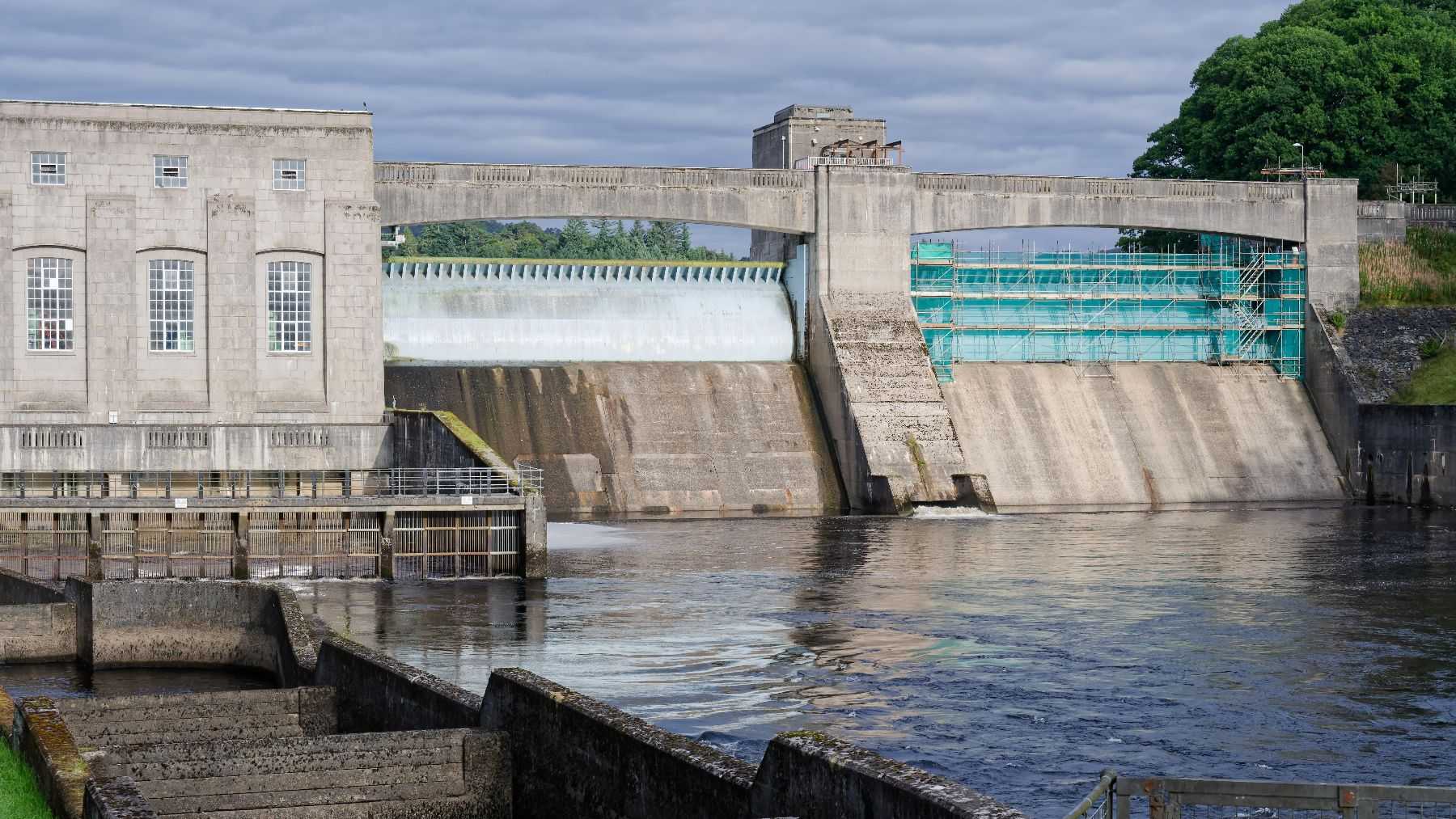 Pitlochry Dam's salmon ladder
The Pitlochry Dam in Scotland is a true testament to balancing green power generation with vital wildlife conservation.
Since its expansion across the Highlands during the 20th century, hydropower has played a key role in shaping the nation.
However, these plants are directly threatening native Atlantic salmon populations, a cornerstone of Scotland’s national heritage.
Realizing the urgent need for long-term mitigation, energy developer SSE initiated targeted wildlife conservation protocols at Pitlochry Dam.
Fortunately, a system at Pitlochry Dam stands as a historic triumph of eco-friendly design.
How does engineering conserve wild salmon runs?
How Scottish legacy hydropower facilities have evolved into modern assets
The Highlands saw the construction of over 50 massive dams during the 1940s and 1950s.
Engineers from the North of Scotland Hydro-Electric Board built them.
The goal was to supply electricity to over 90% of rural northern communities for the first time.
Years later, this legacy network now serves as the backbone of Scotland’s renewable grid.
It currently delivers over 1.5 gigawatts of hydro capacity.
However, the role of these facilities has become more critical than ever, as they maintain overall grid stability.
The national grid is struggling to process higher total electricity demand.
This is why consistent volumes of clean baseload power are needed, and hydropower plants deliver it.
These facilities respond within seconds, balancing intermittent energy sources like wind, which provides over 70% of renewable generation.
Unfortunately, they have also historically presented substantial ecological costs.
Dams obstruct natural river channels, posing major barriers to native fish species, especially the culturally important Atlantic salmon.
The need to conserve local fish populations
The cultural and economic value of Atlantic salmon is immense across Scotland.
Wild salmon runs have supported coastal communities for centuries, especially through local angling tourism and river management jobs.
But mid-century hydroelectric projects significantly altered river flows and blocked essential spawning routes.
By cutting off upstream breeding grounds, the Atlantic salmon experienced a sharp decline in population numbers across Scottish rivers.
Understanding these ecological impacts became vital in advocating for change.
Early river bailiffs manually tracked migrating fish numbers using standard visual counts.
War veteran Sandy Philips was a key example. He served as the Pitlochry Dam’s salmon observer for 28 years until his retirement in 1979.
Realizing the urgent need for long-term mitigation, energy developer SSE initiated targeted wildlife conservation protocols at Pitlochry Dam.
Engineers developed a specialized migratory fish bypass system, enabling migrating fish species to safely move past the dam barrier.
Pitlochry Dam’s innovative fish ladder system
Legacy hydropower dams are being upgraded globally to improve native wildlife preservation.
However, some infrastructure, such as Pitlochry Dam, has had an innovative protection system since initial construction.
This dam is located on the River Tummel in Perthshire, Scotland, and was built between 1947 and 1951.

It consists of 34 connected artificial pools that gradually ascend in height and assist salmon migration.
Swimming from pool to pool toward their final destination
The Atlantic salmon migrates across the pools using small circular openings.
These openings allow them to gradually “climb” toward Loch Faskally.
This incline is significantly steep, which is why three oversized resting chambers were added for the fish to rest.
Today, an automated electronic counter is used to track each salmon as it exits the final pool into the reservoir.
The dam also has an underground observation room, featuring large underwater glass windows. Visitors can watch the fish migrating from there.
Both Pitlochry Dam and the innovative fish ladder system remain fully operational today.
Approximately 4,000 to 5,000 salmon can now complete their migration journey annually.
By successfully reconnecting crucial salmon migratory corridors, it proves that green generation does not have to compromise native ecosystems.
Ultimately, integrating fish ladder systems into legacy hydropower infrastructure is key to balancing power grids more sustainably.
Anke Maree is a writer with a clear and engaging editorial style. Her work focuses on making complex topics accessible, informative, and relevant for readers across different areas of interest.
