
Near Rome, Georgia, Rocky Mountain sends water through a 700-foot tunnel, then reverses three turbines to pump it uphill overnight
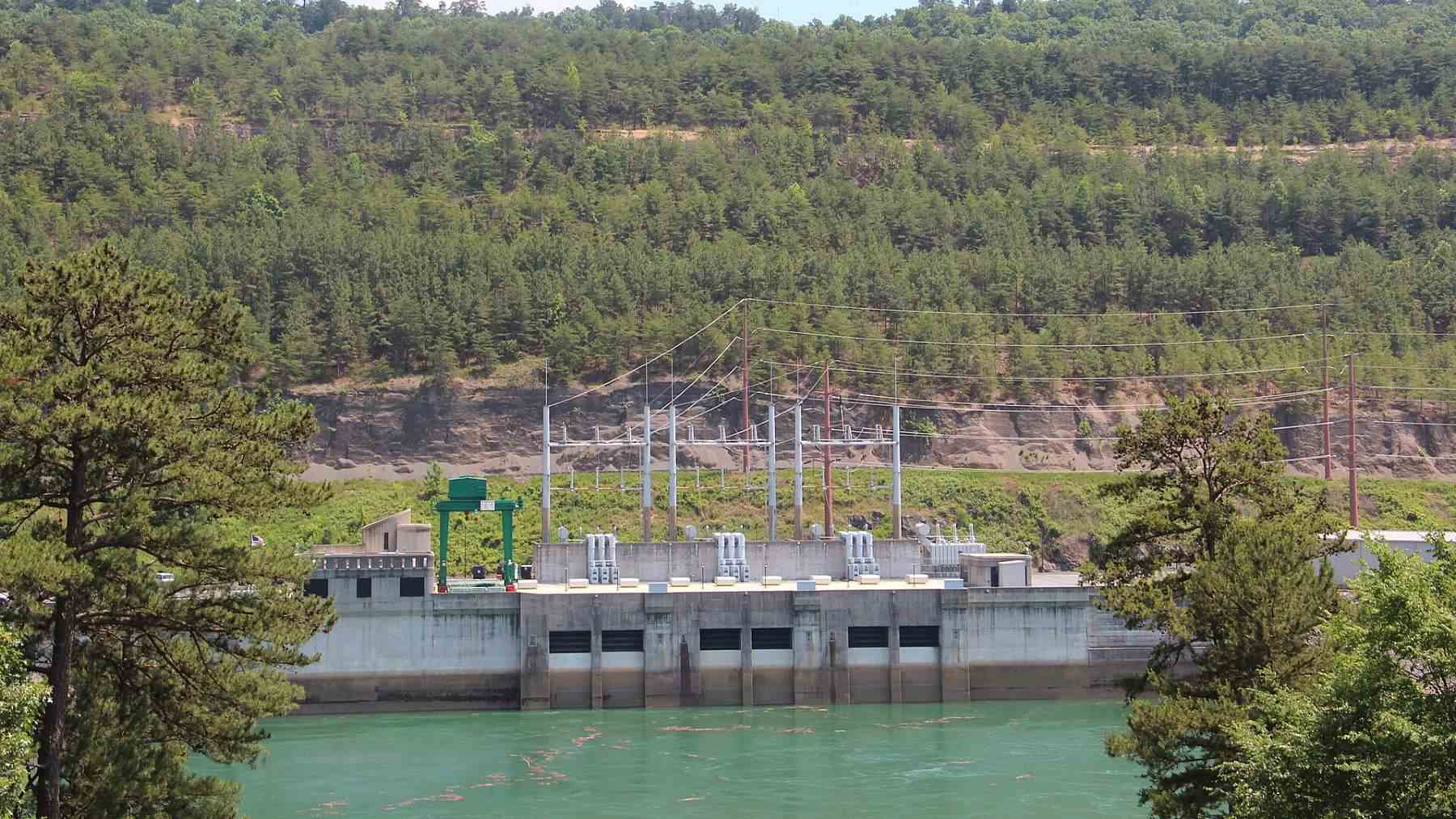
Deep in the southern Appalachian foothills near Rome, Georgia, something large and largely invisible happens every night. Inside Rocky Mountain — an actual mountain — machinery stirs, tunnels fill, and water begins moving in a direction it wouldn’t naturally go.
The facility is called the Rocky Mountain Pumped-Storage Hydroelectric Plant. It’s been running this way since 1995. And the scale of what it does, hidden beneath forested ridgelines, is easy to miss entirely.
A mountain that works two shifts
The Rocky Mountain Pumped-Storage Hydroelectric Plant doesn’t run on a single schedule — it runs on two. By day, it generates electricity. By night, it stores it. The same mountain, the same tunnel, the same three machines, just operating in reverse.
Those peak periods are exactly when Rocky Mountain earns its keep: it can start up quickly, delivering flexible, reliable electricity precisely when demand spikes.
The plant sits in the southern Appalachian foothills, where an upper and lower reservoir are separated by significant elevation. A 700-foot tunnel bored through the mountain connects them. Water moves down through that tunnel to generate power, then back up through it to store energy for later. Commissioned in 1995, the plant has served Georgia reliably for more than 26 years, with a nameplate capacity of 848 MW delivered through three reversible pump/turbine units — the mechanical heart of the whole operation.
How water becomes a battery
The concept behind pumped-storage hydro is straightforward, even if the engineering isn’t. At night, when electricity demand drops and power is cheaper, the plant uses that off-peak electricity to pump water from the lower reservoir up through the tunnel to the upper reservoir. The water sits there, holding energy in the form of gravity. Then, during peak demand hours — typically late afternoon and early evening, when people get home and start running appliances — it’s released back down, spinning the turbines and generating electricity exactly when the grid needs it most.
What makes this work is reversibility. The same three units that act as pumps overnight become generators during the day, with no separate machinery required. That elegance is also what makes pumped storage one of the most practical large-scale energy storage technologies available today.
Matching electricity supply to demand in real time is one of the central challenges of grid management. Rocky Mountain doesn’t solve that problem entirely, but it provides something rare: a fast-response, dispatchable source of clean energy that can be called on within minutes.
The infrastructure behind the illusion of simplicity
From a distance, Rocky Mountain looks like what it is — a forested ridge in northwest Georgia. What you can’t see is the scale of what’s been built into and around it.
The upper reservoir covers 221 acres, held in place by a 12,800-foot-long earth and rock-fill dam, with an emergency overflow spillway and three miles of access roads threading through the terrain. The lower reservoir is even larger: 600 acres, contained by seven earth and rock-fill dams, a 100-foot concrete-gravity dam, and a reinforced-concrete gate structure. The powerhouse itself stands 175 feet high.
Monitoring all of it is a Dam Safety Instrumentation System — a network of sensors, dataloggers, and fiber optic communications installed across the facility. Three dataloggers collect structural data from the power plant, the main dam control building, and the upper reservoir control building. A fourth monitors weather conditions around the clock. What looks like a quiet mountain landscape is, in fact, a continuously operating system being watched from multiple points simultaneously.
Powering nearly two-thirds of Georgia’s land mass
Oglethorpe Power owns 74.6% of the plant; Georgia Power holds the remaining 25%. Together, they operate Rocky Mountain to serve 38 electric membership cooperatives — the EMCs that distribute power across Georgia to homes, businesses, and public institutions.
The plant’s total capacity is listed at 1,095 MW, enough to help power approximately 50,000 homes during peak periods. Those peak periods are exactly when Rocky Mountain earns its keep: it can start up quickly, delivering flexible, reliable electricity precisely when demand spikes. The cooperatives it serves cover nearly two-thirds of Georgia’s land area, reaching about 4.7 million people. For a facility most Georgians have never heard of, its footprint is enormous.
A 5,000-acre park — and a license that shapes the next 50 years
There’s another side to Rocky Mountain that rarely comes up in conversations about energy infrastructure. The plant site includes a 5,000-acre recreation and fishing area, managed in partnership with the Georgia Department of Natural Resources — so the same mountain that stores megawatts overnight also hosts anglers and hikers during the day.
That dual identity becomes especially relevant now. Rocky Mountain’s original FERC license, issued in 1977, expires December 31, 2026. Oglethorpe Power filed its final license application in December 2024. The new license, if granted, will define how the plant operates for the next 40 to 50 years, covering not just power generation but environmental stewardship, recreation access, and public safety.
Relicensing is a rare moment of public reckoning for infrastructure that usually operates beyond public view. It’s a chance to ask what a facility like this owes to the land it occupies, the water it moves, and the millions of people whose lights it quietly keeps on. The mountain has been working two shifts for three decades. The question now is what the next shift should look like.
Kelly is an experienced writer with 15 years of experience exploring the big stories that shape our world, from tech breakthroughs and space exploration to climate, energy, and the fascinating quirks of science. She has a talent for turning complex ideas into sharp, memorable insights that stay with readers long after they’ve finished reading.
