A Spanish vineyard raises 1,000 square meters of solar panels 16 feet above grapes, letting harvesters pass beneath two panel designs
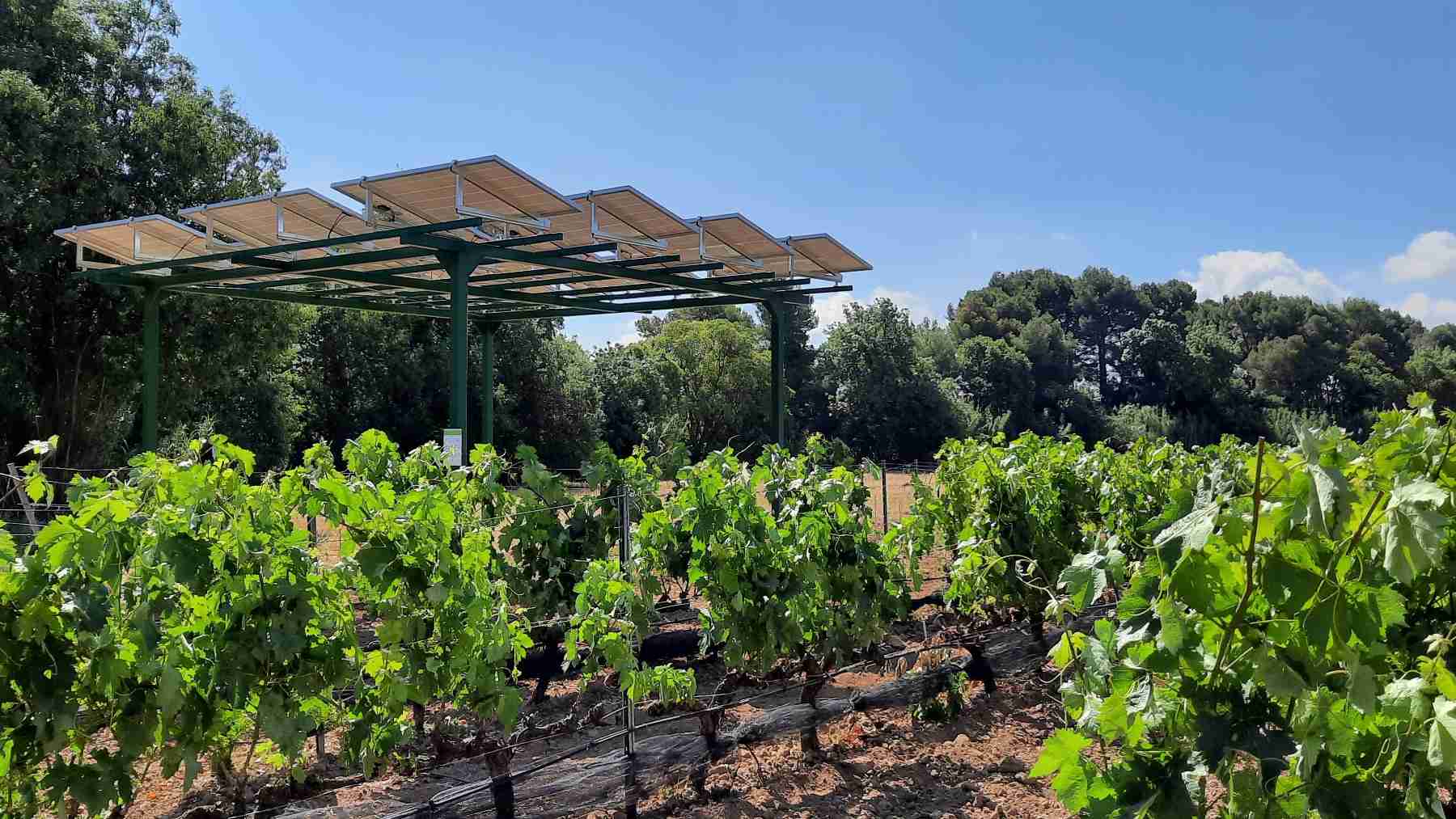 Familia Torres, Solarwine
A vineyard needs the right amount of sun, shade, and airflow.
One Spanish winery has fitted agrivoltaic solar panels over its vines while still leaving the ground free for growing grapes and operating harvesting machinery. This provides shade for the vines while producing energy simultaneously.
But how can panels fare with crops that need sunlight?
Wineries rely on electricity for their production, storage, and hospitality services, so having another source of generation on site can be very beneficial.
Why vineyards are switching to solar
Weather plays a large role in wine production. Temperature, sunlight, and rainfall impact the grape ripening cycle and the start of the harvest.
Rising temperatures are challenging for vineyards in Spain’s Penedès region. Warmer temperatures can speed up grape ripening, bringing harvests forward and affecting wine quality.
Wineries are rethinking ways to survive the heat without interfering with vineyard work.
An opportunity is provided by solar power. Wineries rely on electricity for their production, storage, and hospitality services, so having another source of generation on site can be very beneficial.
Vineyards require open rows for the vines, workers, and machinery. The challenge is to find space for the panels without taking away productive land.

A vineyard turns into a testing ground
The Familia Torres winery installed a pilot agrivoltaic system in its organic vineyard in the Penedès region of Catalonia.
The installation is part of the SOLARWINE project, which examines the use of photovoltaic technology in combination with wine production.
It will research the effect of the panels on the vineyard’s microclimate, on the grape development, and on energy production. Sensors will monitor soil and climate conditions to help the team compare agricultural and energy performance.
The electricity produced will be used for the Torres Brandy ageing cellars and the Familia Torres Restaurant Mas Rabell, both located nearby.
It is one of two SOLARWINE pilots, the other being in Castilla-La Mancha. Other trials include Virginia crops growing under solar panels.
Two panel designs in one vineyard
The installation covers 1,000 square meters, with solar panels raised five meters above ground. That’s around 16 feet, which is enough room for a harvesting machine to pass underneath.
This allows harvesting machines to continue moving along the rows.
The pilot has two PV designs: opaque panels and semi-transparent bifacial panels. Opaque panels provide a solid cover, while semi-transparent panels let some light through.
Bifacial technology can capture sunlight from both sides of the panel.
By testing the two designs, it will be possible to compare their effect on harvest and electricity production.
Vines need sunlight, but the hot summer sun can cause heat stress. The panels are meant to shade the vines and protect them from direct sunlight. The goal is to slow grape ripening with rising temperatures and earlier harvests.
Sensors will determine whether the approach works in practice and if it is technically and economically feasible.
Another model is a Sicilian project that combines solar panels with sheep grazing.
The Penedès installation is not yet proof of increased wine production with elevated panels. It’s meant to show how elevated panels affect vines, the local environment, and energy output.
But it shows the potential of adding renewable generation to an existing agricultural operation.
If the results are positive, the trial could help guide the vineyards through hotter seasons and rising energy demands.
How can farms produce food and clean power without sacrificing either? That’s the question posed by Spain’s solar panels above a working olive grove.
The value of the project will be shown through the results over time. Vineyard owners will need sufficient evidence that adding the panels supports grape production overall.
The project offers a practical example of how using agricultural land could serve two purposes at the same time, which could be a good solution in the end.


Bronwyn has over 20 years of experience in media, digital publishing, and storytelling as a journalist, content creator, and publishing editor. She writes about various niches and has a keen interest in science, technology, energy, and innovation.