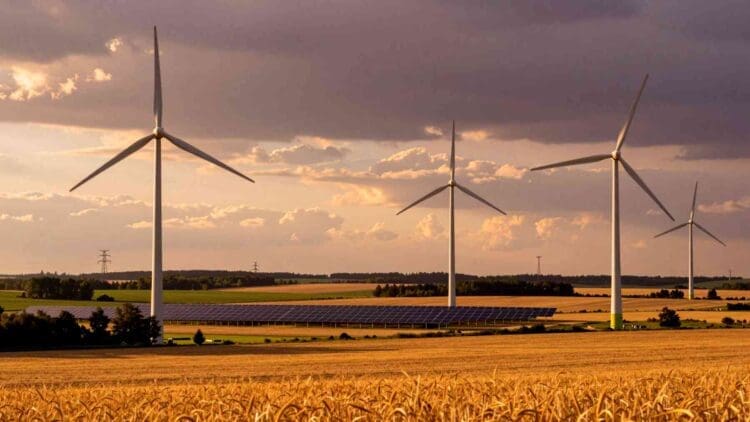

Actis just made its first move in Poland. The firm acquired Klara Renewables—a 171 MW operational onshore wind portfolio—from CVC DIF. It’s not just a one-off deal. Actis is using it to seed a new renewable energy platform targeting up to 1.5GW across onshore wind, solar PV, and battery storage.
This is Actis’ second renewable energy platform in Central and Eastern Europe. The first was Rezolv Energy, launched in Romania and Bulgaria in 2022, which has since grown to 2.3GW.
Actis enters Poland with Klara Renewables acquisition
Actis isn’t treating this as a finish line—it’s a foundation. Buying an already-operational portfolio gives the firm an immediate foothold in Poland, along with the grid connections and regulatory standing that come with it. Then it builds from there.

Klara Renewables brings 171MW of operational onshore wind to the table. Those assets seed a platform Actis plans to grow to up to 1.5GW, spanning onshore wind, solar PV, and battery energy storage systems (BESS). Starting with producing assets rather than a blank greenfield slate gives the new platform a running start — and that matters in a market moving fast.
Portfolio details and hybridization potential
The wind assets sit across three Polish regions: Wielkopolska, Kujawy-Pomorze, and Podlasie. That geographic spread reduces concentration risk and distributes the platform across different parts of the country’s transmission network.
All wind projects are backed by contracts for difference running through 2038–39—over a decade of contracted cash flows. That kind of long revenue tail supports further investment and development without constant uncertainty about returns. The turbines use Vestas technology. Beyond existing wind generation, Actis sees roughly 275MW of hybridization potential at these sites, co-locating solar PV and BESS projects on grid connections already in place. That sidesteps one of the biggest bottlenecks in renewable development: securing new grid access, which can take years.
Platform growth strategy and regional expansion
Hybridizing existing sites is just the start. The platform will also pursue late-stage development project acquisitions, with hybrid energy projects as a particular focus. Grid access is scarce, and building around connections you already hold accelerates the timeline considerably—waiting for new ones can stall projects for years.
Poland’s market fundamentals were a clear draw. Jaroslava Korpanec, Head of Central & Eastern Europe at Actis, pointed to the country’s “open, regulated electricity market and strong institutions and regulatory frameworks” as key reasons for the investment. For an infrastructure investor committing capital over a multi-decade horizon, regulatory predictability matters as much as the wind resource itself.
Rezolv Energy — Actis’ first CEE platform, launched in Romania and Bulgaria in July 2022 — has since scaled to 2.3GW. That’s a useful reference point for how quickly Actis can build out a platform once it has seed assets and market access in place.
Poland’s energy transition context
Poland’s energy mix is a story of transition, but one with a long road ahead. Coal still accounts for 56% of domestic electricity generation, which stands out sharply against the EU’s broader decarbonization push. Wind and solar have made real inroads—contributing 15% and 9% of the mix, respectively—yet the gap between current output and future targets remains wide.
Poland has set a target of generating more than 50% of its electricity from renewables by 2030, alongside plans to decommission coal capacity by 2040. Hitting both goals requires serious build-out. The IEA estimates Poland will need at least 84GW of renewable capacity by 2040 just to keep pace with demand growth driven by industry and digitalization.
Solar has been moving particularly fast. The IEA identifies Poland as one of the fastest-growing solar PV markets in the EU, and the country has also seen strong heat pump adoption while emerging as a player in offshore wind. That breadth of activity signals a market serious about the transition—even if coal still dominates today’s generation stack.
Energy security adds another layer. As Korpanec noted, energy independence remains a priority for governments and consumers across the region. For Poland specifically, domestic renewable generation reduces exposure to fuel imports and price swings — a practical argument for the transition that stands entirely on its own.
Klara’s assets provide a stable base
The Actis-Klara Renewables deal follows a clear logic: acquire an operational, contracted wind portfolio, use its grid connections to layer in solar and storage, and build toward a 1.5GW platform in a market with solid regulatory foundations and a genuine long-term need for clean capacity.
Poland’s energy transition creates the demand. The country needs tens of gigawatts of new renewable capacity over the next 15 years to hit its 2040 coal phase-out and absorb rising electricity demand. Actis is positioning early, with contracted cash flows from the Klara assets providing a stable base while the broader platform takes shape.
For anyone watching Central and Eastern Europe, the deal adds another data point: the region’s renewable buildout is attracting serious, multi-platform capital. Poland is now firmly on that map.
Kelly is an experienced writer with 15 years of experience exploring the big stories that shape our world, from tech breakthroughs and space exploration to climate, energy, and the fascinating quirks of science. She has a talent for turning complex ideas into sharp, memorable insights that stay with readers long after they’ve finished reading.