
In the Atlantic Ocean, a “spider turbine” is generating power above the waves while five legs anchor it to the seafloor and leave room for fish to swim underneath
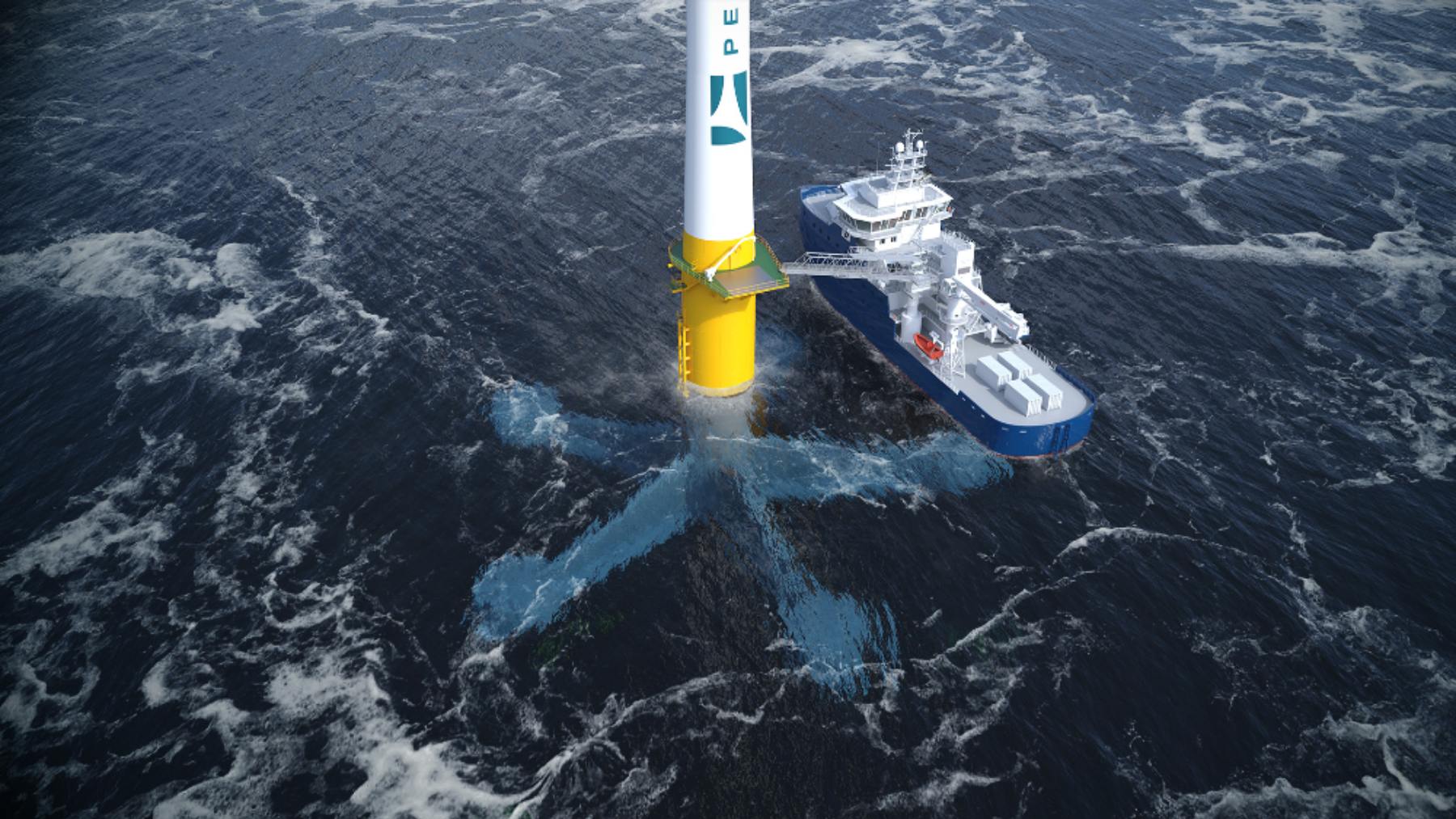 Credits: PelaStar
A unique spider-like turbine in the Atlantic Ocean is generating low-cost energy while keeping its environmental footprint minimal.
Offshore infrastructure has rapidly expanded as global energy demands continue to rise.
However, traditional installations are no longer enough to bridge the growing energy gap.
Known as the tension-leg platform, PelaStar’s turbine design addresses the industry’s greatest mechanical and environmental challenges.
Moving wind power into deeper waters has become key, but certain challenges remain unresolved.
Will the next generation of floating foundations finally overcome these barriers in coastal regions?
How coastal communities still have a high fossil fuel reliance
Coastal regions have become central to the global economy.
These areas are typically densely populated, with nearly 40% of the world’s population living within 60 miles of a coastline.
Within these dense zones are major industrial ports, giant cities, and shipping lines.
As a result, coastal areas consume over 75% of the world’s energy.
This high demand is usually met by burning imported fossil fuels.
While green capacity has increased significantly, current new clean generation is being outpaced by electricity usage.
Furthermore, land near coasts is limited and expensive to develop.
It is becoming more vital each day for coastal grids to transition to local green power.
Continued reliance on carbon-heavy sources is increasing local air pollution while accelerating climate change.
Consequently, sea levels are rising, directly threatening the very coastal cities with high carbon footprints.
To break this cycle, these nations are turning to offshore wind.
The ups and downs of floating wind
The stronger, more consistent winds offshore have become essential to coastal decarbonization.
The proximity of offshore turbines to coastal cities ensures a direct supply of clean electricity where demand is highest.
However, traditional fixed-bottom installations are limited to shallow waters off the coast.
As these parts of the ocean fill up, developers are forced to move into deeper waters.
Fortunately, over 80% of global offshore wind capacity is found at these great depths.
This is why floating wind farms are rising over the deep sea to tap into these rich winds.
However, these installations continue to face major barriers.
Floating platforms require high initial investment and capital expenditure for manufacturing and deployment.
Furthermore, they use giant cables for tethering to the seafloor. This disrupts marine ecosystems and complicates environmental permitting.
Glosten spin-off company PelaStar addressed these challenges by creating a unique spider-like turbine design.
The spider-like turbine with five legs
One of the greatest challenges to offshore turbine installations is the impact of waves on structural integrity.
PelaStar’s design overcomes this using a floating central column with five extending steel arms.
Each arm is anchored to the seafloor with rigid vertical tendons.
As a result, the anchoring system pulls the floating column downward against its natural buoyancy.
Structural, environmental, and economic benefits
The vertical tension ensures that the turbine remains upright even during extreme storms.
Mechanical stress on the tower and internal generator is minimized.
Decreased motion maximizes the annual energy yield by sustaining blades at optimal angles.
The layout also provides structural redundancy. Even if one anchor or tendon is damaged, the remaining four legs maintain stability.
Furthermore, the design drastically lowers physical impact on the ocean.
The narrow, straight-down lines leave the surrounding seabed and water column accessible.
Marine wildlife can swim through without entanglement risks.
Additionally, operations and maintenance are significantly simplified.
Known as the tension-leg platform, PelaStar’s turbine design addresses the industry’s greatest mechanical and environmental challenges.
It is optimized for modular fabrication, quick assembly, and local supply chain integration.
This makes it highly suitable for large-scale production.
Additionally, its innovative design won the U.S. Department of Energy’s FLOWIN prize.
The design is now fully engineered and has been verified for commercial integration.
Ultimately, this unique floating turbine will help coastal communities harness deepwater clean energy locally.
Anke Maree is a writer with a clear and engaging editorial style. Her work focuses on making complex topics accessible, informative, and relevant for readers across different areas of interest.
