
Gas compression plays a major role in the efficient flow of natural gas from wells to consumers. With increasing pressure on companies to decrease their greenhouse gases (GHGs) without sacrificing the reliability of service, the question isn’t so much if compressor clean-ups will work, but if clean compressors can work at an industrial scale. Baker Hughes thinks they have the answer, and that answer is rethinking turbomachinery from the very beginning.
Gas Compressor’s new place in the spotlight
Gas compression provides a necessary link for all components within a natural gas pipeline network, liquefied natural gas (LNG) facility, and processing plant. Due to the continuous operation of these machines in remote areas, there is an opportunity for lost efficiencies to accumulate into increased GHG emissions. Historically, reliability and availability were the two primary concerns when designing compression equipment, with consideration for emissions coming after as an added component.
The reliability, availability, and emissions trade-off is being changed. Baker Hughes’ gas turbine and turbomachinery portfolio was traditionally designed based on optimizing performance and total cost of ownership. However, those same portfolios are now optimized around emissions and performance.




This represents a larger movement in how gas compression systems are viewed. Instead of considering lower emissions to be an operational compromise, new designs are attempting to build lower emissions into the fundamental design of compression systems.
Regulatory requirements and customer expectations drive this movement
There is increasing pressure from regulators and customers for businesses to develop solutions that support their long-term carbon reduction plans.
New generation turbomachinery products developed by Baker Hughes focus on integrated system design
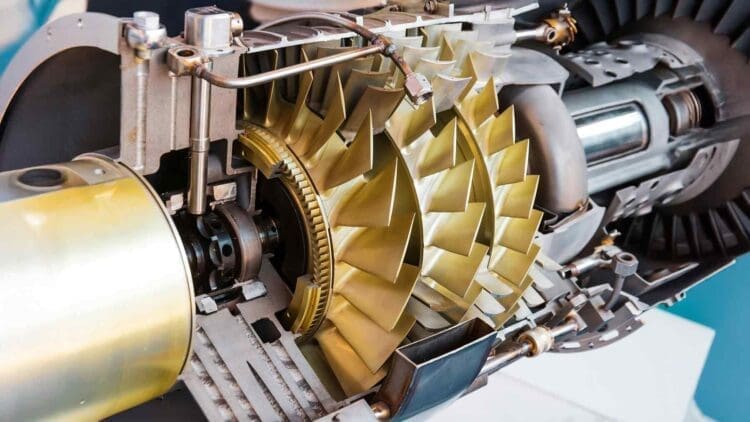
In addition to providing overall improved efficiency compared to older units, Baker Hughes’ turbomachinery products provide efficiency gains that lead to reduced fuel usage and associated emissions. These new products are focused on advanced aerodynamic design, modular product configurations, and digital monitoring capabilities to improve overall operating efficiency across a wide range of loads.
For gas compression users, this means less inefficiency due to start-up, turndown, and varying load conditions — those conditions where emissions tend to increase.
At the same time, Baker Hughes recognizes that its next-generation products can only be effective in achieving long-term emission reductions if the user takes advantage of its suite of diagnostic and monitoring services and upgrade options available to maintain the emission performance of the system throughout its life cycle. It is implied that emission reductions depend as much on how well a system performs over decades of operation as they do on the design of the system itself.
Changing the emissions footprint without disrupting the supply chain
One of the most important aspects of Baker Hughes’ strategy is its compatibility with existing infrastructure. Although gas compression is still a critical element of today’s energy system as the world transitions to renewable energy sources, Their turbomachinery products do not require users to replace existing equipment. Instead, their products are intended to reduce the emissions intensity of systems that are already in place across the entire value chain.
Additionally, Baker Hughes points out that it has been developing hydrogen-ready turbine technology that represents another aspect of this path forward. Hydrogen-capable turbines are not limited to compression operations and serve as an example of how future fuels can potentially integrate with existing turbomachinery architecture and further extend reductions in emissions beyond traditional uses of gas.
By allowing for multi-fuel pathway design, technology is redefined as flexible instead of transitional
Because efficiency improvements at compression can scale rapidly to produce significant reductions in emissions at a system-wide level, compression has become a focal point in some emission strategies.
As many operators evaluate various options for upgrading their compression equipment as part of broader efforts to optimize their operations, particularly in cases where electric power cannot be used or where installing new infrastructure is not practical, Baker Hughes’ focus on modular, pre-engineered package designs supports this trend by enabling quicker installation times with less operational disruption while producing greater levels of emissions improvement.