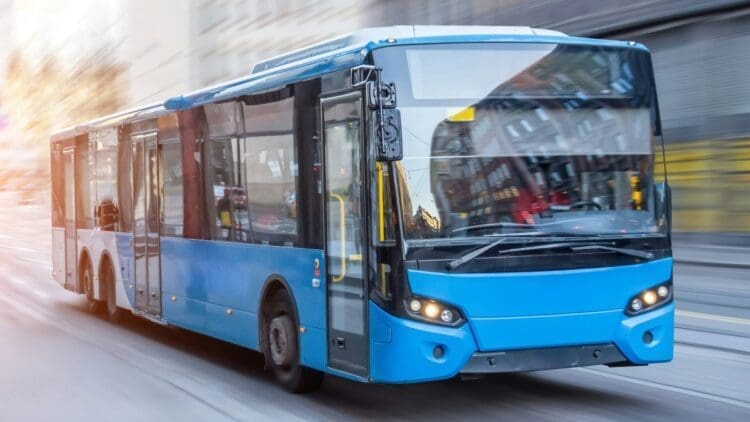

Bologna’s streets looked a little different this week. The first Solaris Urbino 12 hydrogen buses rolled out onto the city network under Tper, the regional public transport operator — a quiet milestone that took years of planning and infrastructure work to reach.
This isn’t a pilot program to be evaluated and shelved. A fleet of 127 hydrogen fuel cell buses is already in the pipeline, placing Bologna among Europe’s more deliberate commitments to zero-emission urban transit.
From depot authorization to first routes
Getting hydrogen buses onto city streets is rarely as simple as taking delivery of new vehicles. Before Tper could run its first Solaris Urbino 12 hydrogen bus in revenue service, the operator had to complete a formal authorization process for the hydrogen refuelling facility at its Via Battindarno depot. That process — involving safety assessments, pressure vessel inspections, fire risk evaluations, and sign-off from multiple regulatory bodies — is what separates a parked fleet from an operational one.
The gap between delivery and deployment in Bologna illustrates this clearly. The buses arrived in 2025, but the latest project completion update was dated March 2026. That lag isn’t unusual. Hydrogen refuelling infrastructure sits at the intersection of energy, transport, and industrial safety regulation, and approvals can stretch well beyond original timelines. For transit agencies planning similar transitions, this sequencing problem — procure the buses, then wait on the infrastructure — remains one of the more underappreciated logistical realities of hydrogen adoption.
Once authorization was granted, deployment followed quickly. The first vehicles entered service on the city network, marking a concrete operational start rather than a demonstration run.
A fleet built for the city and its suburbs
The 127 buses planned for Bologna’s hydrogen fleet aren’t a uniform solution dropped onto a single corridor. The scope covers urban routes requiring 12-metre vehicles as well as suburban connections across the wider Bologna metropolitan area — a mix the Solaris Urbino 12 format handles particularly well.
Twelve-metre hydrogen fuel cell buses occupy a practical middle ground in zero-emission transit. Battery-electric buses of the same length can struggle with range on longer suburban runs, especially when air conditioning loads or hilly terrain cut into efficiency. Hydrogen buses refuel quickly and carry enough onboard energy to handle varied duty cycles without mid-shift charging — which makes them a reasonable fit for operators whose networks blend dense urban stops with longer interurban legs.
Bologna’s metropolitan area presents exactly that kind of operational mix. Routes beginning in the city center and extending outward to surrounding municipalities benefit from a vehicle that doesn’t require route-specific charging infrastructure at every terminus.
Hydrogen as one piece of a larger zero-emission puzzle
Tper’s hydrogen program doesn’t stand alone. It sits within a broader zero-emission mobility strategy that also includes expanding the battery-electric bus fleet, maintaining the trolleybus network, and planning a future tram line. The hydrogen rollout is one layer of a multi-technology transition rather than a wholesale replacement of diesel.
This approach reflects a pattern emerging across European cities. Rather than committing entirely to one clean propulsion technology, transit operators are increasingly deploying a portfolio — battery-electric vehicles where charging infrastructure is well-established and route distances are predictable, trolleybuses where overhead wiring already exists, and hydrogen where operational range or refuelling speed offers a practical edge. Different routes have different demands, and no single zero-emission technology currently satisfies all of them equally well. Hydrogen and battery-electric buses function less as competing products than as complementary tools, and Bologna’s strategy reflects that pragmatism.
Bologna in the context of Europe’s hydrogen bus momentum
Bologna’s rollout is part of a broader European shift toward hydrogen in public transit that has been building steadily over the past several years. Cities across the continent have been commissioning hydrogen bus fleets, and the supporting infrastructure is beginning to catch up.
One marker of that expansion: the Netherlands recently commissioned a 32-kilometre hydrogen pipeline, a development reported alongside Bologna’s launch. Pipeline-scale hydrogen distribution is a meaningful step beyond the depot-by-depot refuelling model most early adopters have relied on. As that kind of backbone infrastructure matures, the economics and logistics of hydrogen transit become more favorable for operators weighing large fleet commitments.
Solaris, the Polish manufacturer behind Tper’s Urbino 12 vehicles, has emerged as one of the central enablers of this transition. The company’s hydrogen buses are operating or on order in multiple European cities, giving it a significant footprint in what remains a relatively young market segment.
Bologna’s 127-unit commitment places it among the more ambitious hydrogen transit programs on the continent. As the fleet rolls out progressively, the city will offer a useful data point on how hydrogen buses perform at scale in a mixed urban-suburban environment — not just in range and reliability, but in the operational rhythms of a real public transport network. What Tper learns here could inform how other Italian and European cities approach their own zero-emission transitions in the years ahead.