

Innovation 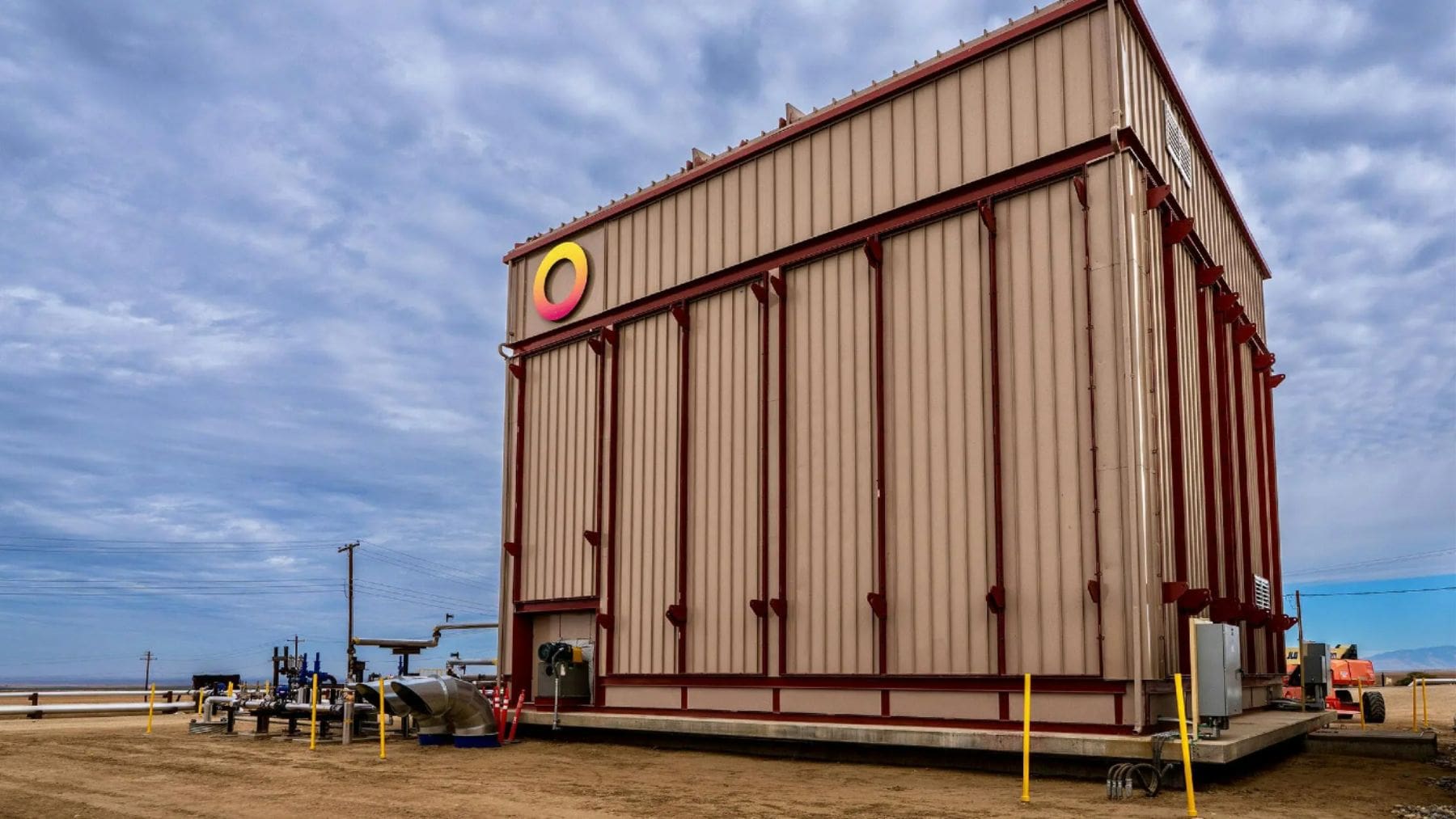 Credits: Rondo Energy

California is storing electricity inside a tower of red-hot bricks heated to 1,800°F, where the heat is later turned into steam and power
Credits: Rondo EnergyClean energy can now be stored more effectively in the long-term using heated bricks in a tower.
The world is racing to achieve climate targets, which have deadlines that are nearing fast.
Despite major progress in renewable infrastructure expansion, some industries remain hard-to-abate.
Innovative storage approaches, such as thermal brick towers or carbon dioxide batteries prove that long-term power can be green.
Heavy manufacturing processes are among those that are historically powered by fossil fuels.
Will turning to superheated energy storage be the solution needed to completely decarbonize power-intensive industries?
How heavy industry struggles to break free from its reliance on fossil fuels
Solar and wind have been leading the global renewable energy transition.
Their combined total capacity has reached 4,174 GW worldwide.
Despite this significant growth, fossil fuels continue to rule in heavy industry.
Currently, over 33% of the world’s energy consumption can be attributed to industrial energy usage.
Nearly 75% of this usage accounts for heat generation.
These sectors face a more complicated transition to green power due to critical bottlenecks.
There is a temperature gap that prevents heavy manufacturing from going green. Processes such as steel, cement, glass, and chemical production require up to 3,000°F.
Carbon-heavy combustion has been the only commercially feasible method to create concentrated heat.
Furthermore, industrial plants often operate 24 hours a day, 365 days per year.
Sudden cooling could be disastrous, ruining materials, damaging costly equipment, and wasting millions of dollars.
To prevent major manufacturing interruptions, factories cannot rely directly on intermittent power sources.
Conventional batteries do not pass the industrial test
Lithium-ion batteries have long been a solution to the green energy gap.
Yet, when it comes to heavy manufacturing, these chemical batteries fundamentally fall short.
The conversion of electricity into chemical energy, back into electricity, then into heat, results in massive energy losses.
Lithium-ion batteries are designed for short-term storage and cannot be scaled for up to 24 hours of continuous supply.
Other disadvantages include rapid degradation under heavy workloads and potential thermal runaways.
Since factories cannot risk any of this, experts are turning to alternative storage methods.
Arizona will have a non-chemical approach come online in 2029.
This approach entails Energy Dome’s 10-hour carbon dioxide battery system.
The gas will be used as a closed-loop working fluid for mechanical energy storage.
While this will be beneficial for grid power, heavy industrial facilities require something else.
This is where Rondo Energy and its super-hot brick tower enters the picture.
A brick tower that converts electricity into superheat
Thermal batteries are rising in popularity worldwide, offering a feasible way to decarbonize carbon-heavy industries.
Rondo Energy’s heat battery is a giant, heavily insulated steel container.
Inside the steel tower are thousands of tons of refractory bricks made from natural clay.
For centuries, these bricks have been used in metal smelting.
They easily withstand extreme temperatures without degrading or melting.
The mechanical stages of the system’s operation
Excess wind or solar power from the grid is drawn and sent through giant electric heating elements.
The elements glow and radiate heat, which the clay bricks absorb.
The bricks heat up to 1,800°F. Heat is locked inside using heavy insulation.
When a factory requires energy, fans blow air through channels in the hot bricks.
The air becomes superheated and is piped into the factory to provide high-temperature processing heat.
Optionally, it can be run through a boiler to generate high-pressure steam.
Innovative storage approaches, such as thermal brick towers or carbon dioxide batteries prove that long-term power can be green.
This means that decarbonization no longer has to be a distant dream for heavy industries.
By storing intermittent renewable power as reliable, superheated air and electricity, the green energy gap can be bridged. Ultimately, unconventional battery systems are paving the way for carbon-free heavy industry processes.
Author Profile
Anke Maree is a writer with a clear and engaging editorial style. Her work focuses on making complex topics accessible, informative, and relevant for readers across different areas of interest.
