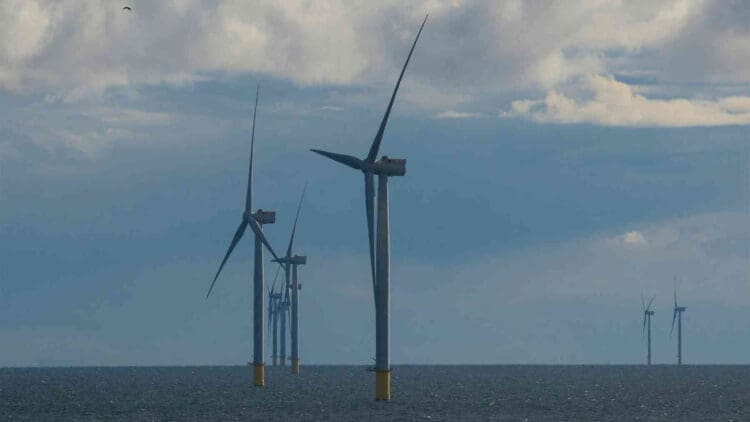

Although the United States wind energy landscape appears to have moved past its period of uncertainty, there are still hurdles that developers have to overcome. The nation received a tremendous amount of attention after some wind energy projects were prematurely halted in 2024, with the Trump Administration suggesting that they were a security concern. Even with that being the case, the United States did not lose its position as one of the leading wind energy-producing countries in the world. In a wind sector-related matter, California filed a formal objection to the proposed federal offshore wind lease buyout arrangement.
A general overview of the United States’ wind energy landscape
One of the main reasons why the U.S. maintains success in clean energy initiatives is the amount of wealth and resources that it possesses. The integration of technology into the industry opened up greater possibilities for developers to execute clean energy projects. As of 2026, Texas is the leading wind energy-producing state, with Iowa, Oklahoma, and Kansas following behind.
California Attorney General Rob Bonta and California Energy Commission (CEC) Chair David Hochschild officially sent a Notice of Intent to Sue regarding an illegal agreement that was reached between the U.S. Department of Interior (DOI) and Golden State Wind LLC (GSW).

The reason this action was taken is that an unlawful agreement may potentially risk the state’s clean energy profits, thousands of jobs, and more than $100 million in public investments in the offshore wind sector.
Analyzing the exact details of the formal objection to the proposed federal offshore wind lease buyout arrangement
Following the filing, there were a lot of question marks about what the arrangement entailed which caused attorneys to file an objection. In the agreement, the DOI is reallocating $120 million in federal taxpayer dollars to pay GSW to relinquish its offshore wind energy lease in federal waters off the California Central Coast and needs GSW to invest an equal amount in out-of-state fossil-fuel projects that will not support California’s economy.
Ultimately, if the lease buyout is approved it may set back California’s growing offshore wind sector by multiple years. Considering that California is not among the leading wind energy-producing states in the country, this will be a massive blow for it. Interestingly, this strategy is one that is increasingly being adopted in the wind energy sector.
For instance, it was recently revealed that the Trump Administration attempted to use a lease buyout in order to pay off another California offshore wind leaseholder, called Invenergy for the amount of $765 million. The Notice of Intent to Sue that was sent to DOI and GSW is one based on California’s belief that the DOI’s buyout deal with GSW violates the Outer Continental Shelf Lands Act (OCSLA).
Reviewing California’s strategy in objecting to the wind lease buyout
The OCSLA is one which was established to assist states like California to have a say in the offshore wind leasing program and mitigate any corrupt backroom deals that could possibly take place. The Notice of Intent to Sue typically gives a 60-day time period for DOI and GSW to reverse any violations which they may have committed before California can stop the unlawful buyout.
Assessing how the proposed objection may unfold in the coming months
Attorney General Rob Bonta, who is at the heart of the objection states the following:
“At a time when the country needs more reliable and sustainable power supply, the Trump Administration is busy using taxpayer money to strike backroom buyouts that make clean-energy projects disappear. California won’t stand idly by as the Trump Administration illegally strikes deals to kill offshore wind projects.”
California’s overall wind energy strategy requires the state to develop 25 gigawatts of offshore wind power by 2045 which is enough to power approximately 25 million homes and provide roughly 13% of the state’s electricity supply.
Prince is a versatile writer focused on energy, automotive, environmental, and general news topics. He makes complex technical and policy issues clear, engaging, and accessible for a broad audience.