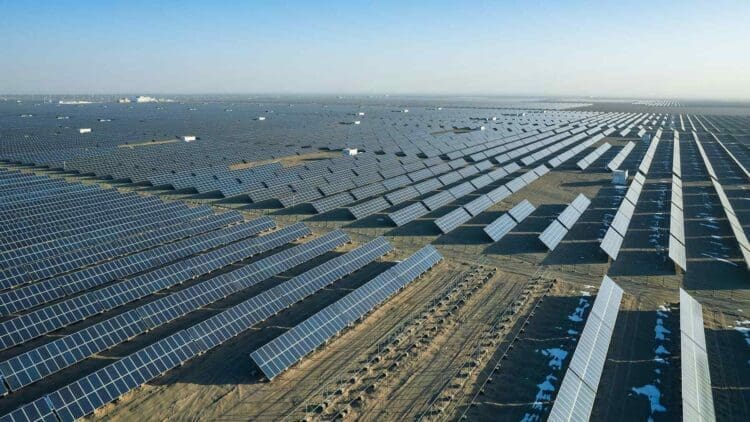

Ceará has been highlighted as a key global destination for solar investment at Intersolar Brasil. Every continent has a country that it looks toward to represent it on a global scale. In South America, Brazil is the nation representing the continent in clean energy generation. The leading nation needs to elevate surrounding countries by pursuing energy initiatives within their countries and allowing countries from outside their own to establish groundbreaking facilities there as well. There has been a massive amount of activity in Brazil as of 2026, with the nation eager to maintain its place.
Ceará maintains strong momentum as the home for solar energy
When countries decide which region is suitable for a certain energy facility, they do so meticulously and with great thought, taking many factors into consideration. For instance, wind energy facilities have to be built in areas with favorable wind conditions so that developers may maximize the generation potential.
Ceara is recognized as a premier leader in Brazil’s renewable energy transition, holding a dominant position in wind and solar power generation. With roughly 71% of its electricity generated from wind, the state hosts over 86 wind farms and boasts the highest potential for offshore wind in the country.


The Brazilian state of Ceará is taking center stage at the upcoming Intersolar Brasil Nordeste 2026. The event held in Fortaleza on April 28–29, 2026, will bring together international investors, developers, and policymakers focused on renewable energy expansion.
As global demand for clean energy accelerates, Brazil’s Northeast and Ceará are positioning themselves as strategic regions for large-scale solar projects.
Analyzing how Ceará became the center for solar energy initiatives in Brazil
Intersolar Brasil Nordeste is the regional hub for solar innovation that focuses on photovoltaics, green hydrogen, and battery storage. It is an essential part of the Intersolar series. Brazil is the biggest solar energy-producing country in South America, as it leads the region with over 37,449 MW of installed solar capacity and several large-scale solar farms such as the São Gonçalo plant.
Ceará’s prominence in the renewable energy sector is largely due to a combination of natural resources and infrastructure. For instance, the state has a huge advantage from high solar irradiation levels and consistent wind patterns, making it one of Brazil’s most attractive regions for renewable generation.
According to reports, the Northeast region already accounts for roughly 52% of Brazil’s installed solar capacity, with several of the country’s largest solar producers located there. Ceará consistently receives attention because of its integration of industrial infrastructure, particularly the Pecém Complex, which supports energy production, storage, and export logistics.
Could Ceará expand beyond being just a solar energy production hub?
Interestingly, Ceará is also becoming a leader in green hydrogen development, with multiple agreements signed for future projects and export terminals expected to commence construction in 2026. This makes the state not just attractive to investors seeking long-term opportunities in solar but in the broader energy transition.
Intersolar Brasil Nordeste is one of the most influential platforms for solar business in Latin America. The industry leaders, investors, and government representatives will all gather to explore trends such as distributed generation, battery storage systems, and carbon markets.
Ultimately, it is an event that assists in keeping everyone up to date with the direction of energy generation strategies.
Intersolar Brasil continues to influence the solar energy initiatives
Intersolar Brasil is gaining more respect as an event that influences the energy initiatives that come out of Brazil. The conference allows companies to showcase technologies while forming partnerships with regional stakeholders.
For instance, topics such as financing, grid integration, and large-scale photovoltaic (PV) development will be central to the talks.
In the past editions of the event, there were thousands of attendees and hundreds of suppliers. This emphasizes the event’s role as a key meeting point for the renewable energy industry.