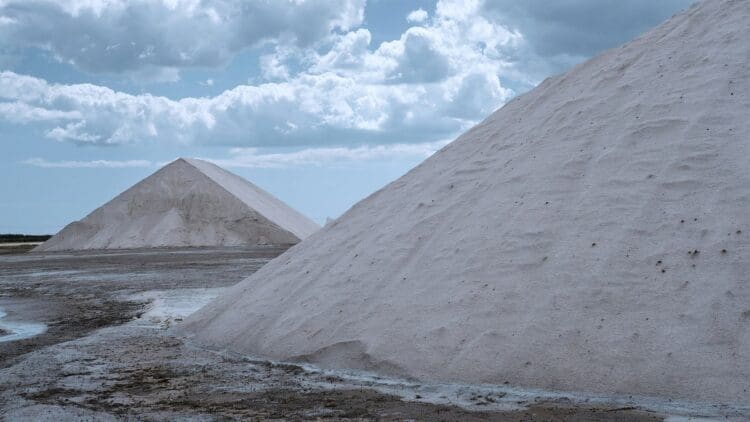

Saving the planet is no easy feat, but when we take it one step at a time, anything can be possible. From producing renewable energies to finding storage solutions for excess energy, it all plays a key role. However, we still face one of the greatest challenges: transporting hydrogen. It is extremely expensive to transport. Fortunately, Australia has found a solution and is now producing 1.2 billion pounds of powder. Discover how this is saving them more than a penny or two.
A key role in excess energy storage
One of the challenges we solved was storing excess renewable energy. Batteries are typically used, but they are disadvantageous to the environment, especially during production and disposal. This is where the element hydrogen plays a key role. The element’s application in the renewable energy industry is groundbreaking. According to the International Energy Agency (IEA), “it’s the fuel of the future.”
Not only does it store excess energy from wind and solar for later use, but it also decarbonizes carbon-heavy industries. It is also used as a zero-carbon fuel and in power production. One can thus not ignore its value, especially in a world focused on achieving the global zero-carbon mission by 2050. However, beyond its expensive production costs, its transport is costly and complex.


There are a few ways to transport this valuable element, but not all methods are possible for some countries. In Australia, exports are usually made by sea through specialized ships that transport hydrogen in liquid form. Ammonia is another transport method, which releases it later via chemical processes. Now, Australian research has found a new method of transport.
Australia finds a solution to hydrogen transport
Australia has always been daring in its energy sector, which is evident from ConocoPhillips’ offshore gas exploration in eastern Australian waters. Now, researchers have dared to explore a simpler and cost-effective way to export hydrogen powder form. Sodium borohydride powder can serve as a carrier, and recycling its byproduct, sodiam metaborate, will no longer be a concern.
John Curtin University researchers engineered a catalyst that easily converts the byproduct into the carrier powder. This all forms part of the university’s Kotai Hydrogen Project. It has been found that adding water to 1 ton of sodium borohydride generates 213kg of hydrogen. Electrolyzers are then used to recharge the byproduct, making sodium borohydride 20 times more affordable than using ammonia, which delivers 178kg of hydrogen per 1 ton.
Producing 1.2 billion pounds of powder
The Australian Renewable Energy Agency has invested $5 million in the project with hopes to increase the country’s exports. It has been determined that the entire project will cost $16.47 million and could be the key to unlocking the country as a major player in the global export market. According to the Australian Government, an annual green hydrogen production of nearly 330,000 tonnes is expected by 2030.
This number is expected to increase significantly, as the state of South Australia is located on the Gawler Craton, where several iron and uranium mines have the potential of millions of tons of hydrogen. This means that annual production rates could increase to 550,000 tonnes by 2040, which is why the commercial development of this form of transport is so vital.
As the researchers continue to develop the product on a commercial scale, they will also focus on producing this valuable element at a higher pressure. At present, the project is in the Core Research Stage, and its findings will directly add to the Research Commercialization Stage. One thing is for certain: this project could be a game-changer for Australia financially and environmentally globally, as optimal renewable energy storage becomes more accessible. Amplitude Energy has also neared its final investment in Australia’s offshore East Coast project. What a time to be alive in Australia!
Disclaimer: Our coverage of events affecting companies is purely informative and descriptive. Under no circumstances does it seek to promote an opinion or create a trend, nor can it be taken as investment advice or a recommendation of any kind.