
Africa built the world’s largest artificial lake and a massive hydroelectric dam, but the water that attracted new fish species also began disrupting the entire food chain
 Credits: Public Domain
A giant hydroelectric dam in Africa has changed the natural systems after decades of operation, affecting the food chain.
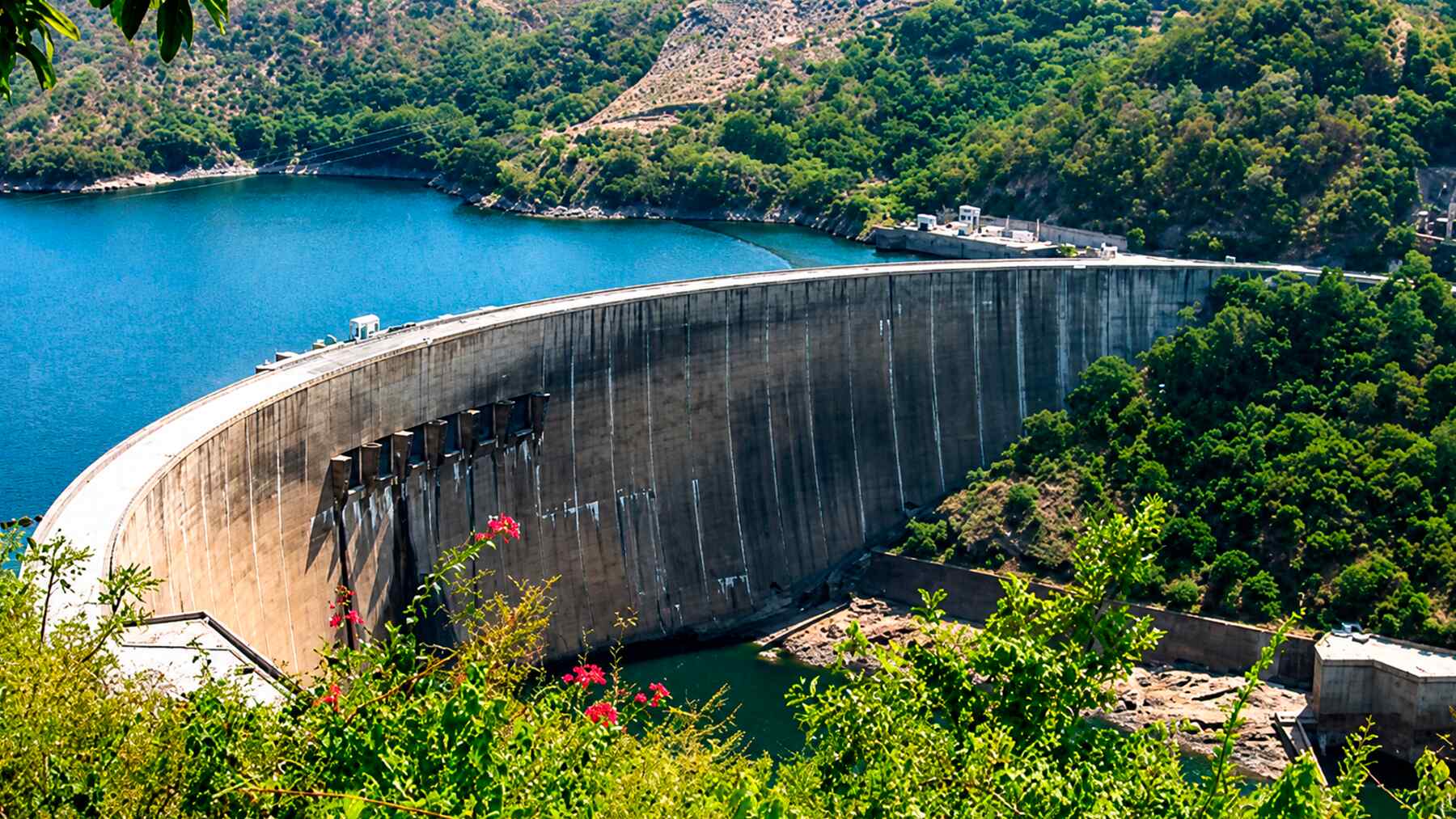
This dam is 420 feet tall, 2,024 feet long, and has one of the biggest artificial lakes in the world.
It plays a vital role in supplying baseload power to southern Africa, but it also comes at an ecological cost.
The dam provides critical flood control, is essential in drought mitigation, and supplies reliable water for agricultural irrigation.
Will the insights into this dam’s environmental impact guide a more sustainable approach to hydroelectricity?
How the Kariba dam became essential to developing countries
Between 1955 and 1960, the Kariba Dam was constructed on the Zambezi River.
Its construction marked a crucial turning point for the rapidly developing nations of Zambia and Zimbabwe. The dam’s main purpose was to bridge the gap in the severe energy shortages while fostering economic growth.
Electricity needs increased due to the post-war economic boom and industry expansion, including copper mining and urbanization.
The Kariba Dam formed Lake Kariba, a reservoir that holds up to 44 cubic miles of water.
Thanks to the power of the Zambesi, the dam has an installed capacity of nearly 1,626 MW.
Beyond its pivotal role as an anchor for the region’s electrical grid, it also became integral in development.
The dam provides critical flood control, is essential in drought mitigation, and supplies reliable water for agricultural irrigation.
However, while it underpins the economic stability of the surrounding nations, its other impacts have not gone unnoticed.
From displacement to environmental transformations
One of the more harsh consequences of large-scale hydroelectric developments is the displacement of local communities.
To build the Kariba Dam, substantial human and environmental trade-offs were made.
The reservoir flooded the Middle Zambezi valley and displaced approximately 57,000 locals. Various ethnic groups were forced to abandon their ancestral homes and agricultural lands.
Beyond the social and cultural disruptions seen with similar major projects, natural ecosystems are also altered.
The newly formed basin’s reservoir permanently flooded terrestrial habitats, and local microclimates were changed.
One advantage is that the Kariba Lake became a vital water source and habitat for the adjacent Matusadona National Park. It now supports a diverse selection of wildlife such as elephants, hippos, crocodiles, and bird species.
But the impact of the hydroelectric dam on local fish species became of significant interest.
A retrospective on the fish community and the food chain
Hydroelectric dams inevitably influence local fish species.
In 1958, scientists hypothesized that riverine species would decline and lake-dwelling species would increase.
Pre-impoundment recordings found between 28 and 31 fish species in the Middle Zambezi. Over time, new species adapted or were introduced, raising the total to 45.
The hypothesis was that fish had been swept over Victoria Falls and found the lake more favorable. This increased speculation that an Upper Zambezi species invasion was underway.
But a large-scale study from 2006 told a different story. The study “The inshore fish community of Lake Kariba half a century after its creation: What happened to the Upper Zambezi species invasion?” was published in the African Journal of Aquatic Science.
The findings after 48 years of observation
Several invader species failed to establish themselves in the lake. This was either due to a lack of vacant niches or competition with native Middle Zambezi species.
Only the stealthy predator Serranochromis macrocephalus invaded successfully. It occupied an empty niche in the lake.
Deliberate and accidental introductions of species were also made to the Kariba Lake.
The kapenta was deliberately introduced to the pelagic zone, forming a successful commercial fishery. It altered the food chain by feeding on zooplankton.
The non-native Nile tilapia escaped from a nearby aquaculture and became abundant at the expense of native species.
The food chain is facing new invasive pressures. Responsible management practices should be implemented to sustain local biodiversity and support fishing communities.
Anke Maree is a writer with a clear and engaging editorial style. Her work focuses on making complex topics accessible, informative, and relevant for readers across different areas of interest.
