
Kinder Morgan expanded its Permian Basin membrane plant twentyfold over four decades and now removes 17.7 million metric tons of CO2 a year
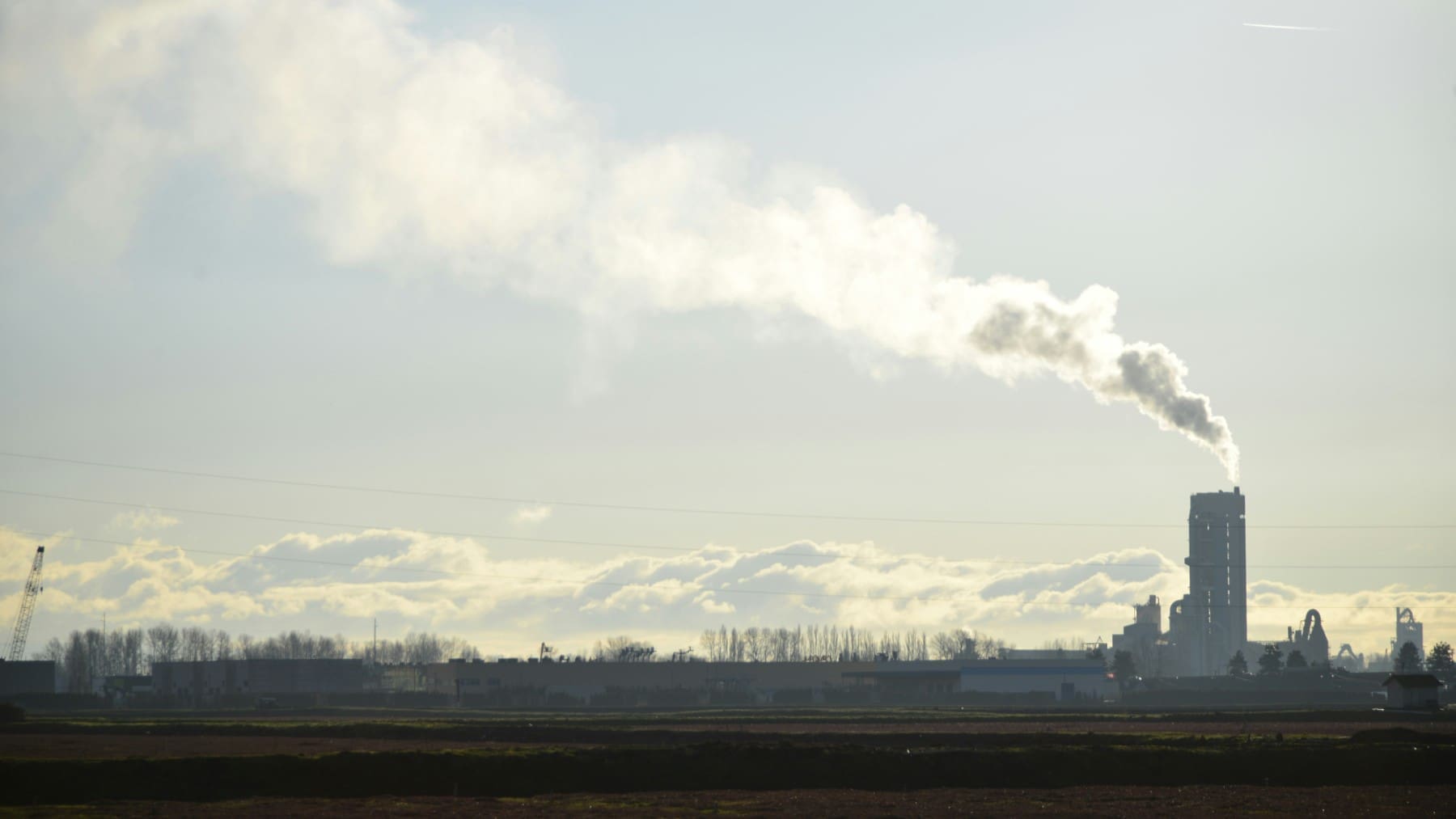
Every day, billions of cubic feet of CO2-laden gas flow into Kinder Morgan’s SACROC facility in West Texas — volumes so large, and concentrations so high, that the plant’s original chemical treatment systems were never built to handle them. As production grew, the gap between design and reality widened. What filled it wasn’t a bigger chemical plant. It was a material solution, quietly installed and steadily expanded over four decades, that would reshape how one of the world’s largest enhanced oil recovery operations manages its gas.
A facility outgrowing its own design
SACROC was built to treat natural gas carrying modest amounts of CO2, relying on established Benfield and amine processes that worked well within their design limits. But as production scaled up, the CO2 content in the produced gas climbed to between 40% and 60% — far beyond what those systems were ever meant to handle. The facility wasn’t failing; the resource itself had changed the rules.
Expanding the amine systems to match the new reality wasn’t a realistic option. At such high CO2 concentrations, the equipment required would have been prohibitively large — in both physical footprint and capital cost. The math simply didn’t work.
As gas cools while passing through the system, NGLs condense and can be captured, turning what might have been a byproduct into a meaningful revenue stream.
Reinjecting the unprocessed gas stream directly carried its own penalties. High CO2 concentrations reduce miscibility, weakening the effectiveness of the enhanced oil recovery process, and reinjecting without treatment meant forfeiting the natural gas liquids locked inside that stream. Those NGLs represented real revenue. Leaving them unrecovered was a cost the operation couldn’t absorb indefinitely.
Why membranes won out over conventional chemistry
Faced with a treatment problem that conventional chemistry couldn’t solve at scale, Kinder Morgan conducted a thorough assessment before committing to a path forward. Membrane technology emerged as the most practical and economical choice — and the reasons were concrete rather than theoretical.
One immediate advantage was pressure. High-purity CO2 recovered through membranes exits at elevated pressure, which directly reduces the energy — and therefore the cost — required to compress it for reinjection. That efficiency gain compounds over time at a facility processing hundreds of millions of cubic feet per day.
There was also an unexpected benefit embedded in the membrane process itself. As gas cools while passing through the system, NGLs condense and can be captured, turning what might have been a byproduct into a meaningful revenue stream. Beyond economics, the modular, compact design required less space than equivalent chemical systems, and eliminating solvent exposure reduced health, safety, and environmental risk — a consideration that grows more significant as a facility scales.
Inside the hollow fiber: how Cynara membranes work
The Cynara membrane elements at SACROC are cylindrical housings packed with thousands of hollow fibers, each made from cellulose triacetate — a material selected for its high selectivity toward CO2 over hydrocarbons. The design is straightforward in concept and effective in practice.
Pressurized feed gas enters the housing and flows along the outside of the fiber bundle. CO2, being more permeable through the CTA material, preferentially crosses the fiber wall and migrates to the bore side — the hollow interior of each fiber. That permeate stream, now rich in CO2, flows out at the fiber ends and is collected for reinjection into the reservoir. The hydrocarbon-rich gas that doesn’t permeate continues through the plant, where a smaller downstream amine unit processes it to produce fuel gas for the facility’s own operations.
One detail in the housing design carries more operational weight than it might initially suggest: vertical orientation. By mounting the membrane elements vertically, condensed hydrocarbons drain naturally by gravity rather than pooling and interfering with gas flow. That single design choice meaningfully improves NGL recovery, turning a potential nuisance into a measurable advantage.
Four decades of expansion: from 50 to 1,000 MMcf/d
The membrane plant at SACROC didn’t reach its current scale through a single investment decision. It grew incrementally, tracking production expansion over four decades — starting at 50 MMcf/d of gas containing 40–60% CO2, eventually climbing to 750 MMcf/d, with the broader facility reaching 1,000 MMcf/d of total throughput.
For a period, roughly 250 MMcf/d were handled by spiral-wound cellulose acetate membranes from a third-party supplier, which allowed direct comparison between technologies. A subsequent study found that the Cynara hollow-fiber membranes delivered approximately 20% more NGL recovery and 40% greater processing capacity than the competing technology. Kinder Morgan switched to Cynara membranes exclusively.
The numbers defining the current operation are substantial. The membrane system now removes 17.7 million metric tons of CO2 per year and recovers 18,000 barrels per day of condensate — a revenue stream that didn’t exist before membranes entered the picture. By generating high-purity CO2 internally, the facility has also significantly reduced its need to purchase CO2 from external sources, cutting operating expenditure in a way that compounds across every year of operation.
A showcase that spread across two continents
SACROC today supports one of the largest enhanced oil recovery operations anywhere in the world, producing approximately 20,000 barrels of oil per day. That scale draws attention on its own. But it’s the 40-year operational record that has made the facility something more than a large plant — it’s become a reference case.
The model has traveled. Cynara membrane technology, validated at SACROC, has since been adopted in multiple EOR projects across Texas and Louisiana, and in offshore operations in Brazil, with each deployment drawing on lessons accumulated in West Texas.
What the SACROC story ultimately demonstrates is that a materials-science solution — hollow fibers made from a polymer, arranged in a cylinder, mounted vertically — can move from an experimental installation to a continental industrial standard given enough time, data, and operational trust. As CO2 management becomes an increasingly central concern across energy sectors, the trajectory of SACROC offers a template worth studying. The question is no longer whether the model works. It’s how broadly it can be applied.
Daniel García is an Editor-in-Chief with strong expertise in structural work and engineering principles. He combines this technical foundation with deep knowledge of energy, spatial design, and emerging technologies, bringing a forward-thinking and analytical approach to editorial leadership.
