
State lawmakers spread a viral food safety scare about solar farms and potatoes, but the company at the center of it says none of it is true
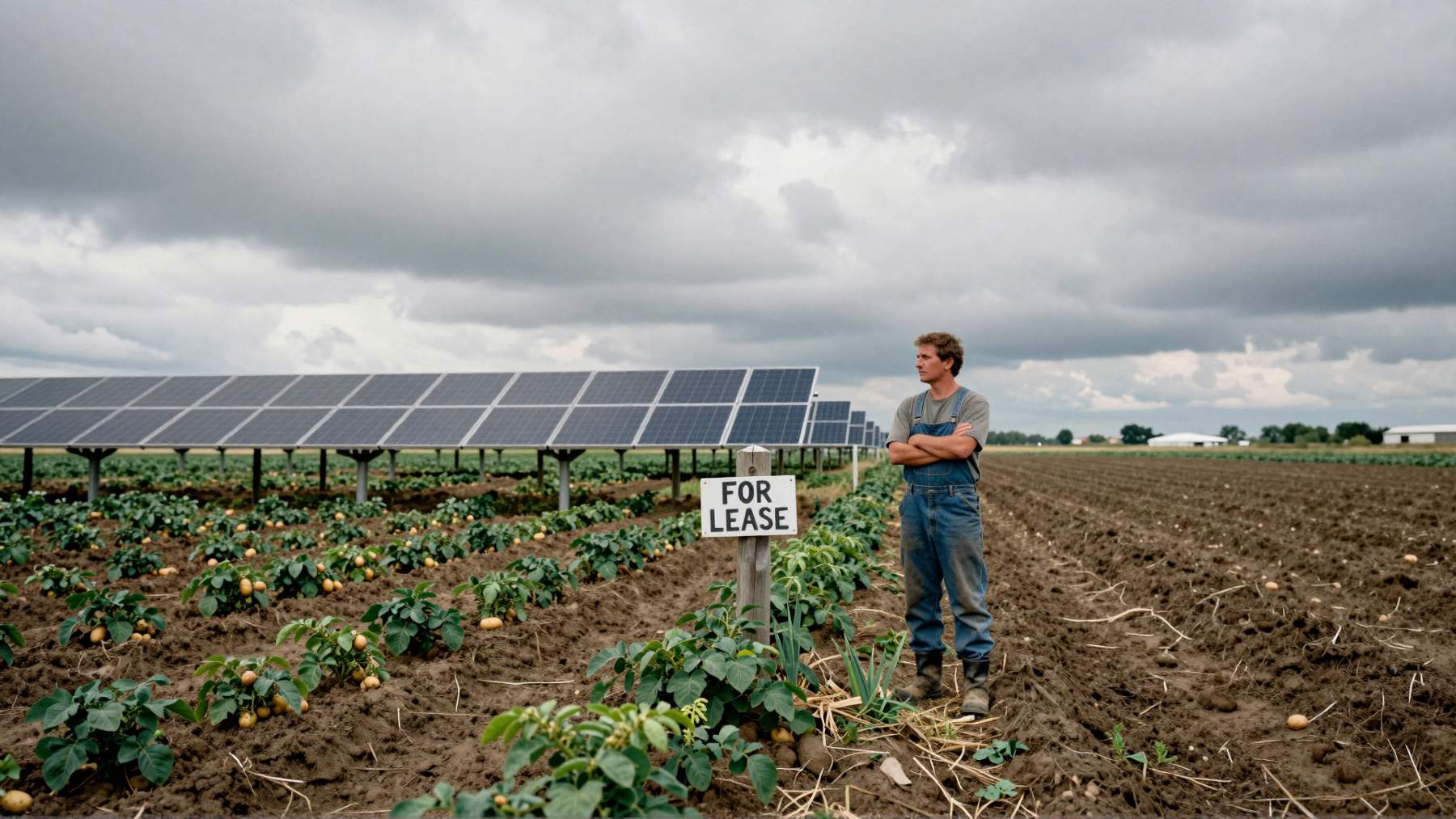
A 51-second Facebook video posted by a Michigan state lawmaker has been viewed more than a million times — carrying a claim that could reshape how farmers think about leasing land to solar developers.
In the clip, labeled “Solar Farm SECRET,” two Republican state representatives tell viewers that Frito-Lay refuses to buy potatoes grown on farmland that has ever hosted solar panels. The implication is stark: let a solar array onto your fields, and the land may be permanently disqualified from food production. The claim spread quickly, crossing state lines before anyone thought to ask the company at the center of it.
A viral claim takes root in farm country
Michigan Republican Rep. Cam Cavitt posted the video in January. He claimed farmers in his district could no longer grow potatoes on land where solar developments had been sited. His colleague, Rep. Dave Prestin, went further: “Any field that had solar panels installed on it will never be allowed to grow potatoes for human consumption due to the leaching.”
Leasing land to solar developers can generate tens of thousands of dollars for a single farmer — stable, predictable income in a market that offers little of either.
That accusation — naming Frito-Lay as the company drawing the line — gave the rumor a concrete, credible-sounding shape. No longer vague worry; now a named corporation with a named policy.
Pennsylvania Republican Sen. Cris Dush amplified the claim by sharing the video, calling for cash bonds to guarantee soil restoration after solar removal. He wrote: “When Frito Lay refuses to accept potatoes from farms that had solar arrays we should all sit up and take notice!” A post on X from a prominent anti-solar account repeated the falsehood late last month, racking up nearly 10,000 shares and 20,000 likes.
PepsiCo and state officials push back
PepsiCo, which owns Frito-Lay, was direct when asked. The company “has not issued blanket guidance to growers that fields with solar installations will not be accepted,” a spokesperson said. Michigan’s Department of Agriculture and Rural Development backed that up — communications director Lynsey Mukomel said she and her colleagues were unaware of any statements from Frito-Lay or any other company asking Michigan farmers to avoid growing potatoes on land with solar installations. Neither Cavitt nor Prestin responded to multiple requests for comment.
PepsiCo’s actual position is more nuanced. The company endorses solar outside of “prime agricultural lands” as part of its corporate decarbonization goals, but only when growers ask directly. It wants to avoid “potential impacts to crop yields, quality and the creation of other unintended consequences.” Careful and conditional — not a blanket ban.
Where the rumor actually started
The claim traces back to a statement from the Potato Growers of Michigan, a trade group that raised concerns about what solar equipment might leave behind. “When solar panels and systems are eventually removed, small fragments of plastic and metal may remain in the soil,” the statement read, warning that tuber vegetables could “engulf foreign objects.”
Those concerns were repeated at a Michigan House Agriculture Committee hearing in March 2026. Dennis Iott, chair of the trade group, and Kelly Turner, executive director of the Michigan Potato Growers Commission, both testified. Iott addressed food safety but acknowledged a critical gap: “The food safety issue hasn’t been seen yet, because we haven’t taken those solar fields out.” Speculative, not documented. A Kentucky farmer separately cited the Michigan statement in opposing a 100-megawatt solar project that was ultimately approved anyway.
What scientists actually say about solar and soil
Experts consulted for this story said they were unaware of any scientific evidence supporting the contamination fears. Alan Knapp, a plant ecologist at Colorado State University, said he knew of no study finding that solar panels installed aboveground could damage potato crops grown belowground. “I’ve never heard of any sort of toxicity issues or any concerns about the quality of the crop being consumed by humans being impacted by the installation of solar panels above,” Knapp said.
Research points in the opposite direction. A four-year Italian study published this year found that agrivoltaic systems — which combine solar panels with active farming — can support potato crops. Steven Loheide, a civil and environmental engineering professor at the University of Wisconsin–Madison who researches solar and farmland interactions, was direct about the upside: “There’s a huge opportunity to get both agricultural benefits and energy production off a single plot of land.”
The real cost of misinformation for farmers
The farmers most likely to be harmed by this rumor are the ones it claims to protect. Leasing land to solar developers can generate tens of thousands of dollars for a single farmer — stable, predictable income in a market that offers little of either. Scott Laeser of the Rural Climate Partnership warned that unfounded fears could cut off exactly that kind of financial cushion. “Raising these claims about solar could prevent farmers from diversifying their income stream,” he said.
American Farmland Trust projects that by 2040, solar could occupy less than 1 percent of farmland across the Lower 48 states. This pattern has appeared before — claims that offshore wind turbines kill whales became one of the most effective lines of attack against that energy source, and the potato-and-solar rumor follows the same logic. Attach a vivid, specific fear to a real industry and let it travel. When misinformation moves through elected officials and social media at the same speed, farmers trying to make sound decisions about their own land quietly pay the price.
Disclaimer: Our coverage of events affecting companies is purely informative and descriptive. Under no circumstances does it seek to promote an opinion or create a trend, nor can it be taken as investment advice or a recommendation of any kind.

Carlos is an engineer with strong expertise in technical and industrial topics. He previously worked at international companies such as Siemens and is multilingual.
