
Lab-grown crystals are now producing light whiter than the brightest white ever seen
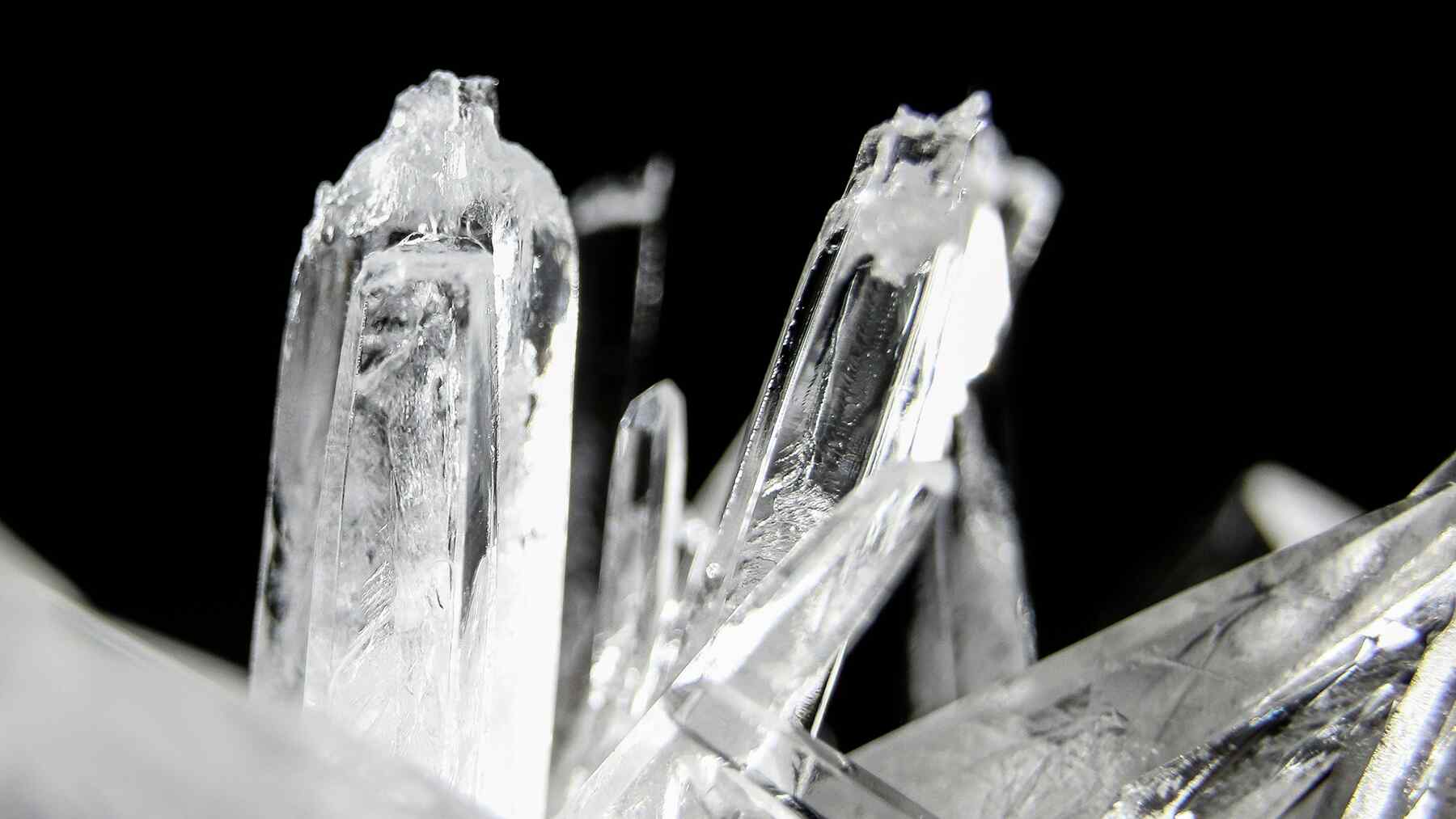 Credits: File, representative image
In a laboratory setting, it has become crystal clear what the future of LEDs and data transmission looks like.
There is a growing desire to live as close to nature as possible, without compromising the comforts of modern life.
With the latest innovation, homes can adopt a more natural aesthetic while keeping in touch with the high-tech world.
These structures have “tunable” characteristics, which means they can be adjusted to emit specific colors across the visible spectrum.
But is the pursuit of a naturalist lifestyle worth disrupting the environment we have vowed to protect?
How the world has settled for an unnatural way of living
In the global attempt to correct the course of history, it seems that history is rather destined to repeat itself.
The environment has been left vulnerable due to more than a century of burning fossil fuels to power industries.
The effects of climate change became more transparent, eliciting a desire to turn over a “greener” leaf.
Now, clean energy innovations are surging to restore the natural balance by changing how the world is powered.
Yet, despite the growing success of cleaner electricity and fuels, this level of sustainability is not reflected everywhere.
High-tech compromises encompass indoor settings. Instead of the warm, restorative natural glow of sunlight, harsh, blue-tinted LEDs have become the standard ambiance.
As a result of blue light trickery and yellow coatings, life has now become more detached from nature than ever.
If we are trying to save the world, why are we not living closer to it?
Breaking down the environment while trying to save it
The industrial costs in the pursuit of sustainability are often masked.
In many cases, the hidden footprints of renewable energy technologies are only unveiled once they are fully operational.
As soon as these disadvantages come to light, experts are at least given the opportunity to address them. Unfortunately, by then, the damage is already done.
This traps the world in a “green paradox,” and modern infrastructure falls into this contradiction.
As global energy consumption continues to surge, more buildings are becoming increasingly energy-saving.
However, the sole focus on lowering power consumption has turned these designs into biologically sterile environments.
Buildings are now being designed to prioritize insulation, forcing the world to rely on artificial lighting.
Standard blue-tinted LEDs lack the depth of natural light, prompting increased brightness and more installations.
This inadvertently increases power consumption, undermining the promised efficiency. Fortunately, Argonne National Laboratory developed a solution.
Using crystals to light the path back to the natural world
Bridging the gap between high-tech efficiency and natural comfort is no easy feat. To do this, the scientists at Argonne National Laboratory turned to the microscopic world.
They created “lab-grown” crystals to use in LEDs, as they address the blue-and-yellow “trickery” of standard lighting.
Growing a new family of nanocrystals that shine bright white
New nanocrystals were created by combining europium oxide and aluminum oxide.
High-brightness X-rays unveiled three distinct atomic structures, of which two are new to science.
These structures have “tunable” characteristics, which means they can be adjusted to emit specific colors across the visible spectrum.
Blending these colors produces the brightest white light ever, which replicates the sun’s full warm spectrum.
They also have the potential to revolutionize fiber optics and global data transmission by acting as high-speed “light pipes.”
These lab-grown crystals will help humans “reconnect” with nature in the comfort of their own homes.
It will allow indoor settings to be illuminated by more natural LED light without excessive energy consumption.
However, as the saying goes, “all that glitters is not gold.”
The production of these nanocrystals also has a hidden footprint due to rare-earth extraction. There is thus a fine line between innovations that save the environment and those that impact it.
Anke Maree is a writer with a clear and engaging editorial style. Her work focuses on making complex topics accessible, informative, and relevant for readers across different areas of interest.
