
America needs to triple its geothermal drilling workforce by 2050 and a small city in Massachusetts just launched the country’s first training center to make that happen
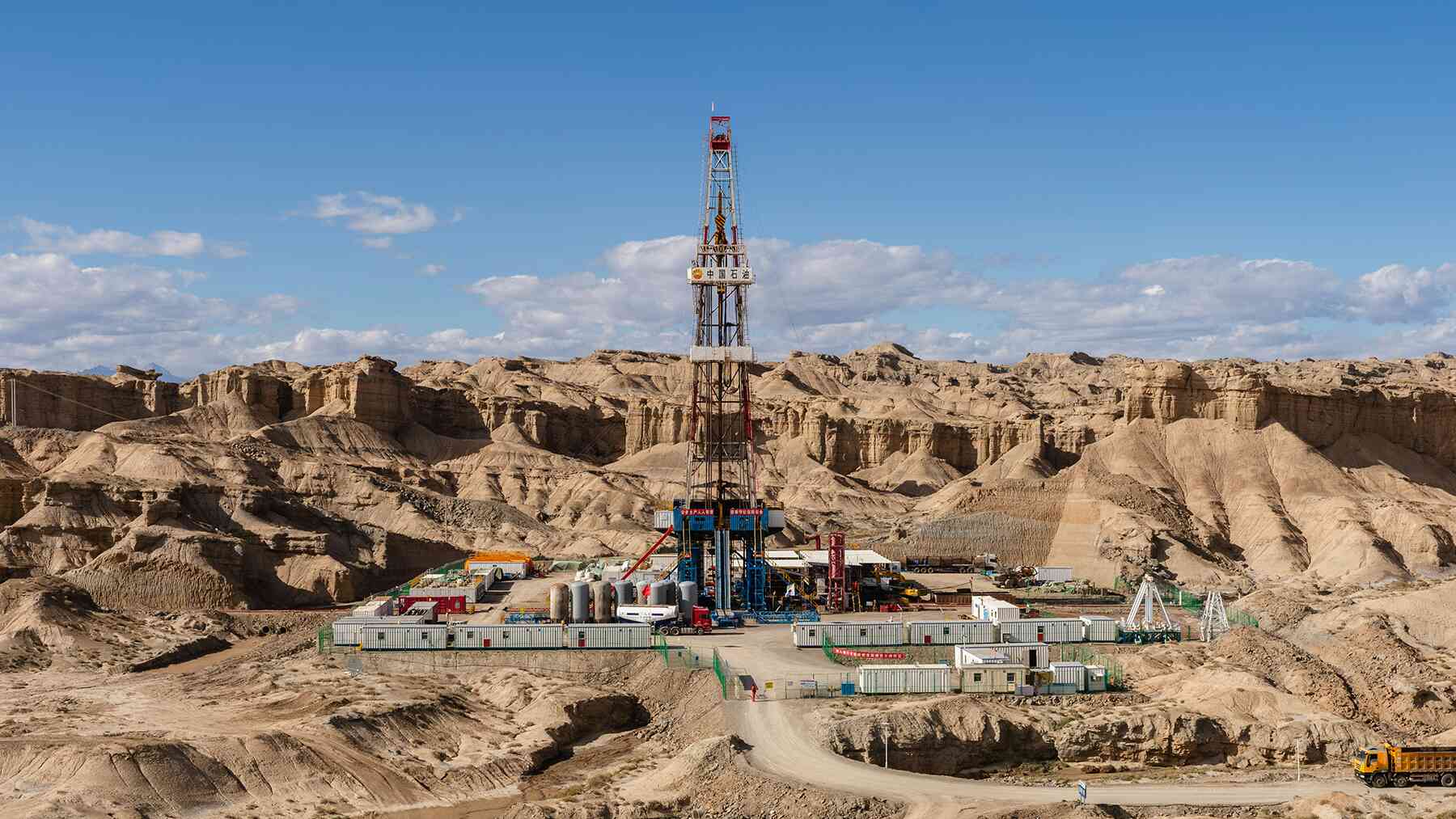
America needs to triple its geothermal drilling workforce by 2050 — and a Massachusetts city just launched the country’s first training center.
Geothermal networks are quietly spreading across American neighborhoods. About 30 projects are already underway in Massachusetts, Colorado, and other states, using underground thermal energy and electric heat pumps to heat and cool homes — cutting fossil fuel dependence and, supporters say, lowering utility bills in the process.
But the buildout is running into a wall. Drilling the thousands of boreholes these systems require takes a specialized workforce — and right now, that workforce simply is not there. The U.S. has roughly 19,500 professional drillers working outside oil and gas. According to the Geothermal Drillers Association, that number would need to triple by 2050 just to meet federal expansion targets.
Geothermal work repurposes many of the same technical skills, making the transition relatively straightforward for workers who already know the equipment.
A clean energy buildout with a very dirty bottleneck
The federal ambition behind geothermal is significant. In 2022, the Biden administration’s Department of Energy announced a target of 17,500 geothermal networks installed by 2050 — a goal that signaled serious policy intent while exposing a gap no one had fully reckoned with: the people who actually drill the boreholes.
Meeting the DOE’s target would require tripling the current driller workforce over the next 25 years. Experts describe this personnel shortage as the single biggest obstacle standing between geothermal’s promise and its reality on the ground.
“This work is absolutely essential in New England and anywhere there are legacy heating systems that are fossil-fueled,” said Lawrence McKenna, chair of the Department of Environment, Society, and Sustainability at Framingham State University. “But we don’t have the personnel to man the equipment.”
An unlikely talent pool: displaced gas workers and young job seekers
The workforce gap is a problem — but it may also be an opening. As states move to cut carbon emissions, the natural gas industry is expected to contract, leaving experienced drillers without careers. Geothermal work repurposes many of the same technical skills, making the transition relatively straightforward for workers who already know the equipment.
Young people entering a difficult labor market represent another pipeline entirely. McKenna described the current job market for new workers bluntly: it “sucks.” Geothermal drilling offers something increasingly rare — well-paying, hands-on work that cannot be automated away by artificial intelligence, the kind of durable career that supporters contrast sharply with stopgap employment.
Massachusetts takes the first step: a Center of Excellence
Framingham, Massachusetts is where this starts to get concrete. The nonprofit HEET (Home Energy Efficiency Team) and the Geothermal Drillers Association are launching the country’s first Geothermal Drilling Center of Excellence there later this year. Framingham is a fitting location — it already hosts the nation’s first utility-owned, neighborhood-scale thermal network.
The initiative received a $1.2 million grant from the Massachusetts Clean Energy Center in April. That funding unlocks two things the existing training program has never been able to afford: a drilling rig and a mobile classroom.
Until now, the Geothermal Drillers Association’s two-week pre-apprenticeship program covered geothermal science basics, borehole drilling fundamentals, and workplace safety — but not actual drilling practice. Students could visit worksites, though only after the day’s work was done. The new rig changes that entirely. Framingham State University is adding a more intensive layer on top: a yearlong, six-course certificate program covering thermodynamics, trigonometry, and hands-on field lab work. Currently, the only comparable certificate-level training exists at a college in Canada.
From regional hub to national network
Framingham is meant to be a starting point. The broader vision is a nationwide network of Geothermal Drilling Centers of Excellence, each designed to meet the specific needs of its regional market rather than funneling everyone through a single national program.
“It’s a huge advantage to have something like this exist regionally, so you can pace the workforce development with the market development in a more cost-effective, reasonable way,” said Zeyneb Magavi, HEET’s executive director. Distributing training geographically means the workforce can grow in step with local demand. Organizers are still finalizing site selection and partnership details for the Framingham center itself, which they describe as being “collaboratively bootstrapped into existence.”
Beyond jobs: geothermal as an economic development engine
The case for this initiative extends well beyond individual employment. A trained geothermal workforce enables more networks to be built, which means more communities gain access to cleaner, more affordable heating and cooling — benefits that compound outward from there.
Magavi frames the stakes plainly: “It’s not just about the jobs. Building the energy infrastructure of the future is an extraordinary development action.”
Clean energy transitions are often discussed in terms of what gets eliminated — fossil fuels, emissions, old appliances. This initiative focuses on what gets built instead: skills, careers, and local economic capacity that can last for decades. As Framingham moves from concept to operation, the real question is whether its model can be replicated fast enough to close the driller gap before the buildout stalls.

Carlos is an engineer with strong expertise in technical and industrial topics. He previously worked at international companies such as Siemens and is multilingual.
