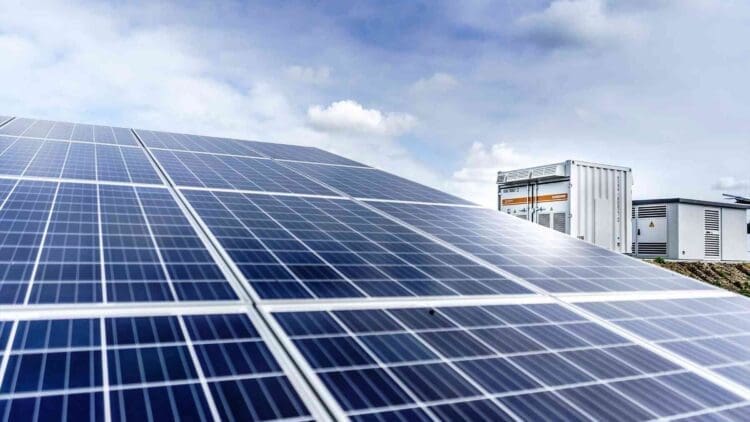

Solar energy facilities are becoming more popular as scientists are uncovering new and effective strategies through which developers can maximize solar energy generation. Countries like China, Japan, and the United States are perceived as the pioneers within the sector, meaning it is incumbent on companies based there to come up with groundbreaking initiatives that will influence global solar generation. This explains the abundance of projects that have emerged in 2026, with the latest one involving New Energy Equity, a company that placed a 5.5 MW community solar installation online in Illinois.
A general overview of New Energy Equity and its growing influence
The United States possesses a variety of companies that are vying to be the leading solar energy-producing entities in the world. This competitive nature within domestic companies means that the nation as a whole can increase its total solar energy capacity. Among the aspiring pioneers is New Energy Equity, a wholly owned subsidiary of ALLETE that develops, builds, and owns solar projects designed to generate reliable energy and extensive economic value.
New Energy Equity’s latest project is based in Illinois, a state with a booming, rapidly expanding solar energy landscape. It currently has over 6,187MW of capacity across more than 120,000 projects. Among the reasons for its focus on solar energy production is the Climate and Equitable Jobs Act (CEJA).

Maintaining momentum: New Energy Equity places a 5.5 MW community solar installation
New Energy Equity, along with community leaders and the Harlem School District, received a massive amount of attention as they gathered in Machesney Park, Illinois, on June 24, in celebration of the energization of a new 5.5 MW community solar project. Interestingly, the community solar project is set to be operated by New Energy Equity on land that is owned by the school district.
Ultimately, it is expected to generate 8.3 million kWh of clean energy per year, which is enough to provide electricity for roughly 1,002 Illinois-based homes. The main reason why energy projects are of great interest to the general population is because of the tremendous amount of benefits that they can bring to them. This includes employment, power provision, and long-term economic value.
Local ComEd customers have the ability to enroll in community solar and receive credits on their electricity bill generated by their share of a community solar project, lowering their electricity costs. In the case of the Harlem School District, the initiative has been met with great positivity because it creates massive advantages without needing taxpayer-funded construction costs.
Assessing how Illinois continues to enhance its solar energy landscape
Through leasing district-owned land and enrolling in community solar as a subscriber to the initiative, Harlem is set to receive annual lease payments and utility bill credits for 25 years that will assist in offsetting energy costs across its 9 schools. The Illinois solar transition is heavily backed by major legislation and projects aimed at scaling capacity while focusing on environmental equity.
For instance, initiatives like the Adjustable Block Program allow the state to pay for Renewable Energy Credits (RECs), which greatly lowers the upfront cost of residential and commercial solar installations.
Looking ahead: How Impactful will New Energy Equity be to the transition?
Other than the environmental impact, the event also celebrated a new scholarship program that is funded by New Energy Equity, which will award roughly $10,000 annually in scholarships to Harlem School District students for the 25-year life of the solar project. Kyle Marchesseault, who is the VP of Marketing, stated the following:
“We’re very proud of this project at New Energy Equity because of all the positive benefits it delivers. It delivers benefits for the school district in the form of lease revenue and electricity bill savings. It benefits four deserving, accomplished students through scholarships.”
According to reports, New Energy Equity has successfully developed over 600 megawatts of solar projects across 16 states. This is valuable considering that the U.S. is currently seeking to diversify energy generation.
Prince is a versatile writer focused on energy, automotive, environmental, and general news topics. He makes complex technical and policy issues clear, engaging, and accessible for a broad audience.