
Nordex cements 15-year partnership with a new 110MW wind order deep in the highlands of Türkiye
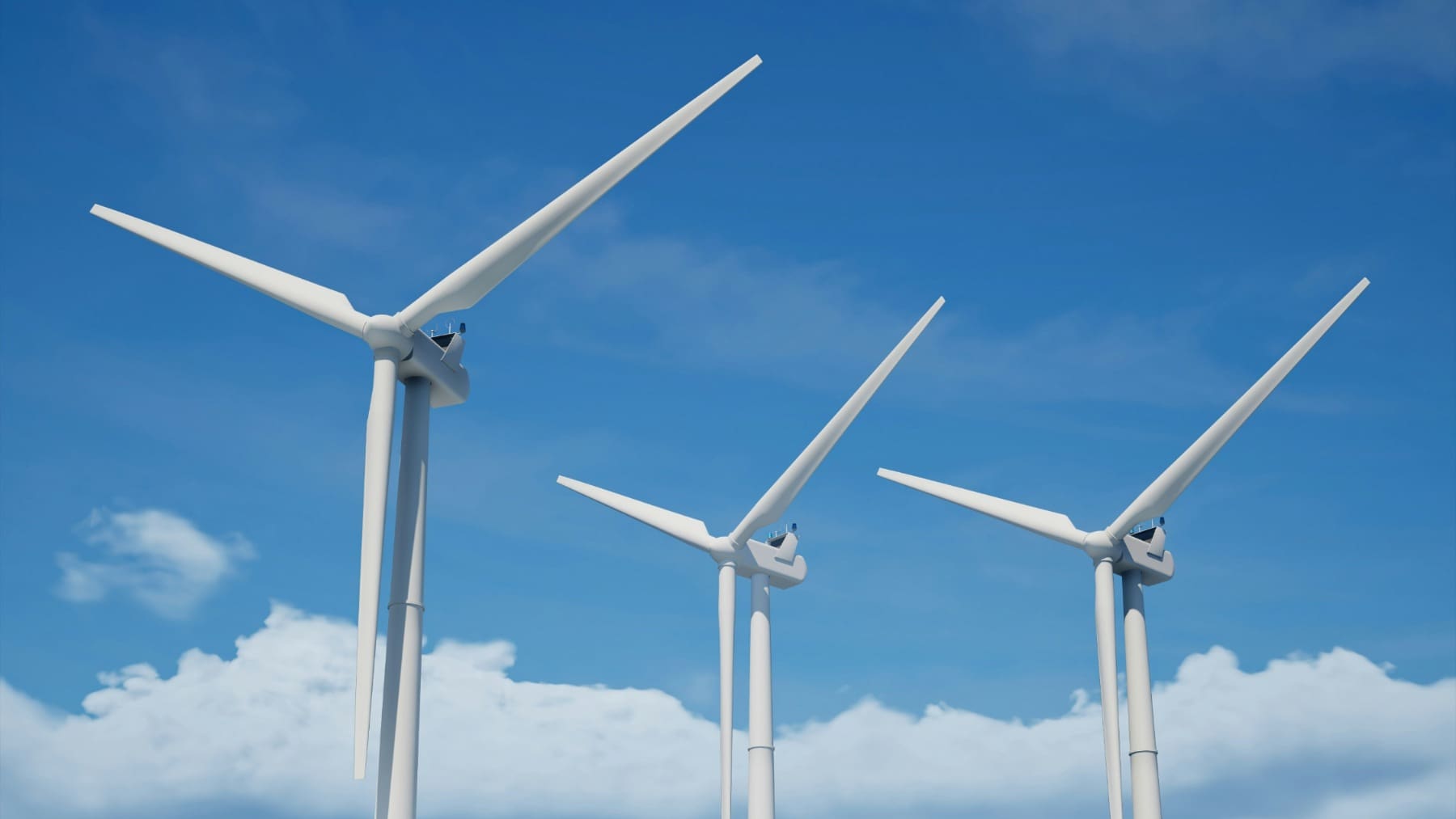
High on the plateaus of Balıkesir province, where elevations stretch between 800 and 950 meters and steady winds roll across open terrain, a new wind farm is taking shape. The Sındırgı district — remote, rugged, and rarely in the headlines — is about to receive 16 utility-scale turbines totaling 110MW of capacity.
The order, announced on May 26, comes from Eksim Enerji, a company that’s worked with Nordex for well over a decade. That history, and what this latest project says about Türkiye’s renewable energy direction, is what the rest of this story is about.
A wind-rich site in the heart of Balıkesir province
Balıkesir province occupies northwestern Türkiye, where the Aegean interior transitions into elevated plateau terrain. The Sındırgı district, where Balıkesir-3 will be built, sits between 800 and 950 meters above sea level — high enough to access consistent, commercially viable wind resources that lower-lying coastal sites can’t always guarantee. Elevation translates directly into energy: the higher and steadier the wind, the more reliable the generation profile across a project’s lifetime.
For a site sitting nearly a kilometer above sea level, that adaptation isn’t optional — it’s foundational to the project’s long-term business case.
Altitude comes with tradeoffs, though. Cold temperatures, ice accumulation, and seasonal weather extremes can stress standard turbine components in ways that erode performance and drive up maintenance costs. That’s why the Balıkesir-3 turbines are specified in the Cold Climate Version — a configuration designed to handle exactly those conditions, maintaining operational reliability when temperatures drop and weather deteriorates.
Tower height matters as much as turbine specification. At 119 meters of hub height on tubular steel towers, the N175/6.X units will reach well above the ground-level turbulence that disrupts energy capture at lower elevations. Greater hub height means access to smoother, faster wind — and over a project life exceeding 20 years, those gains compound significantly into total output.
Balıkesir province has long been considered strategically attractive for wind development in Türkiye. Its combination of favorable wind regimes, existing grid infrastructure, and proximity to industrial demand centers makes it a logical destination for continued investment. The Sındırgı project isn’t an outlier — it’s another data point in a pattern of deliberate site selection.
The N175/6.X turbine: engineered for performance at altitude
The N175/6.X is Nordex’s flagship platform for challenging wind environments. With a 175-meter rotor diameter, it’s built to extract energy efficiently even at sites where wind speeds are moderate but consistent — precisely the profile that elevated inland locations like Sındırgı tend to offer. Across 16 units, the platform delivers the full 110MW capacity that makes Balıkesir-3 a meaningful addition to Türkiye’s grid.
The Cold Climate Version specification is more than a label. It signals that the turbines have been adapted for low-temperature operation, with heated components, reinforced materials, and monitoring systems suited to harsh seasonal conditions. For a site sitting nearly a kilometer above sea level, that adaptation isn’t optional — it’s foundational to the project’s long-term business case.
Alongside the hardware, Nordex’s contract includes a 10-year Premium Service Agreement. These agreements cover long-term availability and performance of the wind turbines, shifting much of the operational risk from the owner to the manufacturer. For investors and project financiers, that kind of structured service commitment provides revenue predictability that’s difficult to achieve otherwise — and it keeps Nordex closely involved in the project’s performance well beyond the installation phase.
More than 15 years of partnership between Nordex and Eksim Enerji
The relationship between Nordex and Eksim Enerji began in 2010 — predating much of Türkiye’s current renewable energy policy framework. Over that period, the two companies have built a working history spanning multiple project cycles, technology generations, and shifting regulatory environments. That kind of continuity is uncommon in any infrastructure sector.
Eksim Enerji’s wind portfolio now stands at 832.8MW, and the Balıkesir-3 order adds another 110MW to that total. The scale of the portfolio reflects a company that’s grown steadily and deliberately, consistently returning to the same turbine supplier across different market conditions.
Ender Ozatay, Vice President Region Türkiye and Mid East at Nordex, framed the relationship directly: “This new order from Eksim Enerji once again underlines the strength of our long-standing partnership, which has been built on trust and successful collaboration for more than 15 years.” He added that local expertise and comprehensive long-term service solutions are central to what Nordex brings to these projects.
In markets where development timelines are long and regulatory conditions can shift, multi-decade supplier relationships carry real value. Transaction costs fall, technical coordination becomes faster, and lenders gain a track record they can actually evaluate. The Nordex–Eksim Enerji partnership is a working example of what that continuity looks like in practice.
Nordex’s dominant position in Türkiye’s wind energy market
Nordex has held the position of market leader in Türkiye since 2017, with a market share of approximately 32 percent. That’s sustained dominance across nearly a decade — through policy shifts, currency volatility, and a rapidly expanding installed base. Maintaining that position requires more than competitive hardware; it demands local credibility, service infrastructure, and regulatory fluency built up over years.
One of the more consequential aspects of the Balıkesir-3 order is its compliance with YEKA-2025 local content requirements. All 16 turbines are fully compatible with these specifications, meaning components are sourced or manufactured domestically in ways that support Turkish industrial value chains. For a foreign manufacturer, meeting local content rules isn’t simply a regulatory checkbox — it’s a competitive differentiator that determines which projects are accessible and which aren’t.
Türkiye’s government has used local content requirements as a deliberate tool to build domestic manufacturing capacity in the renewable sector. For companies like Nordex, investing in that compliance framework early has translated into sustained market access. Competitors that haven’t made the same investment face structural disadvantages when bidding on projects under YEKA specifications.
What this order reveals about Türkiye’s renewable energy trajectory
The Balıkesir-3 project doesn’t exist in isolation. It reflects a broader pattern: established developers expanding existing portfolios, proven turbine platforms deployed at increasingly challenging sites, and long-term service agreements becoming standard rather than optional. Taken together, these trends point to a wind market that is maturing — moving from early-stage development into a phase of systematic, bankable expansion.
Long-term service agreements and local content compliance are particularly telling signals. Both developers and manufacturers are thinking in decades, not project cycles — a time horizon that only emerges when a market has demonstrated policy stability and revenue predictability over time.
Türkiye has set ambitious renewable energy targets as part of its broader energy transition agenda, and wind is expected to play a central role. The country’s wind resource is substantial, and much of it remains undeveloped, particularly at higher-altitude inland sites of the kind Balıkesir-3 represents.
What comes next will depend partly on how Türkiye’s regulatory frameworks evolve — around grid connection, auction design, and the continuation of local content incentives. If those frameworks remain supportive, projects like Balıkesir-3 are likely to be early entries in a much longer pipeline. For Nordex, Eksim Enerji, and the broader market, the highlands of Sındırgı may be a preview of where Türkiye’s wind expansion is heading.

Carlos is an engineer with strong expertise in technical and industrial topics. He previously worked at international companies such as Siemens and is multilingual.
