
A new solar panel can collect more sunlight from both sides, helping solar farms produce more power for years
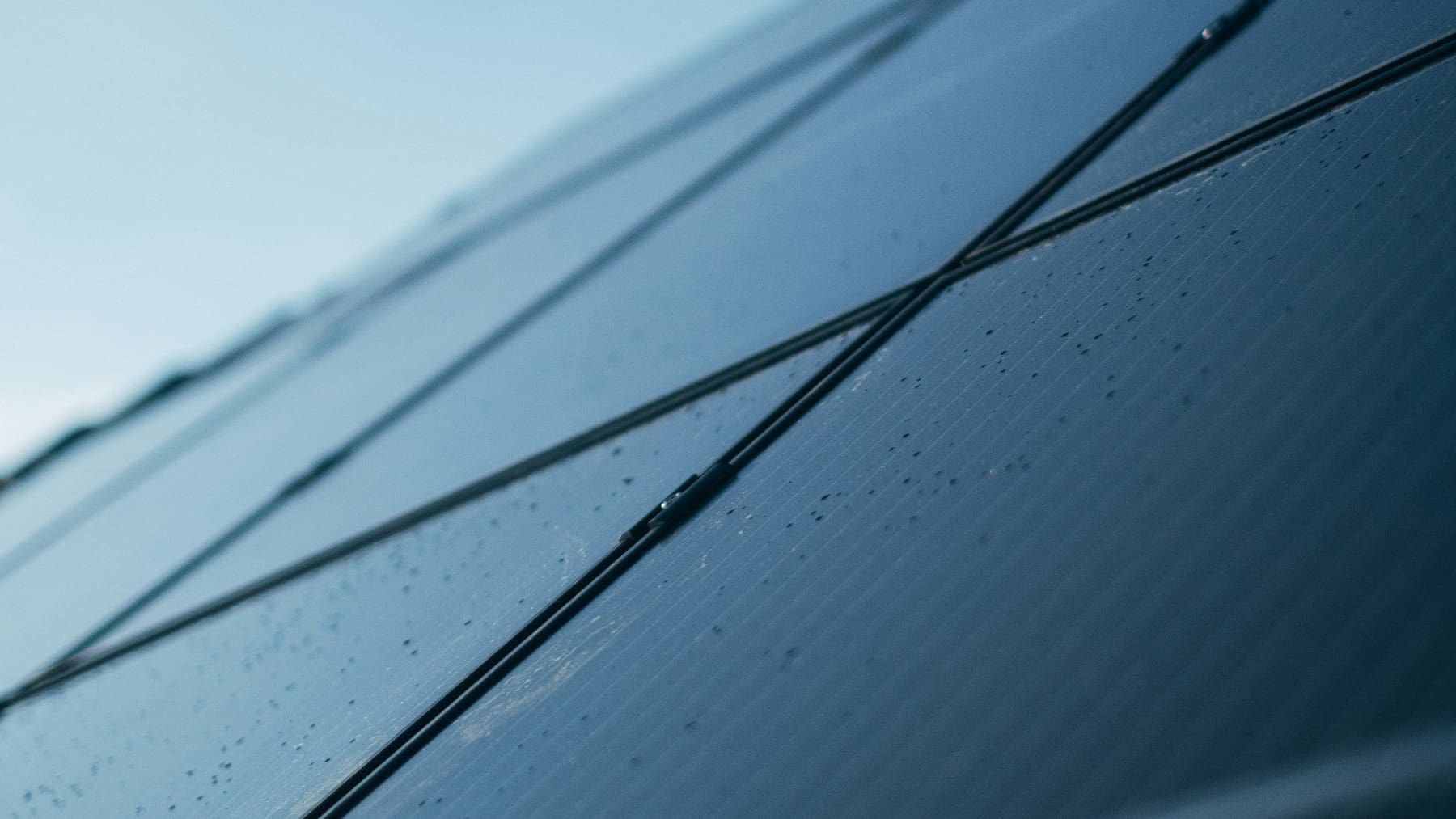
At Intersolar Europe 2026, the industry’s most closely watched solar showcase, Tongwei is arriving with more than incremental upgrades. The Chinese manufacturer’s booth at A2.350 is drawing attention from developers and project financiers alike — and for good reason.
The numbers on display this year push measurable boundaries the industry has been chasing: higher module output, tighter long-term degradation, and a bifacial performance rating with real implications for project returns. What draws particular interest isn’t just what the modules can do today, but what they could mean across a 30-year asset life.
A new performance ceiling for 210mm modules
The TNC 3.0 series is Tongwei’s next-generation flagship, offered in two formats designed to serve different project scales. The G12R-66 configuration delivers a maximum output of 670W, while the larger G12-66 reaches 770W — both sustaining a conversion efficiency of 24.8%. That combination places the TNC 3.0 among the highest-performing 210mm modules currently available.
These gains matter most in high-latitude markets and high-albedo environments, where rear-side generation represents a larger share of total annual yield.
Thermal management is built into the module’s architecture rather than treated as a secondary consideration. The quarter-cut cell design reduces operating current by 75%, and a lower power temperature coefficient works alongside it to limit heat buildup during peak generation hours. The practical result: more stable output during intense midday sun, with fewer heat-induced losses across a full operating day.
Built to last: degradation rates and long-term reliability
Raw output figures tell only part of the story. What makes the TNC 3.0’s performance case compelling over a project’s full life is its ultra-low annual linear degradation rate of just 0.35% — well below the benchmarks typical of conventional modules. A gap that appears modest in year one compounds meaningfully across a 30-year asset life.
The lower power temperature coefficient reinforces this stability picture. Modules that hold their rated output under heat stress accumulate a real energy advantage over years of operation in warm climates. For project financiers and developers, these reliability characteristics directly address bankability concerns — a module that degrades slowly and behaves predictably under thermal stress reduces uncertainty in long-term yield models, and that reduced uncertainty carries genuine value when projects are being underwritten.
BIFIMAX: pushing bifacial generation from 80% to 90%
Bifaciality has become a standard feature in utility-scale solar, but the rear side’s potential is frequently underutilized. Tongwei’s BIFIMAX technology is designed to close that gap.
BIFIMAX isn’t a standalone product. It’s a performance variant applicable across the entire TNC family — from TNC 1.0 through TNC 3.0 — making it an upgrade path rather than a separate module line. The technology combines two innovations: a Poly-Tech passivation layer refinement that removes a portion of the electrode-adjacent layer to improve light access, and a rear-surface light-trapping structure that captures photons that would otherwise escape unconverted. Measured results include a gain of 10 bifaciality index points, pushing the rating from 80% to 90%, a 0.6–0.8% improvement in single-watt energy yield, and up to 1.6% better performance in low-light conditions. These gains matter most in high-latitude markets and high-albedo environments, where rear-side generation represents a larger share of total annual yield.
The financial case: what BIFIMAX means for a 100MW project
Performance specifications become meaningful when translated into project economics. Tongwei has modeled the BIFIMAX upgrade on a 100MW ground-mounted plant in Hamburg, Germany, using single-axis trackers — a scenario representative of utility-scale development in Northern Europe.
Compared to a conventional 625W module at 80% bifaciality, upgrading to the TNC BIFIMAX 670W at 90% bifaciality reduces CAPEX by 0.87 euro cents per watt. At project scale, that represents a 2.63% saving worth approximately €870,000 — before a single kilowatt-hour has been generated. The levelized cost of energy falls by 3.39%, directly strengthening the bankability case across the project’s full operating life.
Over 30 years, BIFIMAX is projected to produce approximately 81,600 MWh more than the conventional baseline — enough to power around 25,000 European households for a year. That additional output translates to roughly €180,000 in extra annual revenue, grounding the technology’s value proposition in numbers developers and lenders can stress-test against real financing models.
Beyond modules: digital passports, rooftop upgrades, and real-world impact
Tongwei’s Intersolar presence extends beyond module hardware. The company will present a Digital Product Passport blueprint for the photovoltaic industry — a preliminary framework developed in response to the EU’s Ecodesign for Sustainable Products Regulation. DPP requirements are already mandatory in sectors such as batteries, but what a solar-specific passport should contain remains largely unresolved. Tongwei’s blueprint is positioned as a starting point for industry-wide discussion rather than a finished standard.
On the residential side, an upgraded TNC 2.0 G12R-48 module brings the performance improvements of the current generation to distributed rooftop installations, extending the technology’s reach well beyond utility-scale ground-mount applications. The “Solar for a Brighter Future” Global PV Case Award rounds out the company’s program by spotlighting community-level projects where solar has produced tangible social outcomes. Technical benchmarks and financial models matter enormously — but the cases on display serve as a reminder that the ultimate measure of any generation technology is what it delivers to the people it serves.
Taken together, these initiatives suggest Tongwei’s Intersolar 2026 presentation isn’t simply a product refresh. Higher-efficiency modules, a proven bifacial upgrade path with documented financial returns, regulatory readiness on product transparency, and a broadening scope across residential and utility segments all point toward where the company — and arguably the wider industry — is heading. The 30-year asset lives of projects commissioned this year mean that performance and reliability choices made at Intersolar 2026 will still be generating consequences well into the 2050s.

Carlos is an engineer with strong expertise in technical and industrial topics. He previously worked at international companies such as Siemens and is multilingual.
