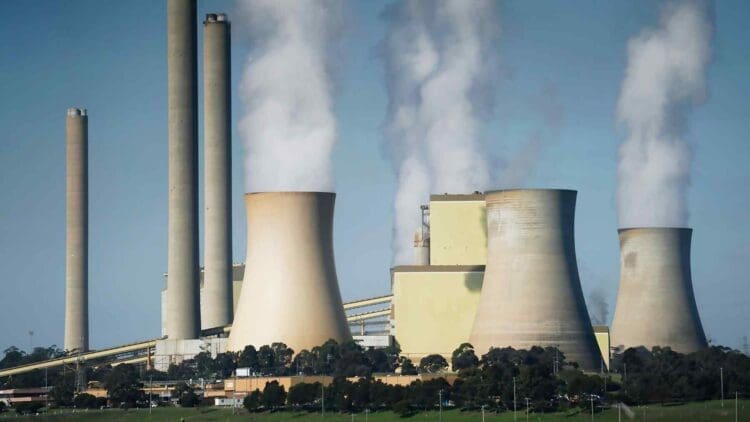

Petrochemical plants are engineered to operate without surprises. Once an energy system is selected, it is expected to run continuously for many years, supporting processes that require uninterrupted operation. While traditional sources of industrial heat have long provided reliability, questions are now emerging about whether alternative methods remain as avoidable as they once seemed.
Alternative methods of producing industrial heat
Process steam and process heat are very tangible concerns for petrochemical operators. Both are critical inputs that directly influence product quality, operational safety, and overall economic viability. As a result, any change in how energy is produced to supply process steam or heat introduces meaningful risk. This helps explain why alternative energy technologies have historically seen limited acceptance among operators.
Many petrochemical operators are facing increasing pressure from energy cost volatility, emissions regulations, and long‑term policy uncertainty. Despite these challenges, few alternative technologies have demonstrated an ability to integrate smoothly into existing petrochemical plant operations.




Much of the previous discussion around alternatives has focused on electrical power generation, grid connectivity, and future fuels. These approaches, however, tend to overlook a more immediate constraint within petrochemical operations. Electricity is only part of the equation, and often not the limiting factor.
In reality, the primary challenge in addressing petrochemical facility heating requirements lies in delivering reliable, continuous high‑temperature process steam. Any viable alternative must meet this demand consistently, particularly in facilities that operate near full capacity, where even short disruptions can have outsized consequences.
An energy source left outside the scope of industrial use
Historical uses of nuclear power relate largely to electrical power generation rather than meeting the daily needs of industrial process heat. This distinction is particularly relevant to the day-to-day activities of petrochemical producers, who rely heavily on consistent and ongoing availability of reliable, continuous supplies of high-temperature steam to ensure safe and efficient production levels.
Light-water reactors have historically failed to supply the high-temperature steam needed to accommodate the more rigorous operational demands of various industrial applications. Historically, therefore, nuclear power has played a relatively minor role in discussions surrounding the utilization of process steam within petrochemical operations.
Small modular reactors are beginning to challenge perceptions shaped by traditional large‑scale nuclear designs. Until recently, however, there was little understanding of how nuclear heat could be delivered in a form compatible with equipment already familiar to industry operators. As a result, nuclear power has largely remained a theoretical concept rather than a practical solution.
Bringing nuclear energy into existing operations
Recent partnerships between NuScale Power and Ebara Elliott Energy are aimed at closing this knowledge gap. Rather than requiring the replacement of existing infrastructure in petrochemical facilities, the companies propose integrating NuScale’s nuclear energy into current operations using industrial systems that are already familiar to operators.
Under this model, steam generated by NuScale’s small modular reactors would be transferred through an intermediate heat exchanger, keeping it isolated from the petrochemical facility. The steam would then undergo adiabatic compression—a method commonly used in industrial applications—to increase its temperature to levels suitable for demanding process heat requirements.
According to NuScale, each reactor module is designed to deliver continuous process steam at temperatures above 930°F (approximately 500°C), levels previously unattainable by light‑water reactors. Ebara Elliott Energy complements this capability with more than a century of experience designing turbomachinery—including compressors, turbines, and pumps—built for continuous operation in demanding chemical environments.
If NuScale and Ebara Elliott can make nuclear‑supplied process heat feel like a natural extension of existing plant systems, the larger shift may be as much psychological as technical. Industrial transitions often falter where operations feel forced to change. The next frontier lies in industrial heat decarbonization pathways that align with how petrochemical facilities already operate.