
Studsvik files second Swedish nuclear application as government moves to take majority stake in SMR developer Videberg Kraft
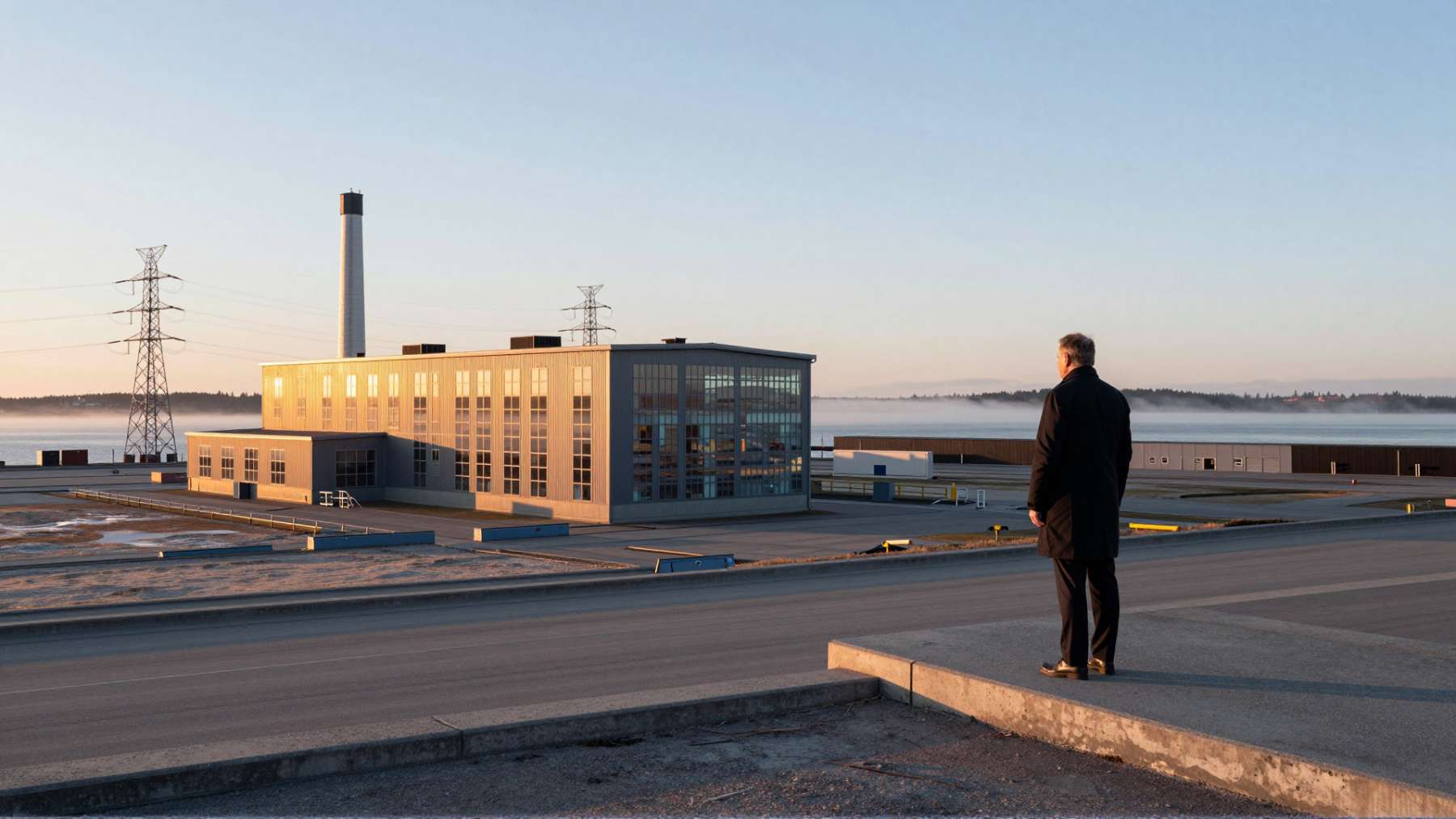
Sweden’s nuclear ambitions took two concrete steps forward this week. Studsvik, the Swedish engineering firm, filed its second nuclear application of the spring — this time to build between 600 and 1,400 MWe of new capacity at its headquarters in Nyköping Municipality. Simultaneously, the Swedish government proposed acquiring a majority ownership stake in SMR developer Videberg Kraft AB, which has plans to add roughly 1,500 MWe of new capacity at the Ringhals site in Varberg Municipality.
Studsvik Submits Nyköping Nuclear Application
Studsvik’s latest filing covers between 600 and 1,400 MWe of new nuclear capacity at its Nyköping headquarters, making it the company’s second such application in a single spring. The first came in March, when subsidiary Kärnfull Next applied for 1,200 to 1,600 MWe at a proposed SMR campus in Valdemarsvik Municipality. Both fall under Studsvik’s ReFirm South program, which targets SMR deployment across sites in southern Sweden.
The company is aiming to have its first reactors ready for commercial operation in the 2030s, though that timeline depends on successfully navigating Sweden’s permitting process — a process involving the municipality, the Land and Environment Court, and the Swedish Radiation Safety Authority. Studsvik officials were clear that any future construction would require additional reviews and approvals beyond the initial application.
The company currently operates five of Sweden’s six online reactors: three boiling water reactors at Forsmark and two pressurized water reactors at Ringhals.
Why Studsvik Selected the Nyköping Site
Nyköping is home to most of Studsvik’s Swedish operations, and the company describes it as one of the country’s strongest sites for new nuclear development. Executives pointed to the site’s decades of work in reactor physics, fuel research, and materials science — advantages that few other locations in Sweden can match.
Geography factored heavily into the decision as well. The site sits within the SE3 bidding zone and lies close to the E4 motorway, major energy consumers, Stockholm Skavsta airport, and the regional grid. That combination supports the case for connecting new capacity efficiently to where demand is concentrated.
CEO Karl Thedéen framed the application in terms of national need. “Sweden has decided to build new nuclear power, and the country needs new firm, fossil-free capacity on a scale not seen in a generation,” he said. Head of new build projects Christian Sjölander added that the application marks the start of a longer process, one that will require sustained dialogue with the municipality, regulators, and local residents.
Swedish Government Proposes Majority Stake in Videberg Kraft
While Studsvik was filing in Nyköping, Sweden’s government was moving on a separate front. The 2026 Spring Amending Budget includes a proposal for the state to acquire a majority ownership stake in Videberg Kraft AB — the SMR developer planning to build three to five reactors at the Ringhals site on the Värö Peninsula in Varberg Municipality. The project would add roughly 1,500 MWe of new capacity to the Swedish grid.
The proposal would give the Riksdag, Sweden’s national parliament, authority to raise the state’s voting and ownership share to 60 percent. Alongside that, the budget authorizes an initial capital contribution of up to SEK 1.8 billion (around $193.5 million), with a further contribution of up to SEK 34.3 billion — approximately $3.7 billion — available during the construction phase.
Ownership Structure and Timeline for Videberg Kraft
State-owned Vattenfall currently holds 80 percent of Videberg Kraft, with a consortium of large Swedish industrial companies holding the remaining 20 percent. Under the proposed restructuring, the state’s share could range between 51 and 65 percent from the point of acquisition through to reactor commissioning, but no later than 2045.
Share acquisition agreements are planned for 2026, with a formal transfer expected in the second half of 2027. Minister for Financial Markets Niklas Wykman argued that combining Vattenfall’s operational experience with broader state ownership creates a more stable foundation. “State ownership provides greater security for taxpayers’ money,” he said.
Broader Context of Sweden’s Nuclear Expansion
Studsvik’s Nyköping application is part of a wider wave of SMR filings across Sweden. Just weeks earlier, Swedish company Blykalla applied to build a 330-MWe, six-SMR facility at Norrsundet — another sign that multiple developers are now moving from planning to formal submissions.
Vattenfall’s central role in both the existing fleet and new development underscores how interconnected Sweden’s nuclear future has become. The company currently operates five of Sweden’s six online reactors: three boiling water reactors at Forsmark and two pressurized water reactors at Ringhals.
Sweden’s adoption of a national policy to build new nuclear power has been the primary driver behind this activity. Studsvik now has two active applications covering up to 3,000 MWe in total, and the Swedish state is positioning itself as a direct majority shareholder in one of the country’s most advanced SMR projects — with formal ownership transfers expected as early as 2027.

Carlos is an engineer with strong expertise in technical and industrial topics. He previously worked at international companies such as Siemens and is multilingual.
